
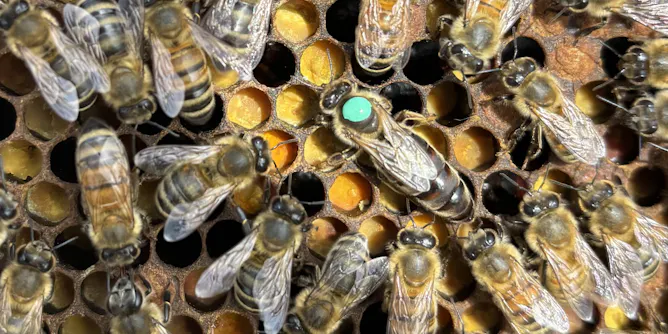
New research shows that virus infections change the queen’s pheromone, which may lead to a grim demise.
Articles on Insects
Displaying 41 - 60 of 537 articles
What matters for consciousness is not what you do, but how you do it.

Chimpanzees are capable of responding to wounds in inventive and sometimes cooperative ways.

The wild cousins of beehive honeybees are disappearing – here’s why that matters.
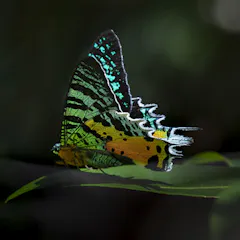
With the warmer weather come more of these fluttering insects – which can be easily confused with each other.
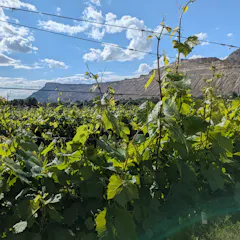
Phylloxera is an aphidlike pest that kills grapevines.
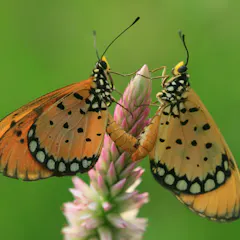
The lack of data about insect life in Australia is already having consequences for plants, animals, and even people.
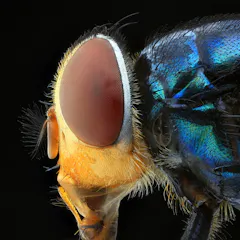
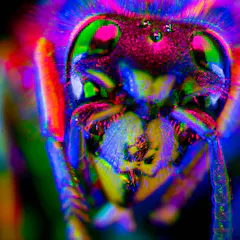
Flies see things differently.
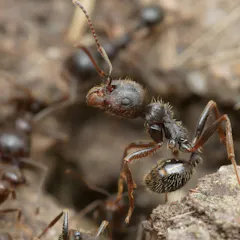
One ant mother raises two species under the same roof.
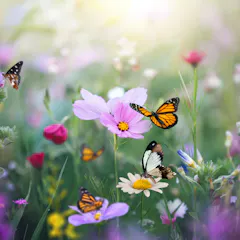
Uniquely colored flowers with big blooms might make for an aesthetically pleasing garden, but they can be unhelpful to pollinators. Careful consideration can help you plan a colorful and eco-friendly garden.
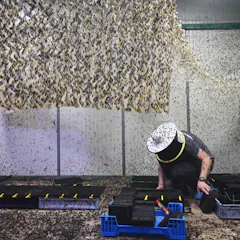
Considering how easily bird flu swept through chicken farms, it’s clear that domestication has downsides. Lessons from the past paired with modern genomic technology can help with farming insects.

Not only are weaver ants not plagued by a drop in teamwork efficiency, but they’re actually ‘superefficient’.

Cool autumns and dry springs could help earwig populations recover.
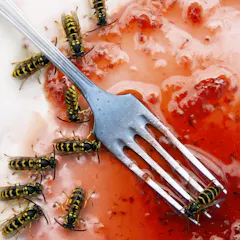
Did you know wasps switch from ham to jam foraging during the late summer?
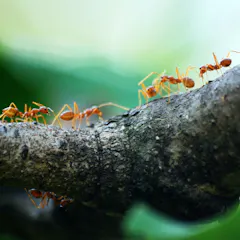
Ants may be tiny – but by working together they build complex societies and solve many problems. They might even teach humans a thing or two?
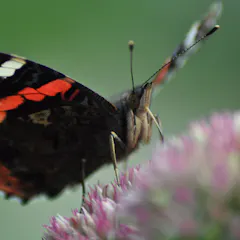
Following on from ‘the year without a butterfly’, 2025 has seen sightings soar in the UK and across Europe.
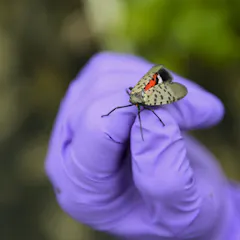
An entomologist describes how the sap-sucking insects can weaken grapevines and reduce fruit yield and quality.
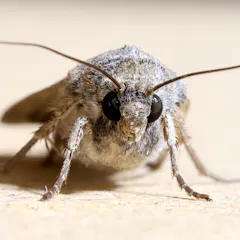
Australia’s iconic bogong moths are the first creatures other than humans and some birds known to navigate by the night sky.
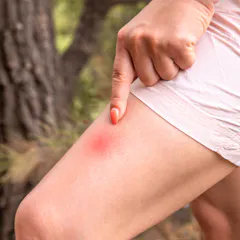
Bites and stings can have different symptoms, and may require treatment to prevent complications.
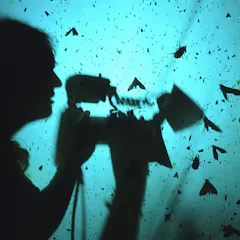
Miller moths migrate through the state every summer and are sometimes considered to be a pest.
Top contributors
-

Associate Professor in Entomology, University of Sydney
-
Clinical Associate Professor, School of Medical Science & Sydney Infectious Diseases Institute; Principal Hospital Scientist, University of Sydney
-
Professor of Behavioural Ecology, UCL
-
Lecturer in Ecology, University of New England
-
Associate Professor, Department of Physiology, Monash University
-
Director of the Australian National Insect Collection, CSIRO
-
Lecturer, School of Life and Environmental Sciences, University of Sydney
-
Research Fellow, School of Biological Sciences, Monash University
-
Postdoctoral Researcher in Mycology, West Virginia University
-
Adjunct associate, CSIRO
-
Associate Professor, Ecology, Northumbria University, Newcastle
-
Assistant Professor, Faculty of Agriculture, Dalhousie University
-
PhD Candidate in Zoology, University of Otago
-
Professor, School of Natural Sciences, Macquarie University
-
Senior Research Associate in Entomology, Lancaster University