
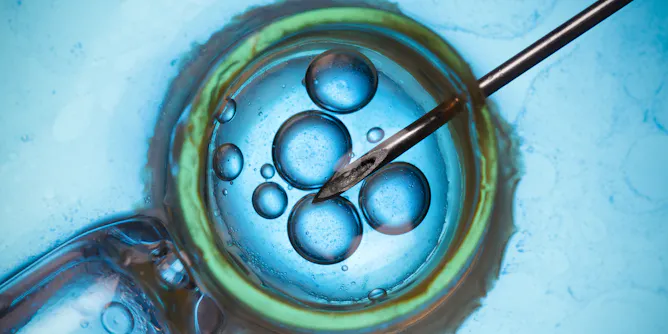
Researchers from Kyushu University, Japan, are the first to turn mice stem cells into mature eggs that can be fertilised.
Articles on Infertility
Displaying 81 - 100 of 105 articles

One in ten cancer patients will face fertility issues after treatment, but less than 50% are given options to preserve fertility. And those who are offered options can face significant cost barriers.
Early studies suggest a process called advanced in-vitro maturation may be able to treat infertility without women needing to inject themselves with high doses of hormones for several weeks.

Pelvic inflammatory disease’s traumatic consequences are unmatched by the low level of awareness around it. Left untreated, it can cause chronic pelvic pain, ectopic pregnancy and infertility.

The practice of offering egg freezing perks to employees is becoming increasingly more common. Facebook and Apple are in on the act, as too are some of our local IVF clinics.
Thanks to IVF and donor conception, infertile couples, single women and lesbian couples now have a better chance of starting families. But while common, it’s rarely openly discussed.
Clinics aren’t compelled to disclose their success rates, so it’s impossible to compare all clinics. Even when they do, the pretty graphs on clinic websites can be difficult to understand.

Freezing young men’s sperm might remove worries about them fathering children in later life, but do we really want the state routinely meddling in conception?

A declining birth rate and treatment that still has a modest success rate calls for better ways to investigate infertility.
The new drug letrozole is more effective in helping women with polycystic ovary syndrome (PCOS) achieve pregnancy than the…
Sperm grown from the frozen testicle tissue of newborn mice has been used to produce healthy offspring, according to a new…
Men who are infertile because of semen abnormalities may have an increased risk of premature death, according to new research…
Cellular mechanisms in worms may be modified to overcome infertility and ageing in future generations, new research suggests…
Women who had their first baby as a result of fertility treatment have a one-in-three chance of conceiving their next child…
A new study of mice receiving chemotherapy could enable researchers to develop and test fertility-protecting drugs. Currently…
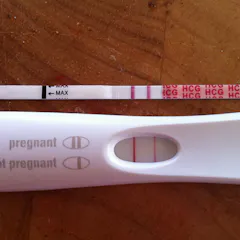
For the first time ever in Australia, a woman whose chemotherapy rendered her infertile has fallen pregnant using ovarian tissue taken from her body before her cancer treatment, a new study reports. Chemotherapy…

Infertility rates worldwide have remained relatively unchanged over the last 20 years, a new global study has found. The study, conducted by international researchers and led by the World Health Organisation…

University of Tasmania academic Meredith Nash recently argued on The Conversation that women who donate their eggs for fertility treatments should be financially compensated. It’s a risky and time-consuming…
Considerable public controversy exists around the question of access to in-vitro fertilisation treatment (IVF) for older women. Some support unlimited, publicly-funded access for all infertile women and…

Many animals, including humans, have a regular ovulation cycle, where an egg or eggs (depending on which type of animal) are released from the ovary regardless of whether mating has taken place or not…
Top contributors
-

Adjunct Senior Research Fellow, Global and Women's Health, School of Public Health & Preventive Medicine, Monash University
-
Associate Professor in Paediatrics and Reproductive Health, Adelaide University
-
Professor - Emerging Technologies (Stem Cells) at The University of Melbourne and Group Leader - Stem Cell Ethics & Policy at the Murdoch Children's Research Institute, The University of Melbourne
-
Senior Lecturer in Sociology, Lancaster University
-
Monash University
-
NHMRC Emerging Leader Research Fellow in Reproductive Health, School of Public Health, University of Sydney
-
Reader in History and Deputy Dean of Humanities (Research), University of Essex
-
Professor of Law, University of Virginia
-
Science Strategy and Operations Manager, Victorian Heart Institute, Monash University
-
Senior Lecturer, School of Social Sciences and Humanities, Loughborough University
-
Senior lecturer in reproductive Biology, University of Sheffield
-
Associate Professor in Philosophy & Chair of Faculty of Arts Human Research Ethics Committee, Macquarie University
-
Adjunct clinical professor, Monash University
-
Associate Professor in Reproductive Biology; Head, Oocyte Biology Research Unit, UNSW
-
Medical Sociologist, University of Oregon