
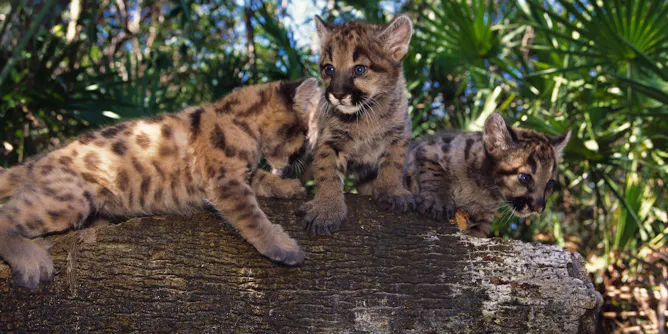
Four experts explain what genetic health is and why it matters for our most vulnerable wildlife.
Articles on Reproduction
Displaying 1 - 20 of 146 articles
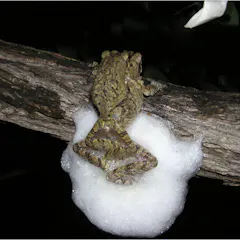
Mating with many males means more viable nests and improved offspring survival or performance for African Grey Foam-Nest Treefrogs.
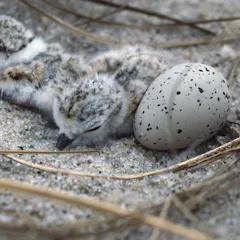
If Congress didn’t believe habitat destruction and degradation constitute ‘harm’ under the statute, why would it require permits and plans to offset habitat loss?
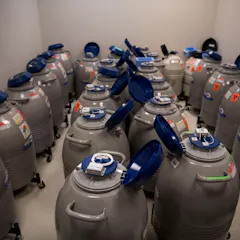
In vitro fertilization has become a bigger part of reproductive rights debates as a once-fringe movement to recognize embryos as people grows louder.
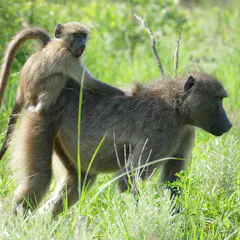
Understanding how female baboons benefit from social bonds helps humans understand their own origins.

A day of celebration for many, it is also a source of anxiety for those whose hopes of motherhood have been dashed by infertility, loss, and those who have chosen unconventional paths to parenthood.
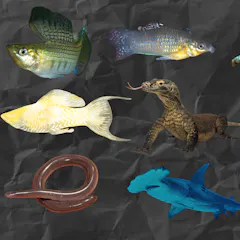
The female animals that go it alone.
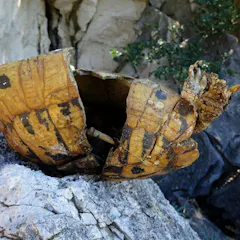
Female tortoises are bearing the brunt of the brutal behaviour of their male counterparts, who are regularly pushing them off cliffs in North Macedonia.
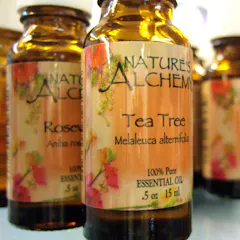
Tea tree oil has been linked to fertility issues. But the experiments were done in rats. Here’s what else is behind the scary headlines.
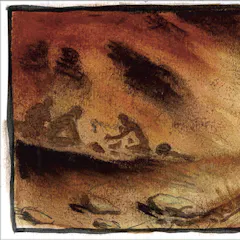
A recent article published and widely read in Science revealed that Neanderthal men preferred “Sapiens” women, but it fails to tell the whole story.

Men’s sperm numbers and fertility also decline with age. If you’re planning to have kids in the future, here’s what you need to know.
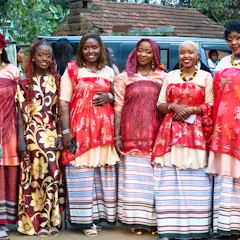
A combination of education, income and technology has a strong influence on women’s reproductive autonomy.

The amazing variety of plant reproductive systems.

Mainstream medical organizations have criticized ‘restorative reproductive medicine,’ but some Catholics who follow church teachings consider it a welcome alternative.

The link between feeding and breeding makes whales a living barometer of ocean health.
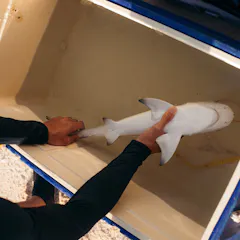
Rather than a clever survival tactic, tonic immobility might just be ‘evolutionary baggage’.

Even though there are 8 billion people on Earth today, a catastrophe could send that number much lower within a few decades.
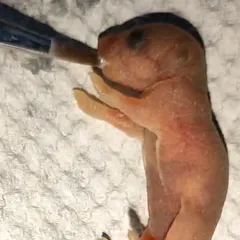
Stem cell engineering and CRISPR were used to create mice with two male parents. Could we use this technique on humans?

Life is a gamble, anti-natalists say, and it’s unethical to force someone else to take the risk.
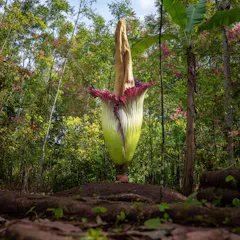
The stench of a rare corpse flower make us retch. But you’re not the target – the plant wants to lure carrion beetles and flesh flies
Top contributors
-

Senior Lecturer, Evolutionary Biology, University of Sydney
-
Principal Lecturer in Wildlife Conservation, Nottingham Trent University
-
Postdoctoral Research Associate, UNSW
-
Jenny Graves is a Friend of The Conversation.
Distinguished Professor of Genetics and Vice Chancellor's Fellow, La Trobe University
-
Lecturer in Molecular Biology and Reproduction, University of Kent
-
PhD student, University of Wyoming
-
Adjunct Senior Research Fellow, Global and Women's Health, School of Public Health & Preventive Medicine, Monash University
-
Mark Elgar is a Friend of The Conversation.
Emeritus Professor of Evolutionary and Behavioural Ecology, The University of Melbourne
-
Assistant Professor and Canada Research Chair in the Politics of Reproduction, University of Waterloo
-
Senior Lecturer in Genetics, Adelaide University
-
Associate Professor in Zoology, University of Tasmania
-
Doctoral Student in Biochemistry, University of Washington
-
Senior Lecturer, Zoology, University of Aberdeen
-
Senior Research Fellow, Monash University
-
Professor of Applied Mathematics, Adelaide University