

Discovering a mouse with a reproductive system surprisingly similar to our own is good news for pregnancy research.
Articles on Infertility
Displaying 41 - 60 of 105 articles

Two research groups have turned human skin cells into structures resembling an early-stage human embryo, paving the way for exciting new research avenues, and opening up some tricky ethical questions.

With the vaccines now being administered at sites around the US, it is important to address misinformation surrounding the effort.

The guide asks questions about the woman’s age, how long she has been trying for a baby, whether she has been pregnant before, and the percentage of the male partner’s sperm that move normally.

Despite the hype about a “coronial” baby boom, the pandemic is likely to see many Australians delay or not have children at all.

Most people don’t intend to be hurtful or insensitive in their conversations with people experiencing infertility — they often just don’t know what to say.

Expect fewer visits to the clinic, fewer people in the waiting room at once, and temperature checks.

Society shapes people’s preferences and emphasises the value of having genetically related children.
Women aged over 35 are sometimes offered genetic testing of their IVF embryos to rule out abnormalities. But it’s expensive and doesn’t increase their chance of a baby. In fact, it could reduce it.
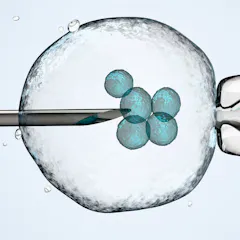
The story of how human eggs became an integral part of a multi-billion dollar global fertility industry starts in a unlikely place: the sex lives of farm animals.

It can be difficult to understand all the ‘add-on’ procedures available with IVF. A new study finds one popular fertility technology, ICSI, is being offered to couples it might not be suitable for.

Children with cancer not only endure chemotherapy or radiation treatment but they may also face infertility in adulthood. Now a new procedure, just proven in monkeys, may be close to use in humans.

If you’re one of the one in six Australian couples experiencing infertility, you’ve probably thought about IVF. Here’s a step by step breakdown of how it all works.

The ‘egg timer’ blood test reveals the quantity of eggs women have, not the quality, which declines with age. It’s also expensive and can give false low readings.
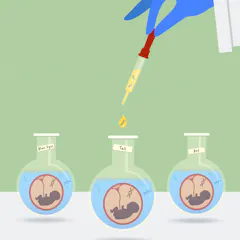
Forecasts of designer babies followed the announcement of the gene-edited twins, just as they have for any reproductive technology since 1978. This signals the public must learn more about genetics.

Endometriosis is cut or vaporised with an electric current or laser. It ranges from a simple, 20 minute operation to complex surgery involving important organs such as the bowel and bladder.

Why some women choose to freeze their eggs.

The surrogacy industry needs international regulation to stop the exploitation of women’s bodies.

For women and men not ready to have children, there are new ways to preserve fertility. And experimental techniques offer hope for sick children whose treatments jeopardize future childbearing.
CC BY-ND16.2 MB (download)
An audio version of a long read article on the history of infertility, 40 years after the first baby was born via IVF.
Top contributors
-

Adjunct Senior Research Fellow, Global and Women's Health, School of Public Health & Preventive Medicine, Monash University
-
Associate Professor in Paediatrics and Reproductive Health, Adelaide University
-
Professor - Emerging Technologies (Stem Cells) at The University of Melbourne and Group Leader - Stem Cell Ethics & Policy at the Murdoch Children's Research Institute, The University of Melbourne
-
Senior Lecturer in Sociology, Lancaster University
-
Monash University
-
NHMRC Emerging Leader Research Fellow in Reproductive Health, School of Public Health, University of Sydney
-
Reader in History and Deputy Dean of Humanities (Research), University of Essex
-
Professor of Law, University of Virginia
-
Science Strategy and Operations Manager, Victorian Heart Institute, Monash University
-
Senior Lecturer, School of Social Sciences and Humanities, Loughborough University
-
Senior lecturer in reproductive Biology, University of Sheffield
-
Associate Professor in Philosophy & Chair of Faculty of Arts Human Research Ethics Committee, Macquarie University
-
Adjunct clinical professor, Monash University
-
Associate Professor in Reproductive Biology; Head, Oocyte Biology Research Unit, UNSW
-
Medical Sociologist, University of Oregon