

Representing 2% of global GDP, the fashion industry must use its cultural reach to drive a shift towards a more sustainable and equitable industry.
Articles on Inclusion
Displaying 41 - 60 of 140 articles

Since the 1970s, corporate boards have included more women and minorities. But those gains are likely to change after a US Supreme Court ruling and increased conservative resistance.
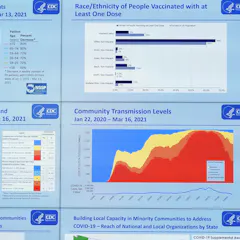
Governments can exclude certain groups of people in policies and services not only by the type of data they collect but also how they collect, store, analyze and use the data.
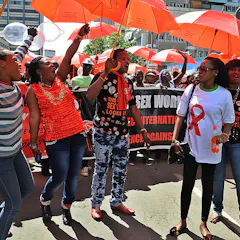
Sex workers have a deep understanding of their needs but development partnerships tend to prioritise scientific knowledge.

A toolkit for inclusive entrepreneurship education and training was developed with input from a 19-country panel of entrepreneurship educators.

Decades of activism have resulted in legislation and infrastructure to make cities more accessible, but the lived experiences of disabled residents shows there’s still a long way to go.

Listening to voices of racialized students in French immersion matters for creating more inclusive schooling.
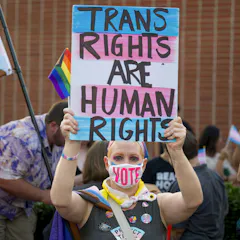
Sports researchers learned that conservative political leanings among state legislators lead to biases against transgender athletes among voters.

The Xbox Adaptive Controller is designed to make gaming more inclusive, but Microsoft’s ban on third-party devices means some disabled gamers are still excluded.

The idea of the 15-minute city has become popular globally. But this approach relies on ableist assumptions and doesn’t reflect inclusive urban design.

Discrimination, a lack of accessibility and isolation still prevent persons with hearing loss from experiencing equity and inclusion at work.
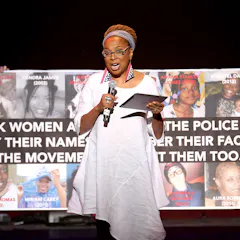
First used in the 1970s, the social theory known as intersectionality triggered widespread debate on racial identifications and the interplay among categories.

Workplaces committed to diversity and inclusion need to ensure they don’t overlook the importance of addressing mental health concerns.

People with intellectual disability told us they often felt cut out of their own health appointments, as healthcare practitioners spoke to their support person or family instead of to them.

The disability royal commission was a once-in-a-lifetime chance to investigate the realities of life for disabled Australians. But it missed three critical areas in need or urgent reform.

Communities and employers miss out when they don’t embrace disabled employees. Companies must be supportive and proactive about including and accommodating people with disabilities.
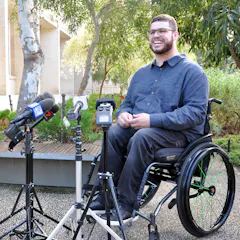
In this podcast, Greens Senator and disability advocate Jordon Steele-John, who campaigned for the Royal Commission, joins The Conversation to give us his take on the report.

The disability royal commission recommended providers offer redress to people who experience harm while in their care. But reparations for past harms were not addressed.

The disability royal commission has heard from thousands of people with disability and their families. But the response must involve everyone.

Increasing entrepreneurship among women and racialized people calls for the development of more inclusive entrepreneurial ecosystems.
Top contributors
-

Professor, Disability and Community Inclusion, Flinders University
-
Professor, School of the Built Environment, University of Technology Sydney
-
Professor of Management, Western Washington University
-
Assistant Professor of Journalism, University of Colorado Boulder
-
Professor of Sociology and Director of the Center for Employment Equity, UMass Amherst
-
Honorary Research Fellow, School of the Built Environment, University of Technology Sydney
-
Professor of Psychology, Clark University
-
Professor, Geography and Planning, University of Toronto
-
Professor of Psychology, Saint Mary’s University
-
Clinical Associate Professor, Boston University
-
Professor, Social Policy Research Centre, UNSW
-
Professor, Sobey School of Business Management, Saint Mary’s University
-
Assistant Professor of Management, Indigenous Business, St. Francis Xavier University
-
Francine V. McNiff Professor of Criminology, The University of Melbourne
-
Associate Professor of Marketing, Dalhousie University