

For early-career workers, remote work can mean fewer opportunities to work alongside experienced colleagues.
Articles on Hybrid work
Displaying 1 - 20 of 25 articles

A mix of work-from-home flexibility, with two to three days in the office, appears to be the sweet spot for looking after both employers’ and employees’ needs.

Setting clear expectations about availability, both at work and at home, is essential for couples negotiating professional careers and hybrid work.
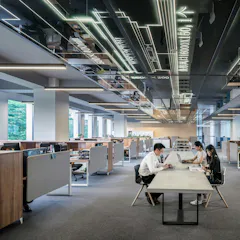
Many employees say they prefer flexibility when it comes to working in the office, but they find it creates uncertainty and unpredictability.

For many employees, flexibility is no longer a nice-to-have luxury but a fundamental requirement. Yet many requests are still being turned down.

Where, when and how Americans work has dramatically shifted since the COVID-19 pandemic disrupted the routines of everyday life.
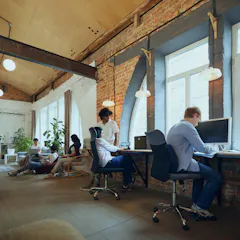
Today’s co-working spaces can boost employee skills and left-behind communities.
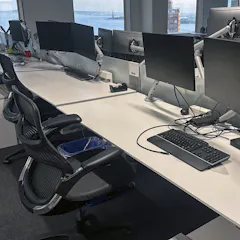
That’s a huge change from 2019, when remote work accounted for only 7% of the nation’s paid workdays, even if it’s a big decline from 2020.

Creating psychological boundaries between work and home life is healthy – up to a point.

The new world of hybrid work presents unique challenges to the mental health and well-being of young people. These four techniques can help you develop a healthier relationship with your phone.

The message is clear: the push to get workers back into the office is being incorporated into US government policy. Here’s what could be lost.

The rapid growth of our capital cities is creating all sorts of problems. Dispersing growth across regional city networks could ease these growth pains and make our cities more sustainable.

A survey of more than 500 Australian organisations found workers are prepared to take a pay cut rather than return to the office.

Instead of trying to force unwilling workers back to the office, Canadian cities should instead focus on developing downtowns that people genuinely want to visit and experience.
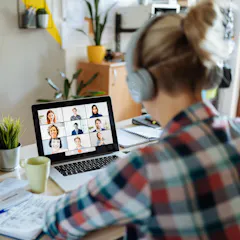
The demand for hybrid work agreements has been on the rise. And extensive research has shown that flexible work can be more productive than being in the office full-time.

The stereotypes around young people only caring about being online are rampant but they are worth questioning — or at least being put in context.

Turning excess office space into apartments isn’t a panacea for the housing shortage, but it’s producing thousands of new units yearly and is more sustainable and economical than new construction.

Four years after working from home was introduced, employers are using various incentives, some say ultimatums, to get workers back into the office.
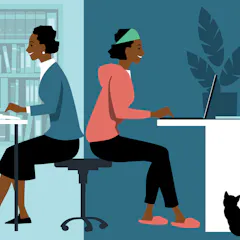
There are so many more ways to work flexibly now.

If an organisation mandates their workers return to the workplace – whether exclusively or in part – it needs to provide clear guidelines.
Top contributors
-

Professor of Information Management and Business Analytics, Drake University
-
Professor of Management, Deakin University
-
Professor of Management and Organizational Leadership, Drake University
-
Associate Professor of Organisational Behaviour, Bond Business School, Bond University
-
Senior Lecturer, Graduate School of Business and Law, RMIT University
-
PhD Candidate in Social and Behavioural Sciences, Utrecht University
-
Managing Director, Youth & Innovation Project, University of Waterloo
-
PhD Candidate, Political Science, University of Toronto
-
Professor Emeritus of Architecture and Interior Design, Miami University
-
Professor of Comparative Social Policy in relation to Social Inequalities, Utrecht University
-
Senior Lecturer in Human Resource Management/People Analytics, RMIT University
-
Adjunct Professor of Human Resource Management, Swinburne University of Technology
-
Postdoctoral Researcher, Melbourne School of Psychological Sciences, The University of Melbourne
-
Senior Lecturer in Human Resource Management, University of Auckland, Waipapa Taumata Rau
-
Associate Professor of Workplace and Business Law, UTS Business School, University of Technology Sydney