
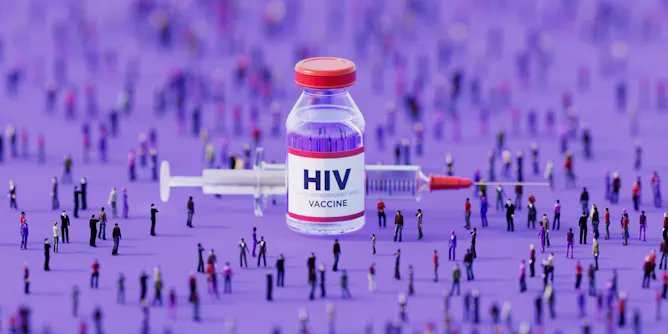
Africa’s investment into research and development is far below the global average.
Articles on HIV/AIDS pandemic
Displaying 1 - 20 of 21 articles

Aids was first identified 40 years ago: these are the game changers that have revolutionised treatment – and the obstacles that remain.
Dec. 1 marks World AIDS Day. Canada has the tools and means to end the epidemic. The question remains, are we up to the task?

The term ‘MSM’ allows public health interventions to gloss over the social, political and cultural complexities of identity. But it’s not without its limitations.

The spread of misinformation in many pandemics, including the smallpox and 1918 influenza outbreaks, have undermined efforts to contain infections and prevent deaths.
To be effective, vaccine formulas need to cover all emergent strains. But there are still plenty of unknowns.

Having survived the HIV/AIDS pandemic, gay communities in the US were well equipped to get residents health and social services early in the pandemic, when the government’s COVID-19 response lagged.

The HIV In My Day project preserves the early history of the HIV/AIDS pandemic through the personal stories of long-term survivors and caregivers.

One of the main challenges remains that diagnostics and drugs for people suffering from advanced HIV aren’t readily available. This group of people is vulnerable to deadly opportunistic infections.
The British press ignored the millions of deaths from HIV/Aids in Africa for far too long.

Uganda’s COVID-19 task force would do well to embrace pop music in its public health communications.
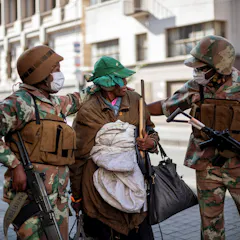
The South African National Defence Force has suffered from terrible neglect over the past 25 years of democracy.
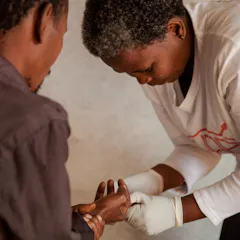
Women and children remain the focus of HIV while men are disadvantaged in accessing testing and treatment in Africa.
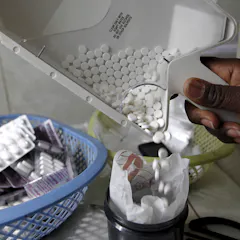
HIV self-testing is a potential strategy to overcome access to testing. However, there are emerging concerns on the lack of counselling, possible user error and accuracy of the kits.

South Africa’s data rollout of its pre-exposure prophylaxis shows that there is a relatively slow, but increasing, uptake. However, more needs to be done to target young women.
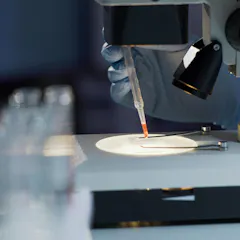
Three new HIV vaccine concepts which rely on high-tech designer proteins are being trialled to see if they can stop the virus.
Understanding where there are high numbers of new HIV infections is important to establishing whether interventions are working or not.
South Africa has made tremendous progress towards meeting the 90-90-90 targets but there are some challenges preventing it from reaching the goals set by UNAIDS.
A South African child, who has been in HIV remission for nearly nine years, could help researchers understand how to make remission possible for millions of other HIV positive people.
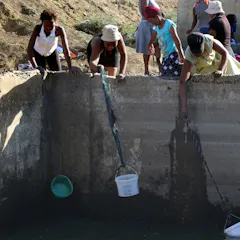
Climate change imperils food supply in many parts of the world, including South Africa, which has shown major gains in treating HIV/AIDS. Climate change could mean even less food – and more disease.
Top contributors
-

Associate Professor and Director: Research at the Wits Reproductive Health and HIV Institute I, University of the Witwatersrand
-
Director of Implementation Science, Wits Reproductive Health & HIV Institute, University of the Witwatersrand
-
Associate Professor and Course Leader: Post Graduate Programmes in Clinical Pharmacy in the Department of Pharmacy, Sefako Makgatho Health Sciences University
-
Research Professor and DST/NRF SARChI Chair of Virus-Host Dynamics, National Institute for Communicable Diseases, CAPRISA Research Associate, University of the Witwatersrand
-
Head: Cell Biology, Centre for HIV and STIs, National Institute for Communicable Diseases
-
Research Associate/Post Doctoral Researcher and Deputy Laboratory Director at the Botswana Harvard AIDS Institute, Harvard University
-
Medical Scientist at the National Institute for Communicable Diseases; Research Associate at CAPRISA; Research Professor in the School of Pathology, University of the Witwatersrand
-
Senior Researcher, University of Cape Town
-
Professor of Geography, Penn State
-
Epidemiologist and Public Health Specialist, National Institute for Communicable Diseases
-
PhD candidate, Ghent University
-
Professor of Immunology, Infectious Diseases and Microbiology, University of Pittsburgh
-
Professor, School of Health Sciences, University of Northern British Columbia; University of Victoria
-
Assistant Professor of Health Behavior and Health Promotion, The Ohio State University
-
Lecturer in Media and International Development, University of East Anglia; Independent Social Research Foundation