

New research reveals a link between a diagnosis of cancer and a lifetime number of 10 or more sexual partners. But there are some flaws in the research we need to consider in interpreting the results.
Articles on HIV
Displaying 181 - 200 of 434 articles
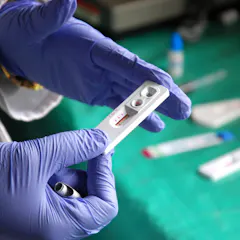
The key to ending the HIV epidemic is a vaccine that will provide long-lasting protection and alleviate the need for prevention methods.

Providing antiretroviral therapy without incorporating quality diets may not help to reduce illness and death related to HIV.
The discovery of a new strain of HIV gives scientists a better understanding of the virus.
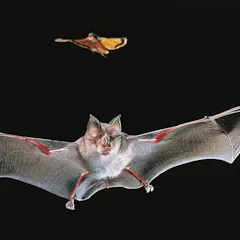
Some of the world’s worst diseases have come from animals. Bats, cows, camels and horses have all contributed. Now, scientists are working to know which animal introduced the new coronavirus.

Difficult to understand communication and the somewhat overstated benefits of male circumcision may lead to increased risky sexual behaviour.

Obstacles to getting more people with TB treated extend beyond cost. It starts with locating people at greatest risk and expanding preventive treatment programmes.

In Eswatini, Botswana, South Africa and Lesotho more than 1 in 5 children are HIV-exposed but uninfected. A coordinated strategy is needed to ensure all children reach their developmental potential.

South Africa has set ambitious targets to eliminate mother to child transmission of HIV completely. It will require innovative strategies and continuous quality improvement to achieve them.

Facebook began blocking ads that linked Truvada and other HIV-related drugs to severe bone and kidney damage based on claims made in lawsuits.

Family structure and family support are protective factors against transactional sex among adolescents and young adults.

A retrospective exhibition displays the key works from the life and times of activist and artist Judy Seidman. She has used political posters as a galvanising force in the fight against injustice.

Bioinformatics can be applied to a range of problems, such as understanding the genome sequence of organisms or coming up with new drugs.

A number of things may have gone wrong when researchers edited Chinese twins Lulu and Nana’s genome. Either way, the failed experiment is a cautionary tale for us all.
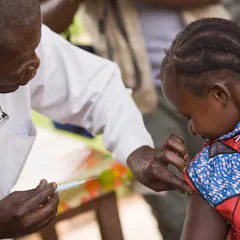
Effective health care interventions are very important for sub-Saharan Africa because the region has a high burden of vaccine-preventable diseases.

HIV is a condition that must be managed, not just medically, but also socially, tackling stigma, social anxieties and the risks of disclosure.

Babies born with the HIV virus in their blood are at a turning point in the infection. With immediate treatment these children can develop much stronger immune systems to fight the virus.
CC BY-NC-ND4.35 MB (download)
Many countries are struggling to reach the 90:90:90 goals because people have difficulty accessing treatment.
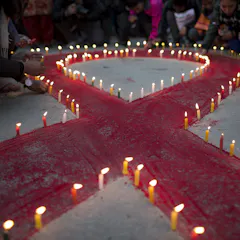
Communities continue to be vital in efforts to bring the pandemic under control. They are the custodians of rich knowledge that creates the context in which HIV transmission occurs.
New research supports kidney transplants from HIV-positive donors to recipients with HIV.
Top contributors
-

Associate Professor, Public Health Ethics, School of Population Health, UNSW
-
Professor of medicine and deputy director of the Desmond Tutu HIV Centre at the Institute of Infectious Disease and Molecular Medicine, University of Cape Town
-
Distinguished Professor, Infectious Disease and Oncology Research Institute, Faculty of Heath Sciences, University of the Witwatersrand, Executive Director Perinatal HIV Research Unit, Chief Scientific Officer, South African Medical Research Council
-
Melbourne Laureate Professor, University of Melbourne; Director, The Peter Doherty Institute for Infection and Immunity
-
Principal Research Fellow, Australian Research Centre in Sex, Health and Society, La Trobe University
-
Doctoral Researcher, School of Public Health and Public Health Technical Advisor, Anova Health Institute, University of the Witwatersrand
-
Assistant Professor of Public Health, University of Iowa
-
Honorary Research Associate, Centre for Infectious Disease Epidemiology and Research, University of Cape Town
-
Ezintsha, Faculty of Health Sciences, University of the Witwatersrand, University of the Witwatersrand
-
Associate Professor, Monash University
-
Research Director at The Health Economics and HIV and AIDS Research Division (HEARD), University of KwaZulu-Natal
-
Dean Faculty of Health Sciences and Professor of Vaccinology at University of the Witwatersrand; and Director of the SAMRC Vaccines and Infectious Diseases Analytics Research Unit, University of the Witwatersrand
-
Research Scientist, African Population and Health Research Center
-
Professor of Gender Studies, Chair in Sex Media and Sex Cultures, Linköping University
-
Scientia Professor of Medicine and Director, Kirby Institute, UNSW