

Evidence suggests that people who receive syringes from a needle exchange are less likely to dispose of them improperly.
Articles on Harm reduction
Displaying 1 - 20 of 62 articles

Arguing that confining and treating people against their will is ‘compassionate’ greatly expands the role of policing in medical matters, often with few limits.

Once taboo, injecting is becoming normalised in the beauty industry and on social media. But what do peptide serums actually contain? And do the anti-ageing claims stack up?

If approved, mirtazapine would be the first prescription medicine for people with methamphetamine dependency.

Supervised consumption sites have real shortcomings. But the government’s case for closing them relies on a narrow definition of success and abandons the people the sites were designed to reach.

You don’t have to rely on willpower alone.
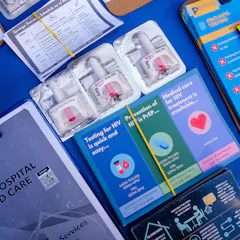
Local governments have a lot of freedom on how to spend the funds, but there’s also confusion and a feeling of moral responsibility to spend wisely after so many lives have been lost.
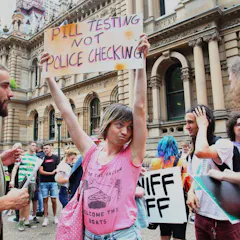
Adulterated drugs and a shortage of pill testing services is making it hard for people who use drugs to stay safe. But they’re taking matters into their own hands.

The teen social media ban is just months away, but are blanket bans or severe restrictions good policy? Well, it depends.

The Health To Go machines in Pennsylvania are in a YMCA in Reading and outside an emergency department in Harrisburg.
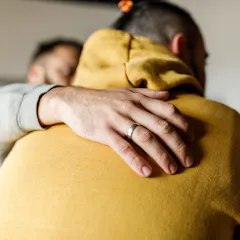
The benefits of providing safe smoking kits include fewer people injecting and stronger connections with harm-reduction services and community groups.

Doses of GHB have a very small margin of error. Just half a millilitre too much can lead to an overdose.

Australia leads the world in community-based needle programs. Yet they’re not used in prisons – which are hotspots for hepatitis C infection.

I’ve spoken to dozens of men who were convicted sex offenders and/or who had killed women. They tried to justify their crimes and often blamed the women.

Telling people to ‘just say no’ to drugs has never worked. Better education and awareness of the harms is key.
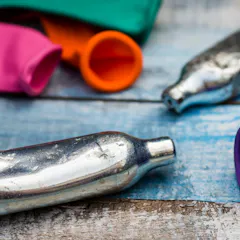
We spoke to young people who didn’t know about the risks, even when they reported side effects including brain fog and seizures.

Alberta’s controversial approach to the opioid crisis rejects harm reduction, including supervised consumption sites. Despite recent UCP claims that the program is working, more evidence is needed.
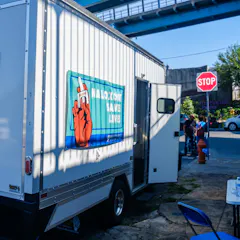
After their initial visit, 69% of patients returned to the van at least four times for follow-ups.

The traction drug checking is gaining in Australia reflects local and international evidence showing these services reduce harm for people who use illicit drugs.

Decriminalizing drugs is not intended as a solution to drug problems. Rather, it is a critical first step that’s necessary, but not sufficient, for replacing prohibition with a public health approach.
Top contributors
-

Adjunct Professor at the National Drug Research Institute (Melbourne based), Curtin University
-
Lecturer, RMIT University
-
Research Fellow in Public Health, The University of Queensland
-
Senior Research Fellow in Public Health, The University of Queensland
-
PhD Candidate, School of Nursing, University of British Columbia
-
Senior Research Fellow, National Drug and Alcohol Research Centre, UNSW
-
Professor, Department of Sociology and Anthropology, University of Guelph
-
Professor in Substance Use, Liverpool John Moores University
-
Professor of Substance Use and Inclusion Health, University of Stirling
-
Research Scientist, BC Centre on Substance Use and Assistant Professor in the Division of AIDS, Department of Medicine, University of British Columbia
-
Honorary Fellow, Department of Health Sciences, University of York
-
Master of Arts student, Social Dimensions of Health Program, University of Victoria
-
Professor and Deputy Director, Monash Addiction Research Centre, Monash University
-
Postdoctoral Fellow in Sociology, University of Oslo
-
Assistant Professor, Dept of Medicine, University of British Columbia and Research Scientist with the BC Centre on Substance Use, University of British Columbia