

Supervised consumption sites have real shortcomings. But the government’s case for closing them relies on a narrow definition of success and abandons the people the sites were designed to reach.
Articles on drug poisoning
Displaying all articles

Alberta’s controversial approach to the opioid crisis rejects harm reduction, including supervised consumption sites. Despite recent UCP claims that the program is working, more evidence is needed.
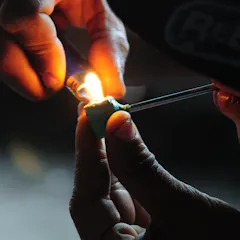
In order for safe consumption sites to respond effectively to the needs of people who use drugs, they must include the option of indoor supervised inhalation.

Regulating drugs may seem radical, but taking the production and sale of currently illegal drugs away from organized crime and drug cartels is the most promising way to keep our communities safe.

The toxic drug crisis is not only about fatalities. A much larger number of people survive overdoses, and are left with brain injuries. A national strategy to support and treat them is crucial.

Researchers found a sharp rise in calls to US poison centers about magic mushrooms coincided with their decriminalization in several US cities and states.

Decriminalizing drugs is not intended as a solution to drug problems. Rather, it is a critical first step that’s necessary, but not sufficient, for replacing prohibition with a public health approach.

A police policy of not making arrests for simple possession is a way to essentially decriminalize personal drug use. However, confiscating drugs — even without arrests — can be harmful in many ways.

Most consumables in Canada have quality controls that inform purchasing and consumption decisions. People who use illicit drugs deserve the same. Drug checking provides that harm-reduction service.

Harm reduction is grounded in evidence. But policies, stigma and ignorance about substance use still create barriers in battling Canada’s drug poisoning crisis.

More than 50 overdoses happen in bathrooms every month in British Columbia. Public bathrooms can be made safer for everyone, including people who use substances.
Top contributors
-

Professor, Chemistry, University of Victoria
-
Professor of Emergency Medicine and Pediatrics, University of Virginia
-
PhD Student, Social Work, McMaster University
-
Researcher of Epidemiology, University of Virginia
-
Doctor of Public Health (DrPH) student, University of Toronto
-
Professor, School of Social Work, University of Victoria
-
Master of Arts student, Social Dimensions of Health Program, University of Victoria
-
Professor of Psychology, University of Victoria
-
PhD Candidate, School of Nursing, University of British Columbia
-
Research Scientist at the British Columbia Centre on Substance Use & St. Paul's Hospital Chair in Substance Use Research and Associate Professor, Faculty of Health Sciences, Simon Fraser University
-
Professor, Dalla Lana School of Public Health, University of Toronto
-
CIHR Scholar, PhD Candidate, Department of Psychology, University of Victoria
-
Clinical Professor, Faculty of Medicine, School of Population and Public Health, University of British Columbia
-
Professor, School of Nursing, Faculty of Human and Social Development, University of Victoria
-
Professor, School of Public Policy; Dorothy Killam Fellow; CIHR Applied Public Health Chair, Simon Fraser University