
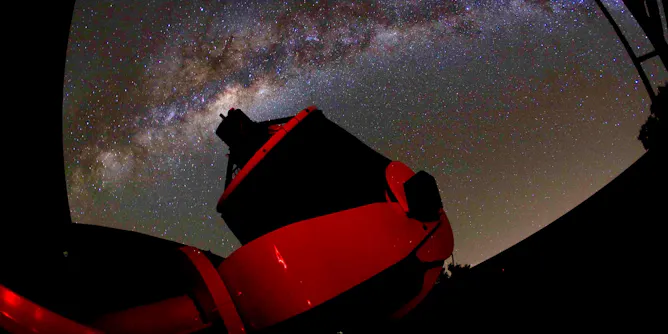
Efforts to see the afterglow from a neutron star merger were nearly thwarted by bad weather and a cyber attack on an Australian telescope.
Articles on Gravitational waves
Displaying 41 - 60 of 96 articles
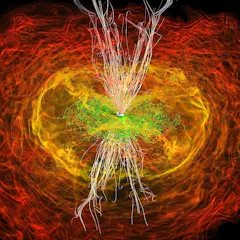
The gravitational wave itself is the least exciting part of the announcement from LIGO and Virgo. Observing this new source answers many longstanding questions.
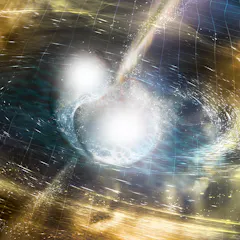
The discovery of tiny ripples in space from the violent collision of dense stars could help solve many mysteries – including where the gold in our jewellery comes from.
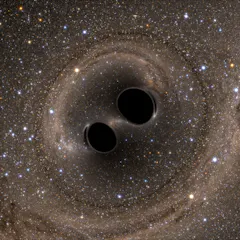
The 2017 Nobel Prize for Physics was awarded to scientists who helped pioneer the discovery of gravitational waves. Australia is playing an important role in gravitational-wave astronomy.
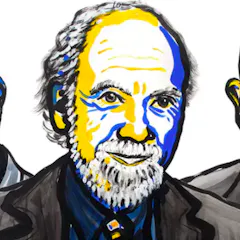
Razor-sharp, unconventional and fun on the dance floor. A colleague paints a colourful portrait of one of this year’s Nobel Laureates in physics.
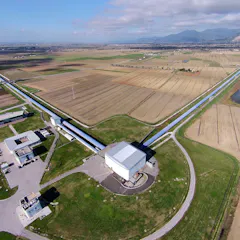
New results from Italy and the US help us better estimate the position of the merging black holes that produced the gravitational waves.
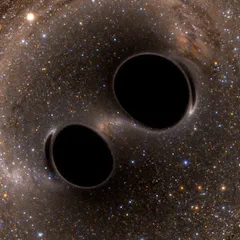
New research shows that as few as ten further detections of gravitational waves will help scientists know for sure how pairs of black holes form.
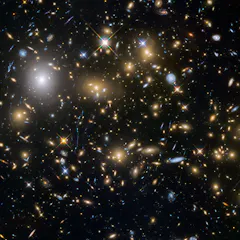
Atoms blown up in the right way could signal when a gravitational wave is passing through.
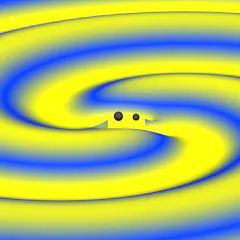
Scientists have made a third detection of gravitational waves, again caused by the merger of two black holes. But they think there’s something different about the black holes in this case.
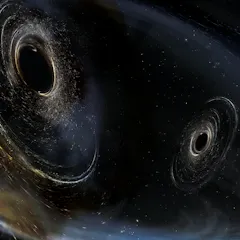
These ripples in the very fabric of the universe were hypothesized by Einstein a century ago. Now scientists have detected them for the third time in a year and a half – ushering in a new era in astrophysics.
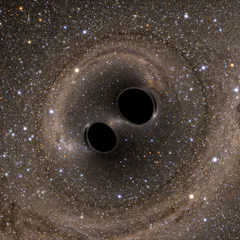
Einstein called entanglement “spooky action at a distance”. But now it’s been used to design an incredibly sensitive detection method for gravitational waves.
Disappointed about Doctor Who’s TARDIS ending up at the wrong place at the wrong time? Don’t be – it’s incredibly precise.
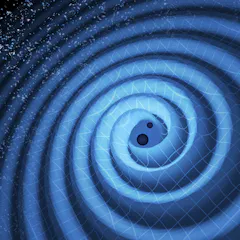
Colliding black holes to exploding spacecraft, 2016 was an incredible year for astrophysics.

From the discovery of gravitational waves, to the Pokémon Go phenomenon to the Census debacle, it’s been a big year in science and technology.
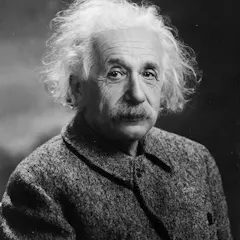
Einstein’s theories of relativity underpin our understanding of the universe, yet they’re not taught in high school. How can we change that?

Sonification is a technique for converting data into sound. It could transform the study of distant worlds.
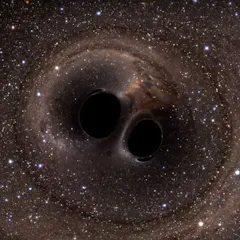
The OzGRav Centre of Excellence for Gravitational Wave Discovery will enable Australian researchers to be at the forefront of gravitational wave astronomy.
The observation of gravitational waves from a second black hole merger implies there are many more black holes in the universe than scientists had previously anticipated.
State of the art detectors have found another signal from a pair of collapsing black holes – the consequences could be momentous.
We find them at the beach, in every sound and light show, the miracle of wi-fi and now in the fabric of space-time itself. But what exactly is a wave?
Top contributors
-

Emeritus Professor, ARC Centre of Excellence for Gravitational Wave Discovery, OzGrav, The University of Western Australia
-
Senior Lecturer and ARC Future Fellow, Monash University
-
Pro Vice-Chancellor Flagship Initiatives, Swinburne University of Technology
-
Professor of Physics, Penn State
-
Professor, Monash University
-
Professor, Radio Astronomy, University of Sydney
-
Reader in Physics, University of Sheffield
-
Professor of Gravitational Astrophysics and Cosmology, University of Glasgow
-
Cosmologist, University of Tasmania
-
South African Research Chair in Physical Cosmology, Department of Mathematics and Applied Mathematics, University of Cape Town
-
OzGrav Associate Investigator; Research Fellow in Astrophysics, The University of Western Australia
-
Professor of Physics, University of Wisconsin-Milwaukee
-
Research fellow, The University of Western Australia
-
Professor of Physics and Mathematics, Queen's University Belfast
-
Professor of Mathematical Physics, University of Cape Town