
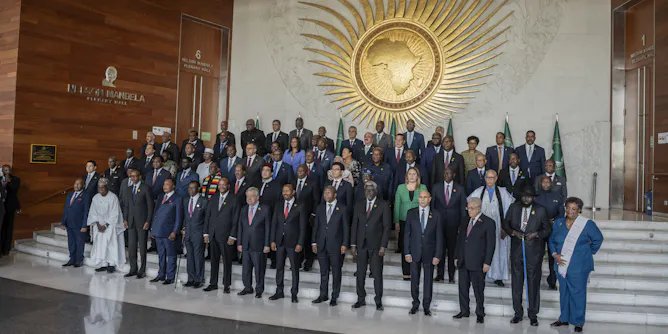
A general decline in trust in public institutions across Africa reflects the disconnect between state officials and the people.
Articles on Governance in Africa
Displaying 1 - 20 of 128 articles

The methods used to manipulate perceptions and hold on to power in Africa are getting increasingly sophisticated.
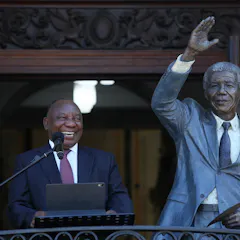
The extent to which presidents adhere to the constitutional written code will have profound implications in relation to their use of executive power.

Concerns about socioeconomic well-being were the main reason why people voted for a certain political party.

The recent spate of military takeovers, most recently in Chad, highlights a developing trend by armed forces in Africa which overtly subvert constitutional governance.

On average, countries that adopt ethnic recognition experience less violence, more economic vitality, and more democratic politics.
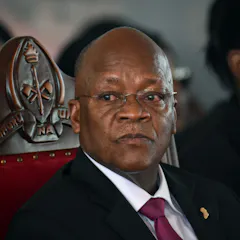
He came into office with a reputation for making broken systems work, but as he began his second presidential term John Magufuli became known as a ruthless and ambitious authoritarian.
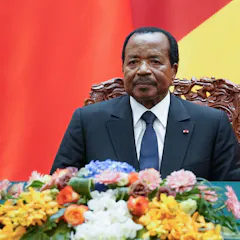
Biya’s long rule has robbed Cameroon of its credibility as a stable and peaceful country.

Sudan’s new government came to power after a people-driven process to oust former President Omar al-Bashir. It must be careful to place ordinary Sudanese at the centre of the reforms process.

Haji was an astute leader who rode the wave of leadership over a long and illustrious career in government and politics.
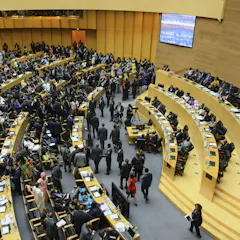
Having four female Commissioners out of six is a good start, but that alone is will not erase the vulnerabilities that women face in leadership and everyday life.

In a country where judicial review is not constitutionally guaranteed, hate speech legislation could shackle freedom of expression and limit citizens’ rights to express themselves.

In surpassing opposition stalwart Kizza Besigye, Robert Kyagulanyi has done what many Ugandans thought impossible. But can he topple Museveni?

The tensions that had been simmering between the Tigray People’s Liberation Front and the Abiy administration eventually boiled over.
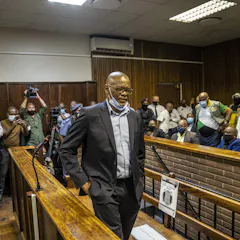
For every office holder who may lose a seat because they are prosecuted, another job opens up.

After endless, futile negotiations with the Kabila camp, Tshisekedi appears to have finally recognised the limits of the coalition government and has lost patience.

Many things have to change for Nigeria’s federal system to work and accommodate its diverse citizens’ interests
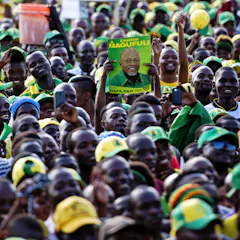
Magufuli took a populist approach in trying to woo voters away from an invigorated opposition, and when that didn’t work he reported to oppressive tactics.
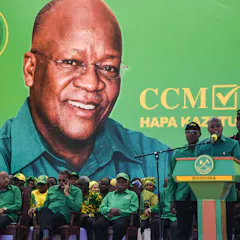
As key opposition members lose seats in their strongholds, it is clear that Tanzania’s ruling party is set to establish a super-majority that will institute a deeper authoritarian agenda.

The country has built a fairly good reputation for well-functioning, democratic governance.
Top contributors
-

Senior Lecturer of Political Science, Georgia Gwinnett College
-
Professor of Political Studies, University of Johannesburg
-
Professor of Public Affairs, Tshwane University of Technology
-
Professor of Media Industries, University of Nottingham
-
PhD Candidate in Political Economy, SMC University
-
Associate Professor of International Studies, University of Nottingham
-
Associate Professor, International Development Studies; Associate Dean, Menno Simons College, University of Winnipeg
-
Professor of Democracy, University of Birmingham
-
PhD Candidate in Politics and International Studies, Adelaide University
-
Research Director, Development Capable and Ethical State, Human Sciences Research Council
-
Executive director, Africa Institute of South Africa, Human Sciences Research Council
-
Emeritus Associate Professor in Public Law, UCT. Visiting Adjunct Professor, WITS School of Governance; Director, Africa Programme, University of Cambridge Institute for Sustainability Leadership, University of Cambridge
-
Professor of Law, University of the Witwatersrand
-
Professor of Social Development Studies, University of Johannesburg
-
Lecturer in African History, Queen Mary University of London