
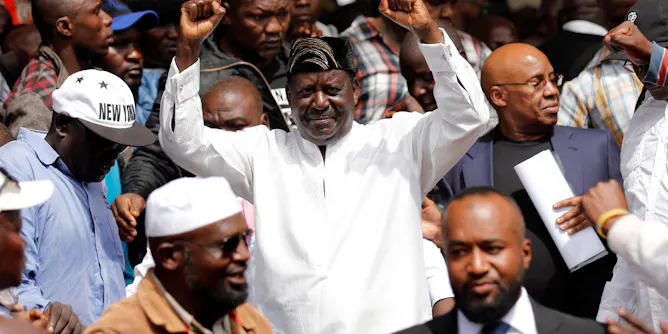
Raila Odinga’s swearing-in has rattled Kenya’s government thanks in part to the large crowds that turned up.
Articles on Governance in Africa
Displaying 81 - 100 of 128 articles
Mass demonstrations in Tunisia indicate anger over the government’s decision to raise taxes, but its more complex.
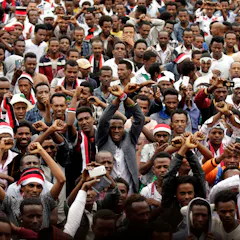
For the first time in years Ethiopia’s ruling coalition faces real political competition from two parties within its own ranks. Can they usher in democracy after nearly 30 years of authoritarianism?
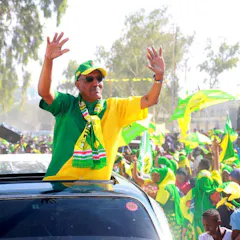
The self-declared territory of Somaliland has held peaceful elections since it broke away from Somalia in 1991. But last month’s polls triggered protests that should be cause for reflection.
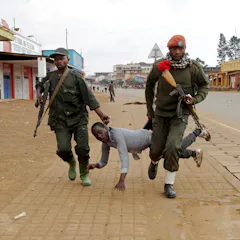
President Joseph Kabila was supposed to step down at the end of his term in 2016. By clinging on to power he threw the Democratic Republic of Congo into a vicious cycle of deadly conflict.

Some African countries present a facade of democracy. The absence of substantive democracy is contributing to instability on the continent.
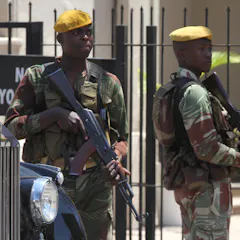
By intervening in Zimbabwe’s politics the military could plunge the country into a prolonged period of uncertainty. Could President Emmerson Mnangagwa be its saviour?
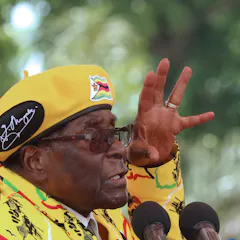
Are we witnessing the end of an era in which dictators stayed in power for decades? If so this must be good not only for Angola and Zimbabwe but for southern Africa as a whole.

The coup in Zimbabwe means Mugabe’s long and disastrous presidency is finally over. The questions that remain are the precise details and mechanics of the deal which secures his departure.
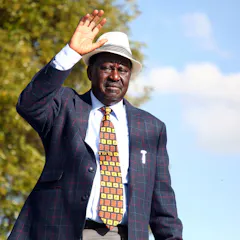
Raila Odinga has been at the forefront of the struggle for democracy and upholding the rule of law in Kenya. His latest battles are bound to cement his legacy as a progressive force for good.
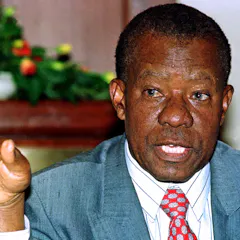
Botswana’s late president Ketumile Masire was original and daring. He should be remembered for his courage and prudence.

Elections in Kenya are never just a matter of casting ballots. Historically, they have been marred by ethno-political violence, exacerbated by vigilantes and militias deployed by politicians.
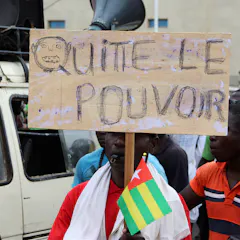
The seeds of discord that were planted in independent Togo have resulted in ethnic divisions, and a state that has long been ruled by family. But recent protests could mean things are about to change.
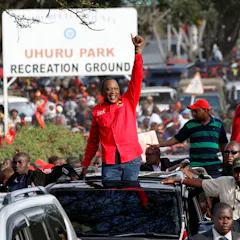
While Kenya’s political leaders often adopt a populist approach to politics, it’s not unimaginable that the courts could also pursue a populist path by claiming to speak for the people.
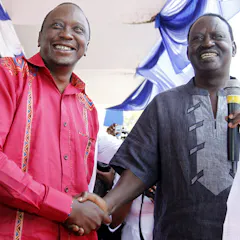
Democracy doesn’t seem to work within societies governed by politics of ethnicity. Instead, elections continue to offer up the hard choice between electoral credibility and political stability.
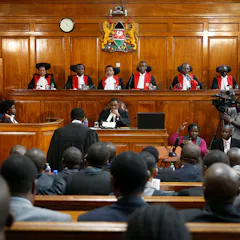
Kenya’s electoral commission faced many legal challenges before the general election, and yet another after the poll. But how will the Supreme Court’s historic ruling impact the country’s democracy?
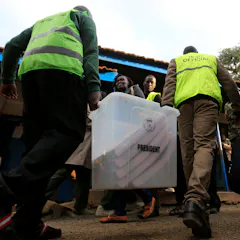
One way to diffuse the tension when Kenyans choose a head of state is to take that decision out of their hands. This could help achieve ethnic cohesion.

Fake news has intruded on every aspect of life. Audiences need to counter its appeal, as the media alone is incapable of debunking false information.

Some might see Kenya’s presidential election petition as ‘nuisance legislation’. But legal arbitration must be encouraged as an audit to the democratic process.
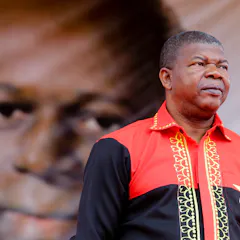
Angola’s president-elect, João Lourenço, has a reputation for relative probity. But, he’s unlikely to rock the boat as Eduardo dos Santos remains party chairman.
Top contributors
-

Senior Lecturer of Political Science, Georgia Gwinnett College
-
Professor of Political Studies, University of Johannesburg
-
Professor of Public Affairs, Tshwane University of Technology
-
Professor of Media Industries, University of Nottingham
-
PhD Candidate in Political Economy, SMC University
-
Associate Professor of International Studies, University of Nottingham
-
Associate Professor, International Development Studies; Associate Dean, Menno Simons College, University of Winnipeg
-
Professor of Democracy, University of Birmingham
-
PhD Candidate in Politics and International Studies, Adelaide University
-
Research Director, Development Capable and Ethical State, Human Sciences Research Council
-
Executive director, Africa Institute of South Africa, Human Sciences Research Council
-
Emeritus Associate Professor in Public Law, UCT. Visiting Adjunct Professor, WITS School of Governance; Director, Africa Programme, University of Cambridge Institute for Sustainability Leadership, University of Cambridge
-
Professor of Law, University of the Witwatersrand
-
Professor of Social Development Studies, University of Johannesburg
-
Lecturer in African History, Queen Mary University of London