
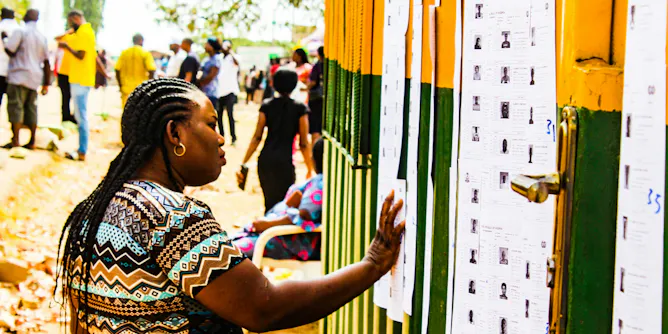
For many Malawians living in acute poverty, elections provided an opportunity to secure much-needed relief.
Articles on Elections in Africa
Displaying 1 - 20 of 174 articles
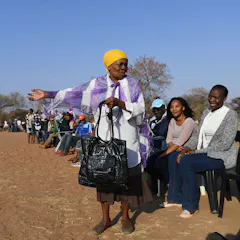
In Botswana women represent 54% of eligible voters, but about 10% of candidates. Political parties could change that.
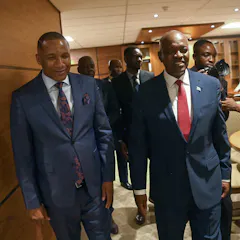
Things had been going largely well for Botswana since 1966. But the wheels started coming off when Ian Khama became president in 2008.
Swapo seems to attract the biggest crowds at rallies, but does it signal electoral support?
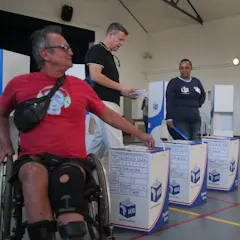
Racial identities continue to shape voter behaviour in post-apartheid South Africa.
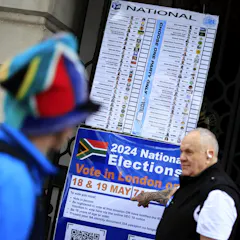
The growing loss of support for the governing ANC raises the possibility of South Africa having its first national coalition government since 1994.
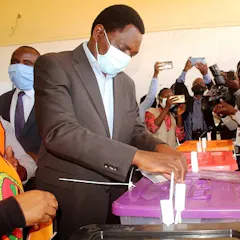
Stakeholders, whether they be policymakers, political parties, civil society or the media, must proactively pursue electoral integrity.

The Independent Electoral Commission cannot afford to put a foot wrong in the country’s most important election since democracy in 1994, on 29 May.
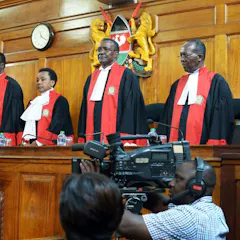
Two conditions enable courts to take the risk of nullifying the elections of ruling party candidates.
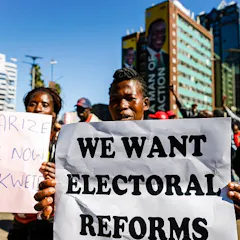
Zimbabwe’s 2023 elections look like their predecessors: stolen. But this one is a bit different. Opposition strategies and regional responses have changed too. What does this mean for the future?

Nelson Chamisa defines himself as a social democrat who believes in providing substantial welfare to support healthcare and basic education.
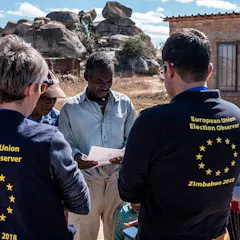
Observers regularly face dangers owing to political instability, insecurity, violence and other crises in some countries.
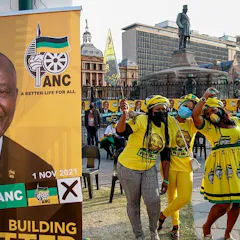
Dissatisfied ANC voters were much more likely to switch their votes if they held positive views of an opposition party. However, the problem for the opposition is that few people held these views.

Whichever way the ongoing armed conflict ends, the loser will be Somaliland president Muse Bihi Abdi.

Electoral violence, low voter turnout, ethnic politics and voters’ suppression were notable features of the 2023 general elections in Nigeria.
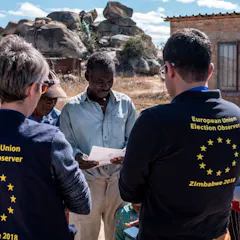
Voters speak favourably about the potential of observation to improve overall electoral quality and transparency.
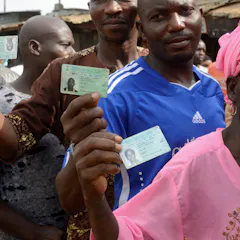
Logistical challenges facing the 2023 elections remain huge given the number of political parties, the security environment and the number of contestants at various levels.
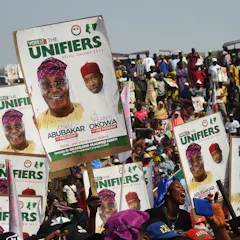
Damage to the fragile Nigerian state is one possible fallout of mixing religion with politics.
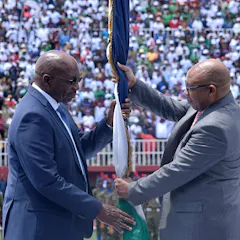
The new coalition government must act quickly to address the kingdom’s massive socio-economic problems, and restore faith in democracy.

Unable to change the country’s vulnerability to shifts in the global and regional economy, the new prime minister Matekane has few economic levers to pull.
Top contributors
-

Professor of Democracy, University of Birmingham
-
Lecturer in African History, Queen Mary University of London
-
Professor of Sociology, University of the Witwatersrand
-
Professor in Political Science, University of South Africa
-
Extraordinary Professor, Department of Political Sciences, University of Pretoria
-
Director of the Leaders of Africa Institute and Research Affiliate with Davidson College, Davidson College
-
Chief Research Specialist in Democracy and Citizenship at the Human Science Research Council and a Research Fellow Centre for African Studies, University of the Free State
-
Research Associate, Dept of Anthropology & Development Studies and Fellow, Clare Hall, University of Cambridge, University of Johannesburg
-
Professor of Political Studies, University of Johannesburg
-
Director & SARChI Research Chair: Political Economy of Migration in the SADC Region, University of Pretoria
-
Head of Department, Public and Environmental Law Department, University of Limpopo
-
Professor, Department of Political Sciences, University of South Africa
-
Professor of Public Affairs, Tshwane University of Technology
-
Associate Professor, International Development Studies; Associate Dean, Menno Simons College, University of Winnipeg
-
Professor of Urban Governance, University of the Witwatersrand