

How the re-elected government uses its new dominance will influence Zambian politics well beyond this election.
Articles on Democracy in Africa
Displaying 1 - 20 of 258 articles

Rallies hold great significance in Tanzania and are central to everyday political communication.
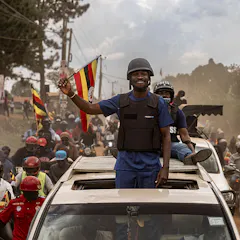
Bobi Wine’s escape from Uganda to the US reveals controlled tensions within both the Museveni regime and opposition.

Constitutional manipulations have been a major trigger for military interventions in sub-Saharan Africa.
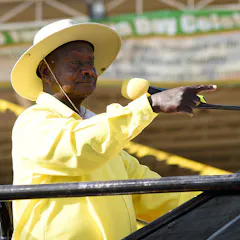
President Yoweri Museveni’s effort to stop evictions didn’t address underlying problems, but it enhanced his political legitimacy.

A general decline in trust in public institutions across Africa reflects the disconnect between state officials and the people.

Like many African leaders of his era, he was shaped by the struggle for resistance against colonial oppression. This was no romantic picnic.
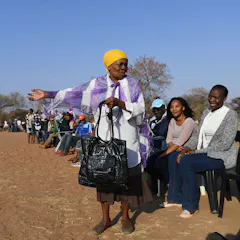
In Botswana women represent 54% of eligible voters, but about 10% of candidates. Political parties could change that.
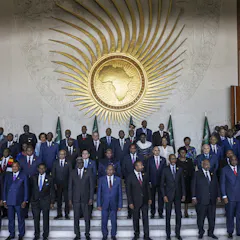
Some African nations are strengthening their democracy, while most are stuck in a dangerously authoritarian spiral.
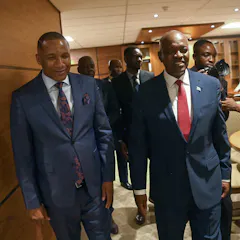
Things had been going largely well for Botswana since 1966. But the wheels started coming off when Ian Khama became president in 2008.
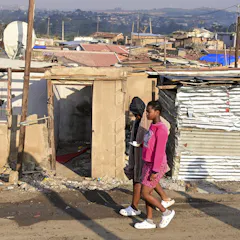
Unless the economic benefits resulting from having the government of national unity become socially inclusive, it might well collapse.

Lesotho, a constitutional monarchy, has been under domestic, regional and international pressure to change its constitution since 2012.
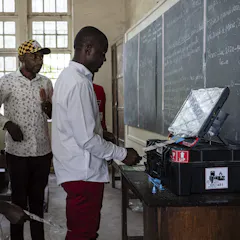
Digital technologies can help more people to participate in building their countries’ democracies.

The Independent Electoral Commission cannot afford to put a foot wrong in the country’s most important election since democracy in 1994, on 29 May.

Africa’s youth are not countering the deepening of autocratisation across the continent.
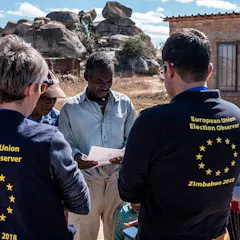
Observers regularly face dangers owing to political instability, insecurity, violence and other crises in some countries.

Whichever way the ongoing armed conflict ends, the loser will be Somaliland president Muse Bihi Abdi.

Electoral violence, low voter turnout, ethnic politics and voters’ suppression were notable features of the 2023 general elections in Nigeria.
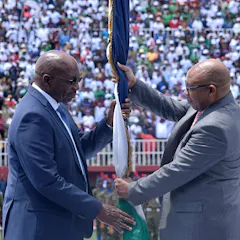
The new coalition government must act quickly to address the kingdom’s massive socio-economic problems, and restore faith in democracy.

The new governing coalition enters office amid euphoria and excitement. There are great expectations it will end corruption and fix the ailing economy.
Top contributors
-

Professor of Democracy, University of Birmingham
-
Extraordinary Professor, Department of Political Sciences, University of Pretoria
-
Professor of Sociology, University of the Witwatersrand
-
Associate Professor of International Studies, University of Nottingham
-
Lecturer in African History, Queen Mary University of London
-
Professor of Political Studies, University of Johannesburg
-
Extraordinary Lecturer, University of Pretoria
-
Research Associate, Dept of Anthropology & Development Studies and Fellow, Clare Hall, University of Cambridge, University of Johannesburg
-
Professor in Political Science, University of South Africa
-
Professor, Department of Political Sciences, University of South Africa
-
Head of Department, Public and Environmental Law Department, University of Limpopo
-
Senior Lecturer of Political Science, Georgia Gwinnett College
-
Emeritus Professor, University of Cape Town
-
Director of the Leaders of Africa Institute and Research Affiliate with Davidson College, Davidson College
-
Honorary Professor of International Relations, University of the Witwatersrand