
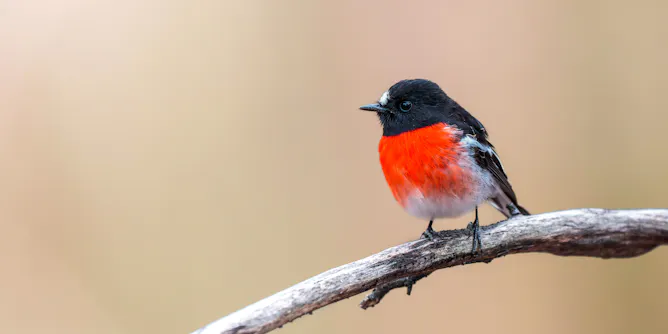
Research suggests all of the world’s songbirds can be traced back to Australia.
Articles on Gondwana
Displaying 1 - 20 of 35 articles
The discovery of Gondwana’s buried bits helps settle the question of whether it was a supercontinent.
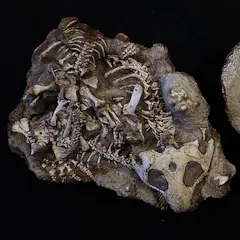
A new fossil discovery suggests that reptiles lived together 20 million years earlier than previously thought.
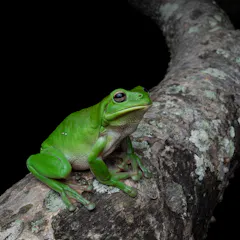
The new species is the earliest known Australian tree frog.
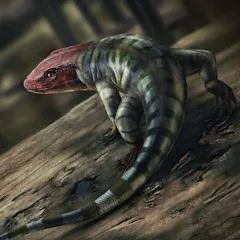
Where did the ancestors of all reptiles, birds and mammals emerge? A newly discovered fossil slab from Australia throws the entire timeline into question.
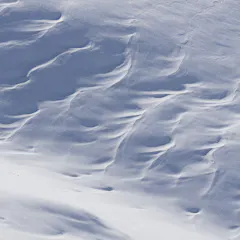
The mysterious ‘ghost mountains’ – buried beneath kilometres of Antarctic ice – have puzzled scientists for decades.
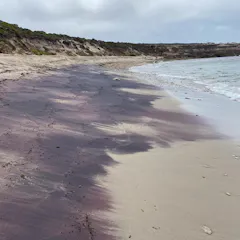
Geologist Sharmaine Verhaert explains her search for the origins of pink sand found on beaches near Adelaide on The Conversation Weekly.
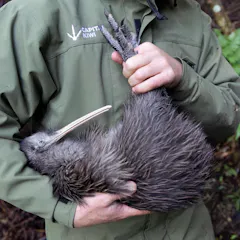
A recent announcement that kiwi and moa are Australian immigrants is not borne out by available evidence. Working out when birds arrived in New Zealand requires both fossil evidence and genetics.
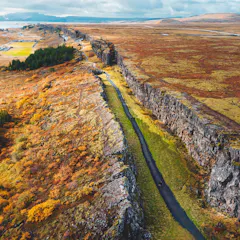
The first time Earth’s geologic record – information found inside rocks – has been used to create an animation of this kind.
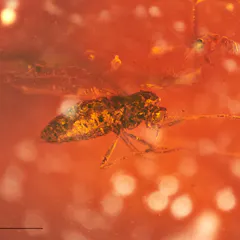
Amber catches creatures in incredible detail. These fossil insects in amber are a link between ancient Gondwana and modern Australian forests.
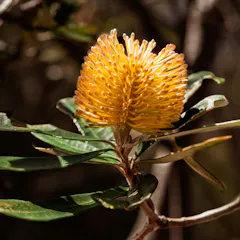
Today, these plants are iconic to the Australian bush. But banksias and their many relatives originated in far-away shores 130 million years ago.

Our birds are tough. They went through some mean climatic conditions to make Australia home.

There’s no single reason many Asian animals spread to Australia but few went the other way – but climate, geography and the slow drift of tectonic plates all played a role.

Africa’s mammals are a global treasure that must be protected.
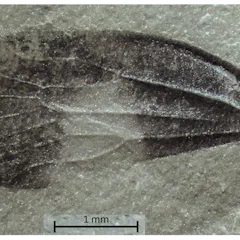
Tiny plant and insect fossils provide unique insight into an ancient ecosystem that would, later, be altered by climatic shifts.
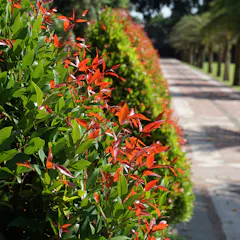
Lillipillies are one of Australia’s great gifts to the natural world. But the story of these homegrown heroes may be taking a grim turn.
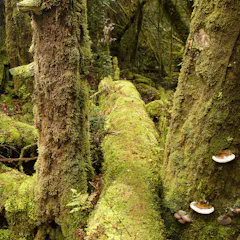
Some of these trees can be over 30 metres high. Others, can live for centuries or, for the Huon pine, up to an astonishing ten millennia.
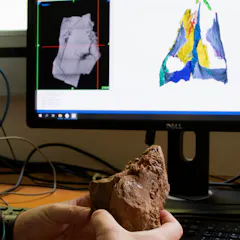
An analysis of the skull suggests the ankylosaur may have had a poorer sense of smell than its counterparts in the northern hemisphere.

Maidenhair trees, Ginkgo biloba, can live for over 1,000 years and grow 35m tall. While they’re beautiful to look at, they’re also notorious for their vomit-smelling seeds.
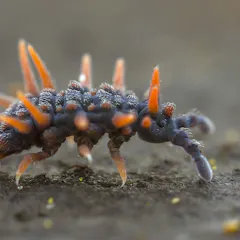
Australia’s invertebrates have an ancient lineage and a fascinating evolution. Get up close with macrophotography to discover tiny, unique animals you’ve probably never seen before.
Top contributors
-

Senior Research Associate, School of Agriculture, Food and Ecosystem Sciences, The University of Melbourne
-
Professor of Geology, Adelaide University
-
Palaeontologist, Earth Science Faculty, University of New England
-
Palaeontologist, Rhodes University
-
Senior Researcher, University of the Witwatersrand
-
Associate Professor of Geology, The University of Western Australia
-
Professor, University of the Witwatersrand
-
Associate Professor in Archaeology and Space Studies, Flinders University
-
Associate Professor of Geology & Environmental Studies, Green Mountain College
-
Associate professor in Vertebrate Palaeontology, University of the Witwatersrand
-
Lecturer in Palaeontology, Universidade Federal do Piauí (UFPI)
-
Professor of Plant Biology and Past Inaugural Head of School of Plant Biology, The University of Western Australia
-
Emeritus professor, The University of Western Australia
-
Distinguished Professor Emeritus in Plant Ecology, Curtin University
-
Reader, Evolutionary Studies Institute, University of the Witwatersrand