
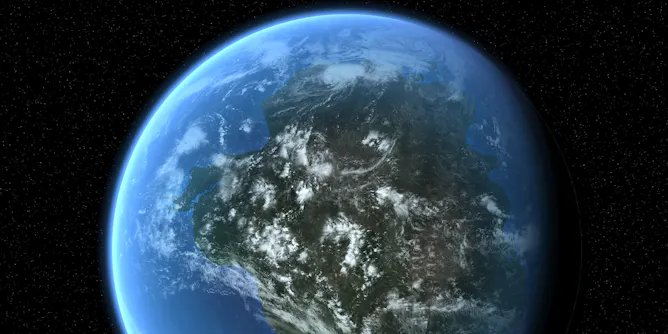
The discovery of Gondwana’s buried bits helps settle the question of whether it was a supercontinent.
Articles on Supercontinents
Displaying all articles
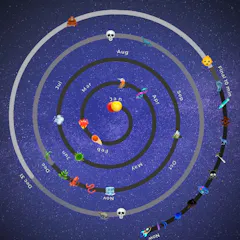
The dinosaurs went extinct on Christmas Day.
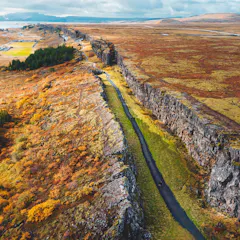
The first time Earth’s geologic record – information found inside rocks – has been used to create an animation of this kind.
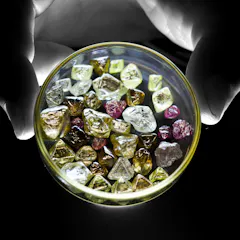
More than 90% of the world’s pink diamonds came from a single mine that closed in 2020. Geologists are only now beginning to understand the forces that create the rare, highly prized gems.

There’s no single reason many Asian animals spread to Australia but few went the other way – but climate, geography and the slow drift of tectonic plates all played a role.
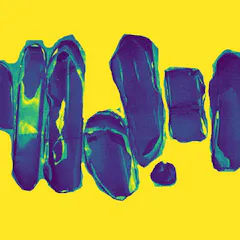
Evidence from the Pilbara region suggests Earth in its youth behaved very differently to how it does today, and had more water within it than previously thought.
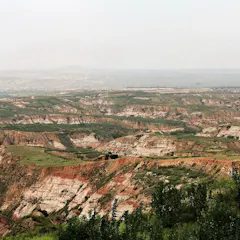
A big dip in the Earth’s crust may record an ancient continental collision from the dawn of plate tectonics.
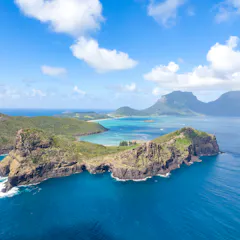
We undertook a 28-day voyage to explore a possible lost continent in a remote part of the Coral Sea, in an area off the coast of Queensland. Here’s what we found.
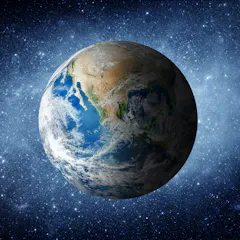
Scientists have predicted four supercontinent scenarios - but which is the most likely?
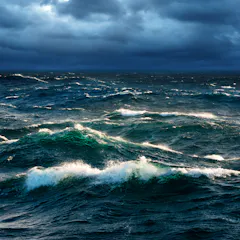
Tides are the largest they have been for 250m years.
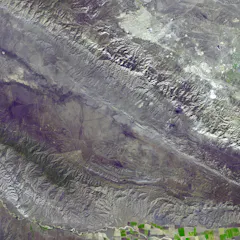
Fifty years on from a groundbreaking paper, geophysicists have progressed from believing continents never moved to thinking that every movement may leave a lasting memory on our planet.
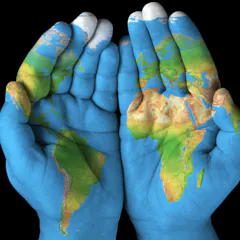
From the 1950s until recently, we thought we had a clear idea of how continents form. Most people will have heard of plate tectonics: moving pieces on the surface of the planet that collide, pull away…
Top contributors
-

Professor in Physical Oceanography, Bangor University
-
Chair in Geophysics, University of Aberdeen
-
PhD Researcher, Universidade de Lisboa
-
Assistant Professor, Environmental Geophysics, University of Toronto
-
Researcher and Coordinator of the Marine Geology and Geophysics Group, Universidade de Lisboa
-
Professor of Geochronology, Curtin University
-
Postdoctoral Researcher, Macroevolution and Macroecology Group, Australian National University
-
Associate professor, University of Tasmania
-
Senior Research Fellow in Geology, Curtin University
-
ARC Future Fellow at the Earth Dynamics Research Group, Curtin University
-
Adjunct Research Fellow, Curtin University
-
Associate Professor, School of Geosciences, University of Sydney
-
Professor, Geology, Curtin University
-
Associate Professor, University of Tasmania
-
Senior Research Fellow, Department of Earth and Environmental Sciences, Macquarie University