

Plus, the history of how Nairobi’s informal settlements got their names. Listen to The Conversation Weekly podcast.
Articles on Future of work
Displaying 41 - 60 of 107 articles
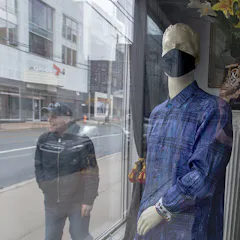
In post-pandemic Canada, the media will play a big role in shaping public understanding of labour conditions. A future of work that is safe and equitable requires the voices of workers.

What we want from our working environment in future needs to be explored now so that the needs of employees and employers are equally and fairly considered.
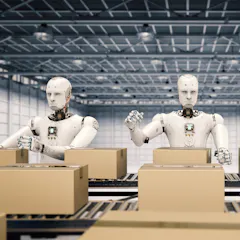
As the use of robots and autonomous machines increases across industries, governments need to have a strategy in place. The labour force will transition out of automated tasks into new jobs.

The COVID-19 crisis is transforming work and how it is done, not just in universities. If managers think that they unilaterally know how to manage remote work, disorder could become chaos.

Most people who worked at home during lockdown want to continue doing so in some respect according to one recent survey.
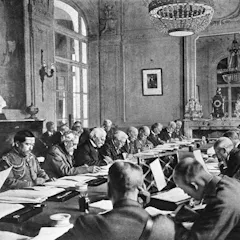
The International Labour Organization was founded in 1919 at the Treaty of Versailles after the ravages of pandemic and world war. Its model offers a way forward for us now.
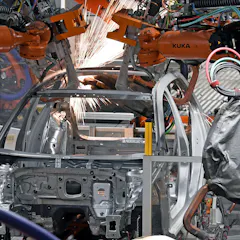
Amazon’s planned upcoming ‘Just Walk Out’ technology will let customers take items off a store’s shelf, bag them, and walk straight out.

We could use this crisis to rebuild, produce something better and more humane. But we may slide into something worse.

The coronavirus outbreak could prove to be the tipping point for remote work arrangements to become the norm.

It’s critical to determine how Canadians who have been considered vulnerable members of the workforce are meaningfully included within the future of work.

Attitudes about data entry are complex, despite a recent study suggesting it’s the most despised workplace task.
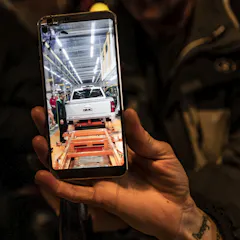
The federal government must take a stronger leadership role to ensure the many bodies that co-ordinate employment training programs are sharing information to develop best practices.
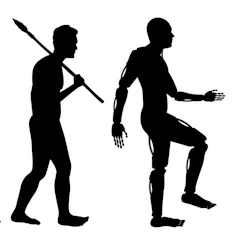
As machine automation and artificial intelligence surge, there’s paranoia our jobs will be overrun by robots. But even if this happens, work won’t disappear, because humans need it.
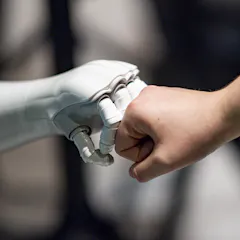
The humanities can supply wisdom to guide our galloping technological progress.

An upcoming study on workers in the gig economy suggests the future of work may be a lonely and uncertain one for many workers.
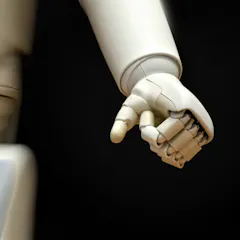
We are far from defenseless against the rise of robots, although they’ll take many of our routine jobs. Our special strength is our ability to apply rules that don’t exist.

Our inability to foresee the jobs of the future should be tempered by the realization that that jobs have always appeared in the past, regardless of technological advances.
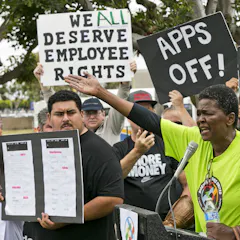
If your job doesn’t currently involve automation or artificial intelligence in some way, it likely will soon. Computer-based worker surveillance and performance analysis will come, too.

Why you shouldn’t be afraid: it won’t steal our jobs or destroy the environment.
Top contributors
-

Professor of Management, Co-Director of the MIT Sloan Institute for Work and Employment Research, MIT Sloan School of Management
-
Director of Sydney Executive Plus, Business School, University of Sydney
-
Professor of Community Information, University of Michigan
-
Research Associate, School of Social Sciences, Monash University
-
Associate Professor of Management, York University, Canada
-
Professor of Information Technology and Organisation, University of Sydney
-
Professor of Work and Employment, University of Southampton
-
DANCAP Private Equity Chair in Human Organization, Western University
-
Associate Professor of Organisational Behaviour, Bond Business School, Bond University
-
Workplace Futures Research Lead, Centre for the New Workforce, Swinburne University of Technology
-
Senior lecturer, University of the Witwatersrand
-
Professor of Economics and Political Economy, University of Leeds
-
Professor of the Future of Work, Newcastle University
-
Professor of Employment Relations and Director of the Work, Organisation and Employment Relations Research Centre (WOERRC), University of Sheffield
-
Architect and academic, London Metropolitan University