

A number of banks are doomed to fail if they don’t adapt to the new realities of the finance industry.
Articles on Future of work
Displaying 61 - 80 of 107 articles

Humans still have an edge over non-Hollywood AI in several key areas that are essential to journalism, including complex communication, expert thinking, adaptability and creativity.
A shift to outcomes-based education will enable students to gain critical automation-resistant competencies to succeed and thrive in the future workforce alongside AI.
How Indonesia can improve its policy on the future on work
As artificial intelligence increasingly intersects with our work and personal lives, we will need to adapt to survive in this new reality.

People – individually and in groups – were not as good at facial recognition as an algorithm. But five people plus the algorithm, working together, were even better.
While some alarmists predict AI will decimate the workforce, the truth is concerted action by leaders in labor, business, government and education can ensure workers aren’t replaced by robots.

An obsession with GDP growth fails to account for some of society’s most pressing problems.
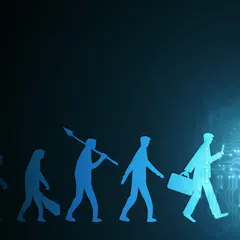
As robotics, IoT, and other automation technologies grow in sophistication and commercial feasibility, jobs at nearly every skill level will be impacted.

Tech companies that have been wary to hire anyone over 30 are missing out on skilled workers.
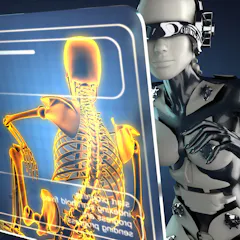
Google DeepMind software can diagnose eye conditions as well as human doctors – and the medical profession should welcome this.
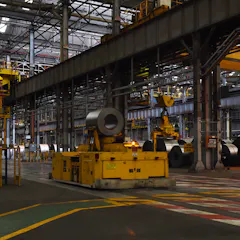
Most Australian workers are fairly relaxed about their own job security, but they do worry about the risks of poor management and outsourcing to cheaper labour.
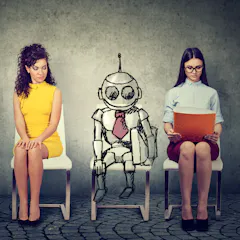
Young people are the most vulnerable as industry and the labour market undergo radical change, but meeting this challenge could just be a matter of plugging existing gaps.

Automation could transform our working world. Here’s what we can do to ensure it is a more gender equal one.
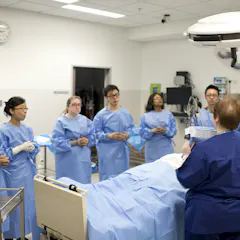
Technology is currently not at the forefront of how work-integrated learning is designed and this is something educators need to address.
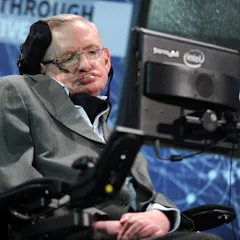
Despite his fears artificial intelligence might one day overtake humanity, Stephen Hawking knew from his own life how profoundly AI could improve humans’ daily lives.

Robots are coming for humans’ jobs, but people should protect from automation the experiences that bring joy and happiness.
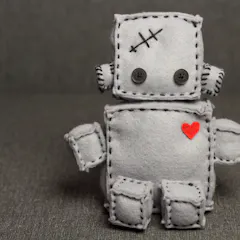
Why we’re developing a soft robot inspired by an elephant’s trunk.
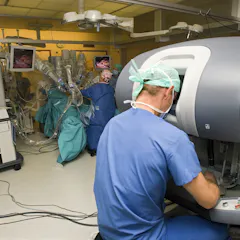
There are more robots than ever in the operating room – but that’s led to fewer opportunities for surgical trainees. Now, some new doctors are teaching themselves in secret.
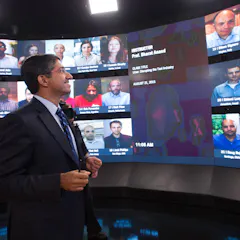
Artificial intelligence and automation are bringing changes to higher education that will challenge, and may even threaten, traditional universities.
Top contributors
-

Professor of Management, Co-Director of the MIT Sloan Institute for Work and Employment Research, MIT Sloan School of Management
-
Director of Sydney Executive Plus, Business School, University of Sydney
-
Professor of Community Information, University of Michigan
-
Research Associate, School of Social Sciences, Monash University
-
Associate Professor of Management, York University, Canada
-
Professor of Information Technology and Organisation, University of Sydney
-
Professor of Work and Employment, University of Southampton
-
DANCAP Private Equity Chair in Human Organization, Western University
-
Associate Professor of Organisational Behaviour, Bond Business School, Bond University
-
Workplace Futures Research Lead, Centre for the New Workforce, Swinburne University of Technology
-
Senior lecturer, University of the Witwatersrand
-
Professor of Economics and Political Economy, University of Leeds
-
Professor of the Future of Work, Newcastle University
-
Professor of Employment Relations and Director of the Work, Organisation and Employment Relations Research Centre (WOERRC), University of Sheffield
-
Architect and academic, London Metropolitan University