
Journalists, policymakers and academics are among those whose worlds could be turned upside down by AI chatbots.
Articles on Future of work
Displaying 21 - 40 of 107 articles

Remote working policy needs to strike a balance between productivity and individual rights of employees.

While ChatGPT has the potential to enhance marketing effectiveness, it can’t replace human creativity or form meaningful connections with customers like humans can.
Now that AI systems can generate realistic images and convincing prose, are creative and knowledge workers endangered or poised for productivity gains? A panel of experts says it’s not so clear-cut.
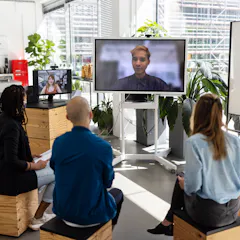
Hybrid and remote-heavy work setups have fundamentally changed how people interact at ‘the office.’ What do workers and managers want out of the workplace now?
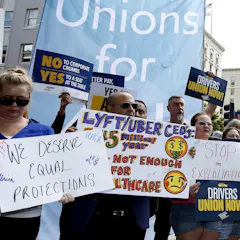
What a ‘gig worker’ is remains ill-defined, which can suit employers. But the spread of the gig economy means more workers don’t have the same rights and protections as employees.
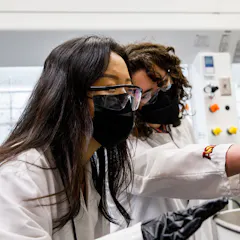
Green jobs go beyond solar panel installation and wind turbine maintenance. They’re found in fields from design to economics and in many types of management.

Employers need good strategies to hire and retain more workers of color and older workers. The mandatory diversity training and requisite skills tests many of them now rely on don’t measure up.

Gig workers navigate the challenges of solo work by seeking out relationships and cultivating skills to cope with emotional turbulence
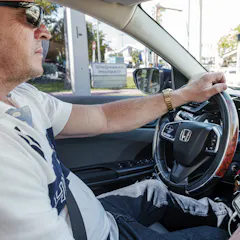
‘Career portfolioing’ is a trend where people assemble different sources of income, such as side gigs, to give them a measure of independence from employers who provide little job security.
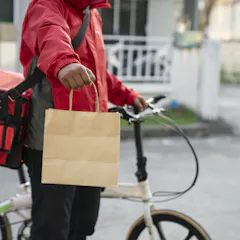
There are ways in which platform workers can resist the rise in job insecurity and poor working conditions brought on by digital labour platforms.

What if the best parts of two competing visions for a solution were brought together?

CC BY-NC-ND14 MB (download)
Innovation in the digital space is not necessarily working for people in the global south.

Amazon can become the Earth’s best employer, but this must involve democratizing the workplace, recognizing the legitimate right of employees to organize and cooperating with labour representatives.
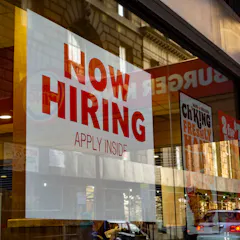
With employers struggling to hire enough workers, reliance on automation is becoming more of a necessity than just a source of competitive advantage.

An increasing number of workers are demanding a more human-centric work environment, with space to express trust and vulnerability.
Organizations can reduce some of the negative effects of the COVID-19 pandemic. Providing customizable support measures can improve employees’ work commitment and well-being.

Employees are demanding a more human-centric workplace, with space for trust and vulnerability. Management is over. The era of co-creation is underway.

The right to disconnect can be the catalyst an organization needs to review its workplace policies. But what’s really needed is a cultural shift that gives workers more control over how they work.
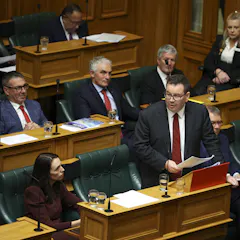
It’s potentially the biggest change to welfare since ACC and would favour those on higher pay – so why does the public know so little about it?
Top contributors
-

Professor of Management, Co-Director of the MIT Sloan Institute for Work and Employment Research, MIT Sloan School of Management
-
Director of Sydney Executive Plus, Business School, University of Sydney
-
Professor of Community Information, University of Michigan
-
Research Associate, School of Social Sciences, Monash University
-
Associate Professor of Management, York University, Canada
-
Professor of Information Technology and Organisation, University of Sydney
-
Professor of Work and Employment, University of Southampton
-
DANCAP Private Equity Chair in Human Organization, Western University
-
Associate Professor of Organisational Behaviour, Bond Business School, Bond University
-
Workplace Futures Research Lead, Centre for the New Workforce, Swinburne University of Technology
-
Senior lecturer, University of the Witwatersrand
-
Professor of Economics and Political Economy, University of Leeds
-
Professor of the Future of Work, Newcastle University
-
Professor of Employment Relations and Director of the Work, Organisation and Employment Relations Research Centre (WOERRC), University of Sheffield
-
Architect and academic, London Metropolitan University