

The rise of robots and new technology threatens to take over many jobs, but just how many is still up for debate.
Articles on Future of work
Displaying 81 - 100 of 107 articles

As artificial intelligence technology becomes more capable, it threatens more types of jobs – like lawyers, bureaucrats and managers. What social upheaval will happen if those people can’t find work?
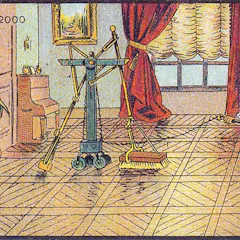
A common theme from science fiction is a vision of a world where humans do less work and machines do more. Why have we not yet reached that point?
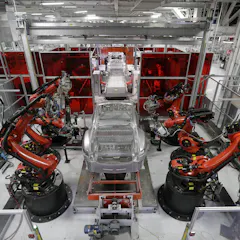
The Industrial Revolution led to centuries of social and economic upheaval. Are economists telling us not to worry about workplace automation because things will be better in a couple hundred years?

Bringing nature into the workplace can lead to a number of benefits, including reduced stress and increased creativity.

Rather than fret about how many jobs future technologies will destroy, we should focus on how to shape them so that they complement the workforce of tomorrow.

The history of the office illustrates not only how our work has changed but also how work’s physical spaces respond to cultural, technological and social forces.

With life expectancy stalling and austerity partly to blame, the UK must rethink its approach to retirement.

Two experts assess the prime minister’s claim and what the evidence says about the impact of a ban.
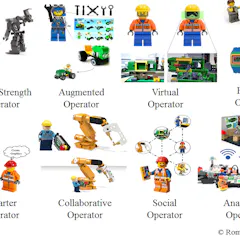
People will still be needed on factory floors, even as robots become more common. Future operators will have technical support and be super-strong, super-smart and constantly connected.
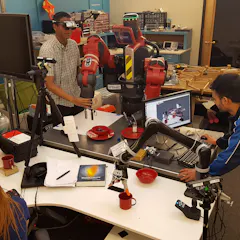
Today, the U.S. is leading the robotics revolution. But without timely investment, China will overtake us, and could permanently put Americans out of work.
CC BY-ND50.9 MB (download)
In this episode we look at historical visions of the future and how accurate they were, the future of work, and what it's like to predict the future for a day job.
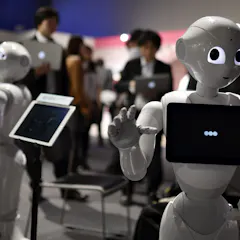
Business Briefing: why the future is workless
The Conversation18.1 MB (download)
We need to embrace a future where machines do our jobs for us and the government gives us a basic income as a safety net, author Tim Dunlop says.

Flexible work is on the rise but research shows it often leads to people working longer hours than they would otherwise.

The Australian Industry Group (Ai Group) said that casual employment has not increased in Australia for the past 18 years. Is that right?
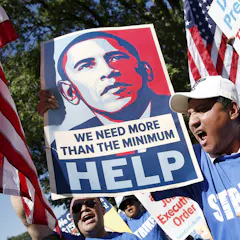
Talk about the future of work is in the air these days, but will all the chatter lead to action and better living standards for tomorrow’s workers?
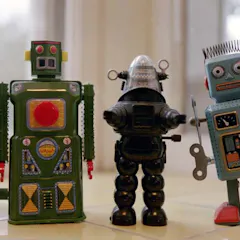
There are very few jobs that are can’t be done in principle by robots and artificial intelligence. What will you do when a robot takes your job?

Throughout history, whenever new technologies have emerged that change our means of production and ability to communicate they have tended to transform society. The rapid technological development of the…

In Australia, there are reports that up to half a million of existing jobs could be taken over by robotics or machines run by artificial intelligence. So with smarter computers taking on more of the work…

For many of us, smartphones and laptops have enabled an electronic untethering from physical and temporal limitations workplaces, creating the opportunity for greater flexibility to fit paid work in and…
Top contributors
-

Professor of Management, Co-Director of the MIT Sloan Institute for Work and Employment Research, MIT Sloan School of Management
-
Director of Sydney Executive Plus, Business School, University of Sydney
-
Professor of Community Information, University of Michigan
-
Research Associate, School of Social Sciences, Monash University
-
Associate Professor of Management, York University, Canada
-
Professor of Information Technology and Organisation, University of Sydney
-
Professor of Work and Employment, University of Southampton
-
DANCAP Private Equity Chair in Human Organization, Western University
-
Associate Professor of Organisational Behaviour, Bond Business School, Bond University
-
Workplace Futures Research Lead, Centre for the New Workforce, Swinburne University of Technology
-
Senior lecturer, University of the Witwatersrand
-
Professor of Economics and Political Economy, University of Leeds
-
Professor of the Future of Work, Newcastle University
-
Professor of Employment Relations and Director of the Work, Organisation and Employment Relations Research Centre (WOERRC), University of Sheffield
-
Architect and academic, London Metropolitan University