

Growing old isn’t always easy. But new research suggests staying curious and social may help you age well.
Articles on Frailty
Displaying all articles

Two people of the same age can age very differently. Frailty helps explain why, and what can be done to reduce risk.
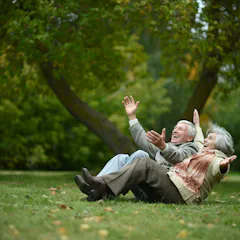
Struggling to stand up from the toilet could signal the beginning of the end for independent living – here’s how to stay strong as you age.
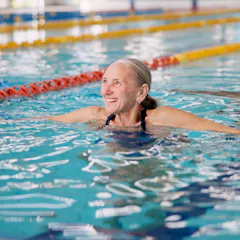
Not everyone who ages will necessarily become frail. Here’s the distinction.

An accurate prediction of survival can enable earlier conversations about preferences and wishes at the end of life, and earlier introduction of palliative care.
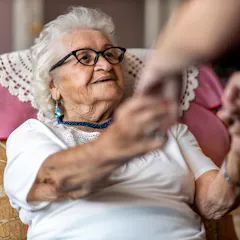
Frailty — the physical limitations of seniors living in the community — needs to be assessed before it can be addressed with social and health support. Virtual assessments can speed up this process.
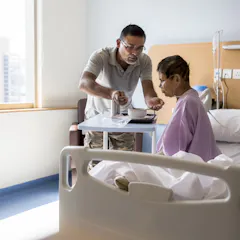
Some older patients forego the food provided at their health care facility because it isn’t aligned with their religious and cultural preferences.

If it’s been a while since your last workout, it’s important to take things slowly.
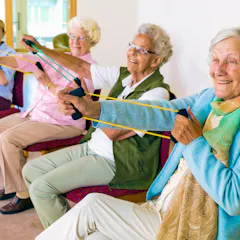
Without proper care, lockdown measures during the COVID-19 pandemic could worsen muscle loss and long-term health in ageing populations.

For patients recovering from heart surgery, being overweight or moderately obese appears to be an advantage over being underweight or even having a normal BMI.
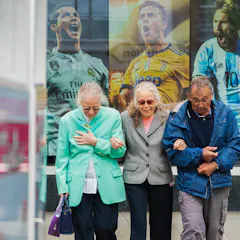
Rates of elective surgery are rising most among those aged over 85, due to advances in anaesthesia and techniques such as keyhole surgery. But it’s also much riskier.
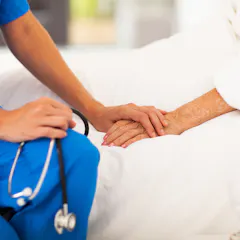
Doctors may say you’re “too old” for surgery, but what they actually mean is too frail.
Top contributors
-

Clinical Lecturer and anaesthetist, The University of Melbourne
-
Professor of Stem Cell Biology, Liverpool John Moores University
-
Assistant Teaching Professor, Nurse Practitioner Program, Faculty of Nursing, University of Alberta
-
Professor Emeritus, Anesthesiology and Perioperative Medicine, Queen's University, Ontario
-
Senior Lecturer, Clinical and Communication Skills, Deakin University
-
Assistant Professor of Health and Kinesiology, University of Illinois Urbana-Champaign
-
Brain and Mind-Bruyère Research Institute Chair in Primary Health Care in Dementia, L’Université d’Ottawa/University of Ottawa
-
Associate Professor, Telfer School of Management, L’Université d’Ottawa/University of Ottawa
-
Assistant Professor, Information Systems, University of New Brunswick
-
Senior Lecturer in Nutrition and Exercise Physiology, Liverpool John Moores University
-
Associate Professor, Division of Palliative Care, Department of Medicine, L’Université d’Ottawa/University of Ottawa
-
Senior Lecturer, Clinical Biomechanics, University of Staffordshire
-
Assistant Professor, Faculty of Health Disciplines, Athabasca University
-
Professor, Anesthesiology and Perioperative Medicine, Queen's University, Ontario
-
Professor, Department of Public Health Sciences, Queen's University, Ontario