
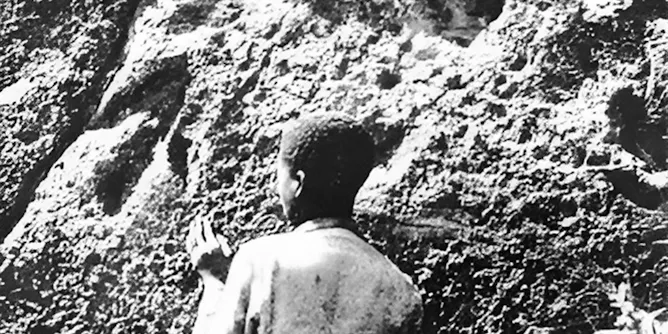
Long ago, people identified fossils in their environment and explained them within their own cultural framework. This was early citizen science.
Articles on Fossils
Displaying 41 - 60 of 512 articles

These tracksites appear to contain the first recorded Pliocene vertebrate tracks described from southern Africa.
Ancient crocs didn’t just hunt in water – some may have dropped out of trees to catch their prey.
Scientists are using mollusk shells to evaluate the health of Florida’s seagrass ecosystems.
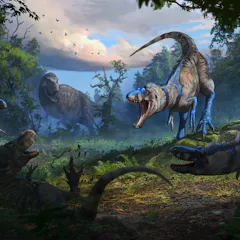
The fossil may help end a long-running debate in palaeontology.

A clay layer one-hundredth of an inch thick preserves the fleshy details of dinosaurs buried suddenly in east-central Wyoming.
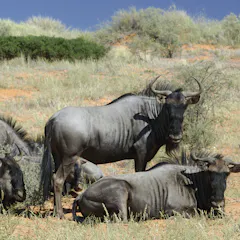
By studying antelope fossils, researchers can revisit long-standing questions about how the Cradle of Humankind’s environment evolved through time.
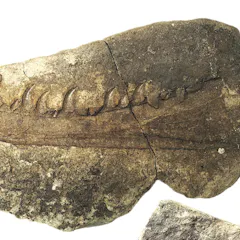
Old fossils can reveal new secrets using modern technology.
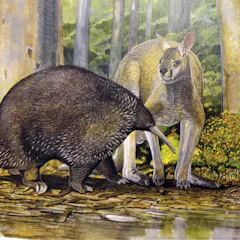
Australia doesn’t have any ‘kill sites’. In fact, there’s no hard evidence people hunted the megafauna.

Highly detailed fossils are typically found in shale or other fine-grained sedimentary rocks. These ones? They’re made of iron.

The first hyrax fossil tracks and traces ever to be discovered were identified on South Africa’s coast.

A new discovery could reshape how we interpret the fossil record of humans and their closest relatives.

A 56 million-year-old fossil bone helps explain how this (mostly) flightless family of birds spread to so many different continents.
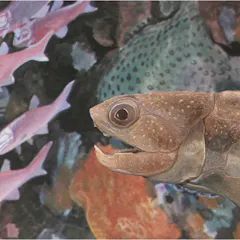
A new study of ancient, extinct fish known as placoderms provides another piece of the evolutionary puzzle about our deep time, aquatic ancestors.
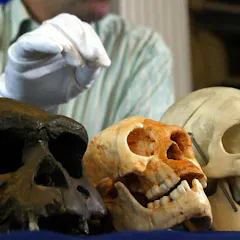
New research on the size relationship between brains and wisdom teeth suggests that bigger brains aren’t necessarily the driving force in human evolution.
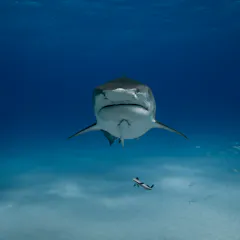
A new study sheds light on how sharks colonised the oceans and became apex predators.
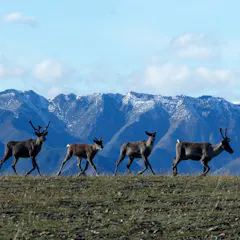
Despite surviving through large climatic fluctuations in the past, future climate warming may cause a drastic decline in caribou populations.
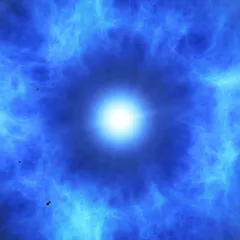
Global cooling associated with the impact of supernova remnants may have affected plants and animals, including species related to humans.
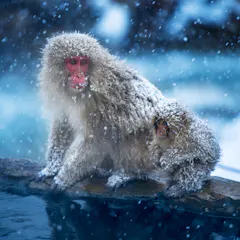
New research overturns decades of assumptions about how – and where – our lineage began.
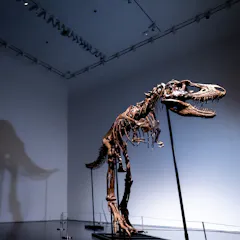
Dinosaur fossils are sold for millions to private collectors. These fossils are scientific evidence, and need to be accessible for research and public education.
Top contributors
-

Research Associate, African Centre for Coastal Palaeoscience, Nelson Mandela University
-
Associate professor in Vertebrate Palaeontology, University of the Witwatersrand
-
Emeritus Strategic Professor in Palaeontology, Flinders University
-
Professor of Vertebrate Palaeontology, University of Bristol
-
Senior Research Scientist, South Australian Museum; Flinders University
-
Associate Professor in Vertebrate Palaeontology, Flinders University
-
Honorary Research Associate, Evolutionary Studies Institute, University of the Witwatersrand
-
Research Associate in the College of Science and Engineering, Flinders University
-
Research Associate, School of Earth and Planetary Sciences, Curtin University
-
Professor of Palaeobiology, University of Leicester
-
Technical Specialist in Earth Sciences, University of Bristol
-
Professor in Geochronology and Geochemistry, Southern Cross University
-
Senior Lecturer in Paleontology and Evolutionary Biology, Life Sciences at the University of Bath, University of Bath
-
Associate Professor in Ancient DNA, University of Otago
-
Lecturer in the School of Applied Sciences, Edinburgh Napier University