
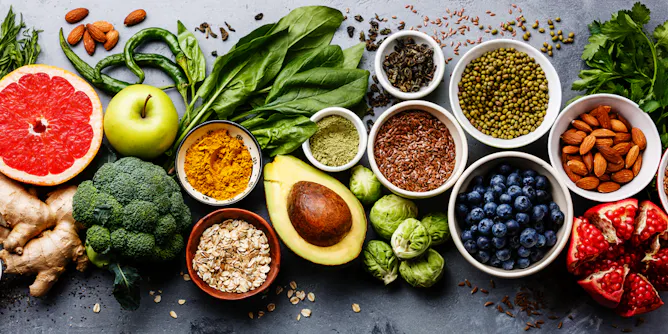
Food safety agencies have assessed the risk of acquiring COVID-19 from contaminated food or food packaging. They found that currently, there’s no evidence that the virus is a food safety risk.
Articles on Food security
Displaying 241 - 260 of 550 articles
The US is formally back in the Paris climate agreement as of today. As one of the world’s largest greenhouse gas emitters, it has a lot of work to do, with food security, health and safety at stake.
When a pandemic hits, questions that immediately arise include what impact there will be on public health, the economy and other aspects of society. Another set of questions involves response priorities…
With the UK government creating hostilities with the EU, its hopes of switching to other food sources would take years to settle.

Fish farms feed millions of people around the world, but they also consume a lot of fish that are dried or ground up to make aquafeed. Researchers are developing more sustainable alternatives.
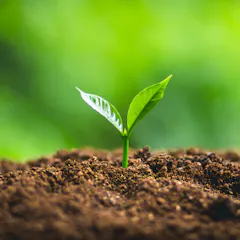
Healthy soils are vital for food, biodiversity, and a healthy planet, but this below-ground world is often overlooked. The launch of the State of Knowledge of Soil Biodiversity Report highlights this.
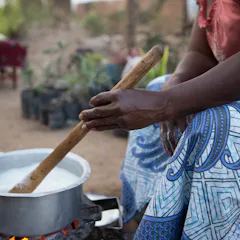
Food security emerged as a major issue for women nearing the end of their lives in Malawi.
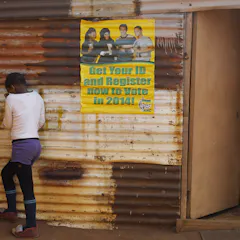
Some caregivers reported seeing improvements in their children’s schoolwork and behaviour at school.

Most of the wastewater produced worldwide receives no treatment and the nutrients in wastewater go to waste. Here’s how households can draw these nutrients from urine and use them as fertilisers.
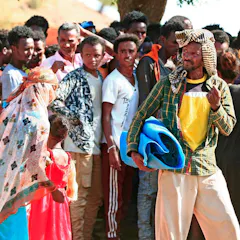
Food security in Tigray was becoming critical even before the current armed conflict.
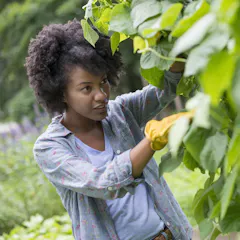
Between the 1950s and the present day, there has been a 65% reduction in allotment land in the UK.
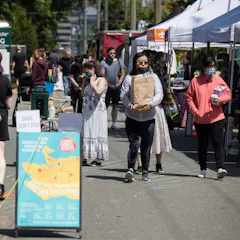
Since the beginning of the COVID-19 pandemic, there has been an increased interest in local food. This demand could be leveraged to help develop community resilience and encourage healthier diets.
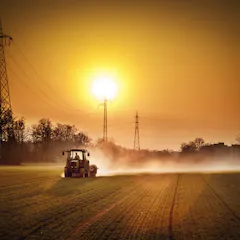
Soil loss in South Africa can have a negative impact on air quality and food security.
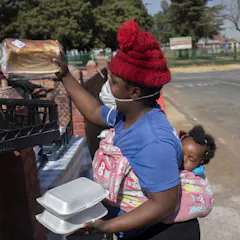
Despite the success of relief efforts by the government and civil society, it’s clear that hunger and food insecurity remain at disturbingly high levels in households.

Fruit production of shea is often limited by a lack of pollination which is more pronounced in places with less tree and shrub diversity.
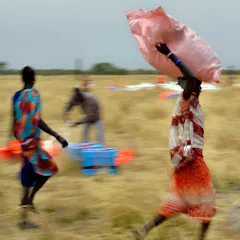
Over 820 million people around the world go to bed hungry at night, and that tide is rising. For working to reverse it, the U.N. World Food Program has received the 2020 Nobel Peace Prize.
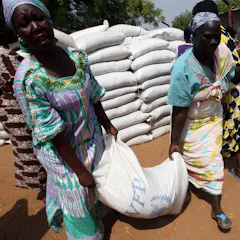
The World Food Programme can’t stop hunger on its own – that also requires political action.
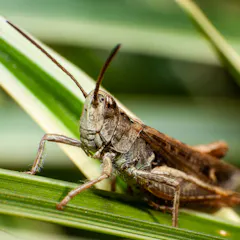
Locust outbreaks are driven by unusual climatic conditions.
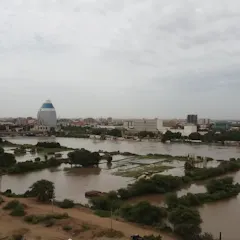
Khartoum, one of Africa’s largest cities, is both blessed and threatened by the dynamics of the Nile Rivers.
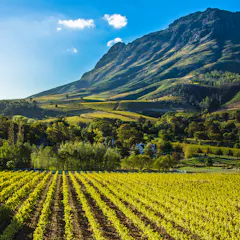
South Africa’s that current land reform strategies focus too narrowly on agricultural outcomes and transferred ownership - this undermines equitable and sustainable land reform.
Top contributors
-

Senior Fellow, Department of Agricultural Economics, Stellenbosch University
-
Associate Professor in Food Systems, The University of Melbourne
-
Research Fellow, Tegemeo Institute, Egerton University
-
Associate Professor, Department of Entomology; African-American Studies, University of Illinois Urbana-Champaign
-
PhD, Political Economy, Macquarie University
-
Professor of Food Policy, City St George's, University of London
-
Researcher in sustainable food systems, The University of Melbourne
-
Director of the Arrell Food Institute and Professor in the Dept. of Geography, Environment and Geomatics, University of Guelph
-
Network and Research Manager: ARUA – UKRI GCRF FSNet Africa, University of Pretoria
-
Professor in Food Security; Head of the Department of Agricultural Economics, Extension and Rural Development, University of Pretoria
-
Emeritus Fellow in Plant Biochemistry, University of Westminster
-
Professor of Social Development Studies, University of Johannesburg
-
Food Systems Research and Partnerships, The University of Melbourne
-
Adjunct Professor, Curtin Business School, Curtin University
-
Climate Scientist and Researcher, University of Cape Town