
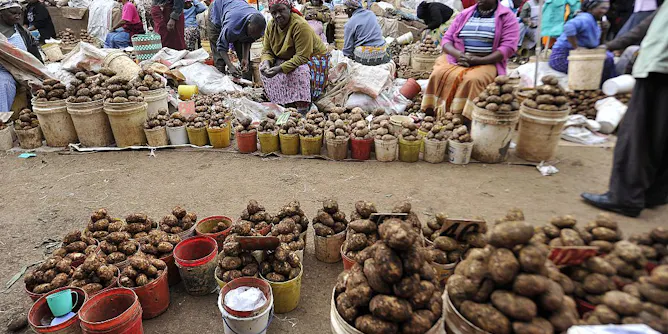
Potato cyst nematodes suppress crop growth and can cause huge yield losses of up to 80%, and even total crop failure.
Articles on Food security
Displaying 261 - 280 of 550 articles
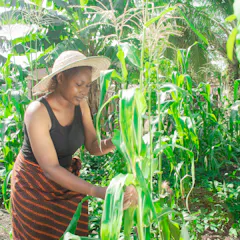
Africa is far from having an ageing farming population. What is missing is a critical mass of skilled, young farmers with access to finance who could drive productivity in farming.
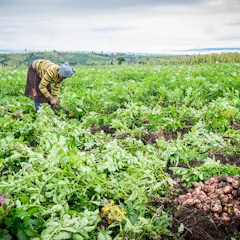
Poor and inconsistent pricing data makes it hard to assess agricultural markets.
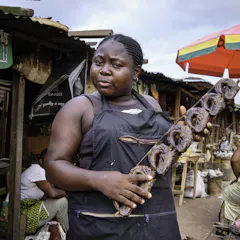
Although COVID-19 measures have had a negative impact on food supply in Nigeria, there are other factors responsible for the dramatic rise in food prices.

A new UN report shows that hunger and food insecurity are rising worldwide. The COVID-19 pandemic is adding to this trend, but is not the major driver.

Clashes between farmers and herders in Nigeria have been bloody and protracted, with one side portrayed as victims. But as this study shows, both sides are victims.

Fast-food restaurants can be comforting places, but when they saturate communities, they crowd out healthy food sources and leave residents less nourished.
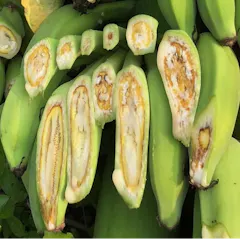
Fungi and other organisms called oomycetes are
highly adaptable. That’s bad news for the global food supply.
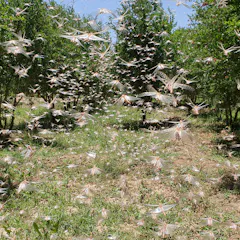
A swarm of roughly 40 million desert locusts can eat the same amount of food in one day as about 35,000 people.
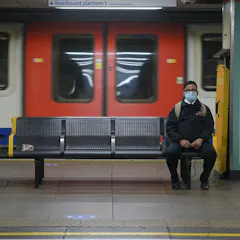
In this week’s round-up of coronavirus articles by scholars around the globe, we explore the disproportionate impacts of COVID-19 and the latest on drug trials.
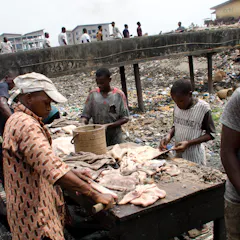
Haphazard development of abattoirs without environmental and health considerations in Nigeria can only invite diseases – and potentially pandemics such as COVID-19.
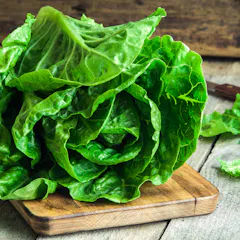
Rapid industrialisation and infrastructure development in developing countries have propelled the growth of the nonylphenol market.

Continuing flour shortages in supermarkets highlight a fundamental food security problem in distribution systems.
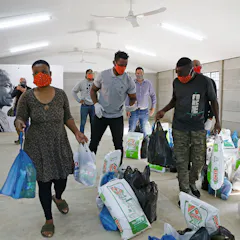
More effort must go into building synergies between emergent local efforts and the government response.
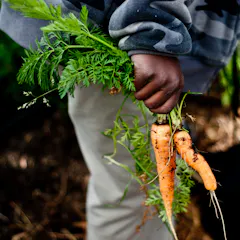
Victory gardens were popular during wartime, and have made a comeback during the current pandemic.
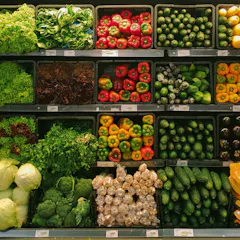
Food is essential to survival. It is also essential to identity. During times of national crisis like the coronavirus pandemic and in the historical landscape, food issues become prominent.

Local fish are almost impossible to find on the shelves of grocery stores in northern Ontario, even though the region has an abundance of fish.

Local people are caught in an impossible situation – stay home and starve or venture out to buy food, potentially bringing the virus home too.

After the brief shock of food insecurity in the form of empty supermarket shelves, we might start thinking about having a Plan B and C based on local food sources and shorter supply chains.

Mauritius relies on a strategy of being open to imports and exports.
Top contributors
-

Senior Fellow, Department of Agricultural Economics, Stellenbosch University
-
Associate Professor in Food Systems, The University of Melbourne
-
Research Fellow, Tegemeo Institute, Egerton University
-
Associate Professor, Department of Entomology; African-American Studies, University of Illinois Urbana-Champaign
-
PhD, Political Economy, Macquarie University
-
Professor of Food Policy, City St George's, University of London
-
Researcher in sustainable food systems, The University of Melbourne
-
Director of the Arrell Food Institute and Professor in the Dept. of Geography, Environment and Geomatics, University of Guelph
-
Network and Research Manager: ARUA – UKRI GCRF FSNet Africa, University of Pretoria
-
Professor in Food Security; Head of the Department of Agricultural Economics, Extension and Rural Development, University of Pretoria
-
Emeritus Fellow in Plant Biochemistry, University of Westminster
-
Professor of Social Development Studies, University of Johannesburg
-
Food Systems Research and Partnerships, The University of Melbourne
-
Adjunct Professor, Curtin Business School, Curtin University
-
Climate Scientist and Researcher, University of Cape Town