

Using government developed criteria for marketing to kids, none of the child-targeted cereals examined would be permitted to be advertised to children, and 96 per cent surpassed sugar thresholds.
Articles on Food packaging
Displaying 1 - 20 of 35 articles

Chemists have been working on new approaches to reducing waste and finding new functions for existing materials.
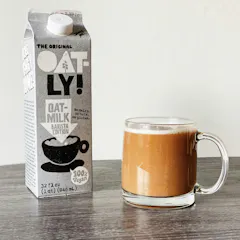
Australian and NZ farmers have long argued only cow’s milk should be sold as ‘milk’, in line with UK and European laws. This is what our current rules allow.

Only 9% of plastics ever made have been recycled. Clever industry campaigns have shifted the costs of their own waste onto consumers.

Research shows most Australians believe they are good recyclers – but they’re often wrong. Here’s how to avoid common recycling mistakes.

Research shows that the effects of ultra-processed foods can accumulate over time, adding to the risk of heart attack, stroke and other serious health issues, even for healthy people.

President Donald Trump has ordered his government to stop using paper straws. A better approach is to avoid using single-use products.

New policy requiring front-of-package nutrition symbols aims to guide consumers toward healthier food choices by highlighting foods high in sodium, sugars or saturated fats.
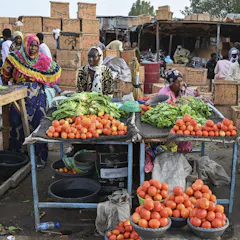
A tool was needed to understand what drives people’s food choices in emerging economies.

Pared-down packaging designs send a subtle yet powerful message of purity to shoppers – and they’re willing to fork over more cash for these goods, regardless of the actual number of additives.

New restrictions on PFAS and other potentially hazardous chemicals in Australia present an opportunity for industry to develop alternatives for new, safe and clean products.
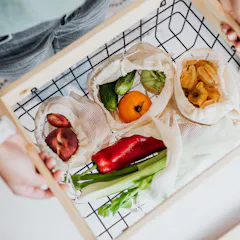
UK supermarket chains have dropped the use of “best before” date labels to reduce the amount of food being thrown out when it’s still perfectly edible. It’s just as big a problem in Australia.
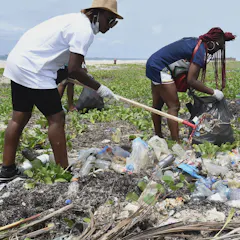
Nigeria generates 2.5 million tonnes of plastic waste yearly. Research and public enlightenment can help address the problem.

Due to increasing concerns over the health hazards posed by BPA, the Food and Drug Administration plans to reevaluate the safety of the controversial chemical for use in everyday products.

Oil is used throughout the US economy. It goes into packaging, toys, clothing and especially the food we eat.

Maine and Oregon have enacted laws that require makers of consumer product packaging to pay for recycling or disposing of it. Will other states follow?
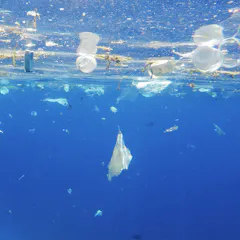
Some plastic sent overseas for recycling ends up as pollution, or goes up in toxic smoke. But there are steps we can take to ensure our waste is processed as intended.

Of the five cuisines examined, packaging from burger meals was responsible for the most emissions.
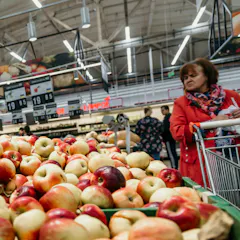
The recommendations of experts aren’t reaching people in the supermarket aisles. So what can be done about it?

Australians spent $400 million on unwanted Christmas gifts last year. There must be a better way.
Top contributors
-

Associate Professor of Marketing, Tasmanian School of Business and Economics, University of Tasmania
-
Senior Research Consultant, Institute for Sustainable Futures, University of Technology Sydney
-
Professor of Marketing, University of Technology Sydney
-
Lecturer in the School of Environmental and Life Sciences, University of Newcastle
-
Professor of Science Communication and Chemistry, University of Hull
-
Senior Lecturer in Geography, University of Sheffield
-
PhD Researcher, Sustainable Consumption, University of Leeds
-
Director, Agri-Food Analytics Lab, Professor in Food Distribution and Policy, Dalhousie University
-
Adjunct Professor, Macquarie University
-
Honorary Professorial Fellow, School of Chemistry, The University of Melbourne
-
Professor in Business and Sustainability, University of Leeds
-
Lecturer in the Department of Psychology, University of Essex
-
Emeritus Professor, University of Tasmania
-
Assistant Professor of Marketing, Texas Christian University
-
Senior Lecturer in Pharmacology, Adelaide University