
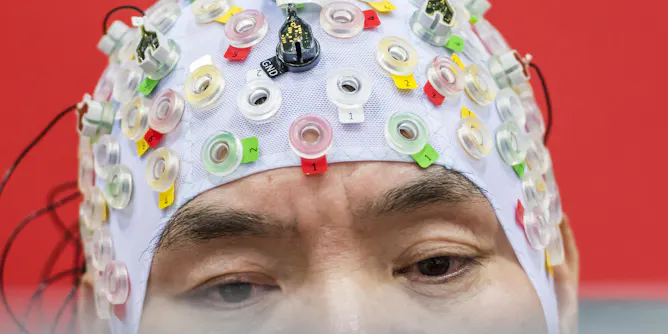
Paralysed people are already using brain-computer interfaces to turn their thoughts into text. But there are risks to this technology.
Articles on Brain activity
Displaying 1 - 20 of 29 articles

There’s a lot going on in your brain all the time. To power your imagination, the neurons need some silence.

About 1-4% of people have synaesthesia, a trait that both fascinates and puzzles scientists.

Here’s what these brain ‘holes’ and the scans that found them really mean.
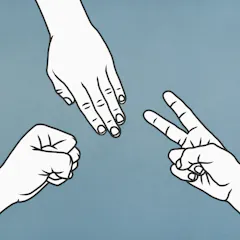
Humans are surprisingly bad at being unpredictable.

How tasty is it? How healthy is it? Our brains work this out faster than conscious thought.
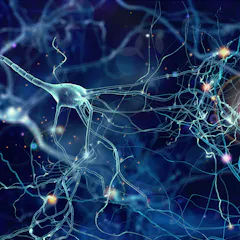
Are neurons star players, or do they prioritise teamwork? A new study has uncovered an answer for this long-standing debate about the brain.
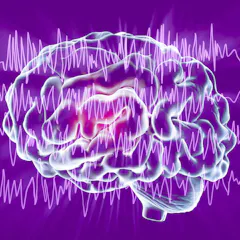
Deciphering how neurons talk to each other by reading the brain’s electrical activity has given scientists insights into memory and conditions like epilepsy and Alzheimer’s.
Electroconvulsive therapy often evokes inaccurate images of seizing bodies and smoking ears. Better understanding of how it reduces depression symptoms can illuminate new ways to treat mental illness.

Humans can spontaneously fall into rhythms with precision, and across a wide range of tempos. This may be because the same neurological processes that anticipate rhythm are involved with movement.
Deep brain stimulation can help some people with treatment-resistant depression feel better, but it can be unclear whether a bout of low mood is a relapse or a bad day.
Glioblastoma is the most aggressive type of brain cancer, causing significant decline in cognitive function. New research suggests a common anti-seizure drug could help control tumor growth.
Learning new rules requires the suppression of old ones. A better understanding of the brain circuits involved in behavioral adaptation could lead to new ways to treat schizophrenia and bipolar disorder.

Neuroscientists have typically thought of energy supply to the brain as demand-based. A supply-limited view offers another perspective toward aging and why multitasking can be difficult.

Many people with epilepsy are unable to remember what happened immediately before they have a seizure. This may be because seizures and memory use the same pathways of the brain.

For many years, concussion treatment followed a rest-is-best approach. But research now suggests that low-to-moderate intensity exercise is a safe and useful approach to managing concussion symptoms.

Cognitive neuroscientists use brain imaging and behavioral economic games to investigate people’s sense of fairness. They find it’s common to take care of yourself before looking out for others.

Despite its huge complexity, your brain directs its neural traffic in relatively straightforward ways when approaching cognitively demanding tasks such as puzzles.

Like a cocktail partygoer able to focus on one discussion in a noisy room, brains are able to make reliable connections against a busy neural background. Here are two phenomena that help it happen.
Is everything about who we are contained within our brains?
Top contributors
-

ARC DECRA Senior Research Fellow in Cognitive Neuroscience, Western Sydney University
-
Adjunct Assistant Professor of Neurology at Oregon Health and Sciences University and Affiliate Assistant Professor of Philosophy, University of Washington
-
Ph.D. Student in Electrical Engineering, University of Washington
-
PhD Candidate in Neuroscience, Yale University
-
Senior Research Fellow, The Perron Institute for Neurological and Translational Science, and Faculty of Health Sciences, Curtin University
-
Sackler research fellow in clinical medicine, University of Sussex
-
Neuroscientist, Monash University
-
Lecturer in Health Psychology, University of Bath
-
Lecturer in Psychological Science, University of Bristol
-
Ph.D. Student, University of Washington
-
Associate Professor of Neurological Surgery, University of California, San Francisco
-
Research Scientist in Electrical and Computer Engineering, Georgia Institute of Technology
-
Postdoctoral Scholar in Social Cognitive Neuroscience, University of Chicago
-
Senior Lecturer in Psychology, Leeds Beckett University
-
Assistant professor, University of Chicago