

Trying to understand how the brain is so good at focusing on one conversation has kept auditory neuroscientists occupied since the 1950s.
Articles on EEG
Displaying 1 - 20 of 37 articles

Dream-like states are not confined to sleep: the brain is able, very surprisingly, to produce the same mental experience independently of our state of vigilance.

Even before generative AI went mainstream, fewer people were reading books.
Deciphering how neurons talk to each other by reading the brain’s electrical activity has given scientists insights into memory and conditions like epilepsy and Alzheimer’s.
Some scientists theorize that artificial intelligence may be able to deduce thoughts from EEGs.
What we ‘see’ in the brain depends on which tool we use to ‘look’ – but each one comes with trade-offs.
Electroconvulsive therapy often evokes inaccurate images of seizing bodies and smoking ears. Better understanding of how it reduces depression symptoms can illuminate new ways to treat mental illness.
Music therapy has been shown to help people suffering with cancer, chronic pain and depression. Our research is testing which parts of the brain are affected by different kinds of music
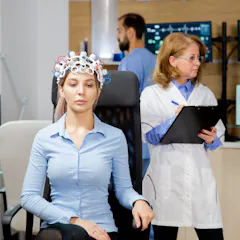
Neurotechnology could mean law firms soon track ‘billable units of attention’ rather than billable hours.
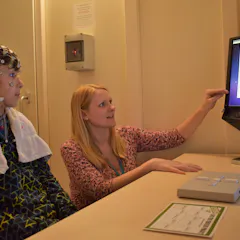
Children with dyslexia seem to find it more difficult to judge the direction of moving dots - this could explain why reading is also more challenging.

Fetal brains are changing rapidly over the course of pregnancy, but so are the brains of mothers-to-be. Neuroscience research shows one way worry can start taking hold – and a simple way to help.

Cognitive neuroscientists use brain imaging and behavioral economic games to investigate people’s sense of fairness. They find it’s common to take care of yourself before looking out for others.

The mystery of how the brain creates consciousness still puzzles scientists, but the mechanics of waking up are starting to be understood.

With caregivers’ faces covered, infants and young children will miss out on all the visual cues they’d normally get during stages of rapid developmental growth.

Facebook and Neuralink are developing interfaces to link our brains to computers, with serious ethical issues.
Your brain’s sensory talents go way beyond those traditional five senses. A team of geoscientists and neurobiologists explored how the human brain monitors and responds to magnetic fields.
Biometrics are more secure than passwords – but when they’re compromised fingerprints and retina scans are hard to reset. Brain responses to specific stimuli are as secure and, crucially, resettable.
During epileptic seizures, neurons in the brain fire without rhyme or reason. New research identifies a possible way to wrest back control by stopping these signals before they can get started.

‘Mini brains’ can be grown in the lab, and brains of decapitated pigs were recently ‘kept alive’ for a day and a half. But what makes a conscious brain?
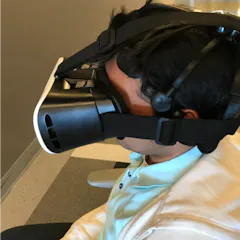
Interactive cinema and the arts are at the forefront of research into brain-computer interaction.
Top contributors
-

Professor in Psychology, University of Florida
-
Postdoctoral Research Fellow in Multimodal Neuroimaging and Machine Learning, Harvard University
-
Clinical Senior Lecturer in the Centre for the Developing Brain, King's College London
-
Assistant Professor of Computer Science and Engineering, University at Buffalo
-
Lecturer in Electronics, Electrical Engineering and Computer Science, Queen's University Belfast
-
Research Associate in Neuro, Physiology & Pharmacology, UCL
-
Professor of Rehabilitation Studies, University of Sydney
-
Lecturer in Psychology, University of Winchester
-
Associate Professor of Psychology, Yale University
-
University of Glasgow
-
Lecturer in Psychology and Cognitive Science, University of Sheffield
-
Postdoctoral research fellow, University of Sydney
-
Professor in Cognition and Neuroscience, University of East London
-
Associate Professor of Computer Science and Engineering, University at Buffalo
-
MRC Research Fellow, UCL