

One village recorded 1.5 year’s rain in 18 hours.
Articles on Flood models
Displaying all articles
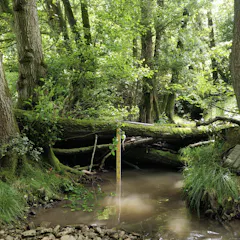
A new study shows that river barriers, similar to those built by beavers, can protect areas at risk of flooding by storing water upstream.
A warmer atmosphere can hold more water – and that makes floods harder to predict. To help, we improved one common tool used to predict floods.
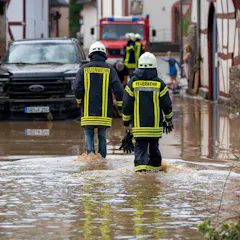
Catastrophic floods in north-western Europe have shown how badly early warning systems can fail.
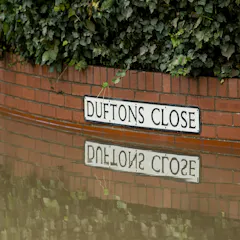
Current policy to manage and protect people from flooding disadvantages those who are most vulnerable.
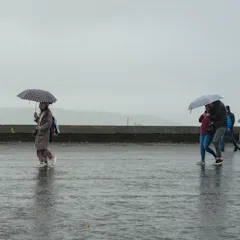
Today’s three-day weather forecast is as accurate as a 24-hour forecast in the 1990s. But floods are still particularly tricky to pin down.
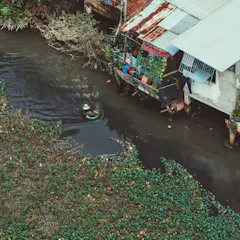
In failing to acknowledge that the capacity of rivers can change quickly, some flood models and defences may not be equipped to deal with the consequences when they do.

A particular brand of climate denial among coastal property owners presents a conundrum for councils and governments trying to plan for sea-level rise.
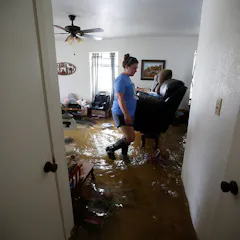
The federal government created a program in 1968 to insure homes in the US from flooding, yet few of the houses hammered by Harvey’s record rainfall were covered.
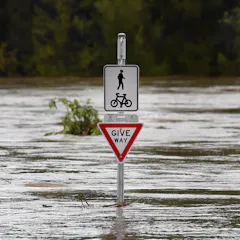
Floods are a costly part of Australian life, which means we need to get better at predicting exactly when - and how severely - they are likely to strike in the future.
Top contributors
-

Associate Professor, School of Civil and Environmental Engineering, UNSW
-
Head of the Centre for Water, Environment, Sustainability and Public Health, University of Strathclyde
-
Professor Emeritus of Risk Management and Insurance, Georgia State University
-
Associate Professor, School of Civil, Environmental and Mining Engineering, Adelaide University
-
Research Associate, Climate and Weather Data Analysis, Loughborough University
-
Professor of Organisational Studies, University of Sydney
-
Associate professor, The University of Western Australia
-
Professor in Environmental Hydraulics, Cardiff University
-
Professor of Hydroclimatology, University of Oxford
-
Professor of Hydroclimatic Modelling, Loughborough University
-
Professor of Environmental Planning, University of Waikato
-
Postdoctoral fellow, Colorado School of Mines
-
Royal Academy of Engineering Research Fellow, University of Liverpool
-
Disaster Risk Expert, University of Reading
-
Research scientist, USDA-ARS Southwest Watershed Research Center