
The goal of creating synthetic cells is not to replace nature, but to learn more deeply about biology and reengineer it to help society.
Articles on Basic research
Displaying 1 - 20 of 30 articles

The federal government is more likely to fund curiosity-driven basic research, while industry is more likely to support research that has a clearer eventual payoff.

Taxpayer-funded investment supports basic research that can yield crucial medical advancements down the line and make lifesaving drugs and technologies affordable for everyday people.
There are several steps between research on seemingly esoteric subjects and breakthrough medical treatments. Ethical oversight at every stage ensures science and society ultimately benefit.

Basic research that doesn’t have a specific industrial or experimental application still adds value outside the lab by engaging people with exciting research.

The National Institutes of Health has been integral to scientific progress in treating countless human diseases. Without its support, patients will ultimately pay the price.
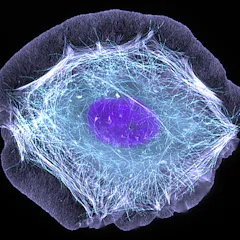
Textbooks usually depict the epithelial cells encasing the interior and exterior of your body as passive barriers. But researchers discovered they can produce electrical signals like neurons.

The Energy Department has a dual mission with a heavy science focus and manages large, expensive programs, many of which are behind schedule and over budget.

The latest government showdown over the budget risks not only a shutdown but jobs, regional economies and America’s competitiveness in AI and other advanced fields.
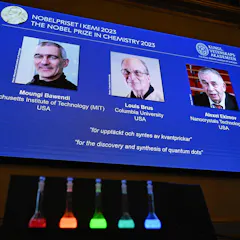
Louis Brus explains some of the foundational research – and how even the letter carrier wants to shake your hand when you’ve just won a Nobel Prize.

The winners of the 2023 Nobel Prize in physiology or medicine made a discovery that helped create the COVID-19 vaccines. They couldn’t have anticipated the tremendous impact of their findings.

Cell cultures are common tools in biology and drug development. Bringing them up to scale to meet the meat needs of societies will require further development.
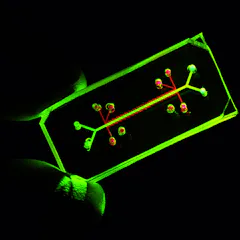
Successes in the lab mostly don’t translate to people. Research models that better mimic the human body could close the gap.

Basic research is best when it’s allowed to proceed on merit, rather than with political interference, says an open letter from 63 leading researchers protesting government interference in ARC grants.
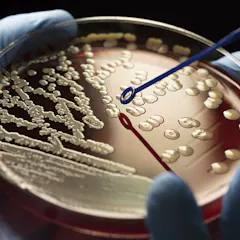
If no action is taken to address antibiotic resistance, infections from multidrug-resistant bacteria could cause 10 million deaths each year by 2050.

A biomedical engineer explains the basic research that led to the discovery of insulin and its transformation into a lifesaving treatment for millions of people with diabetes.
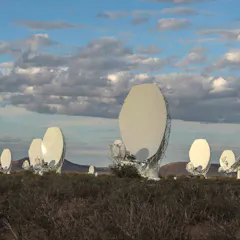
The pandemic has underscored that the world requires agility for survival. That makes blue skies science, which encourages curiosity and nimble thinking, perhaps more important than ever.
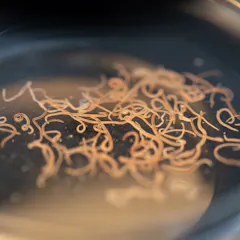
‘Worm’ is really a catchall term for a huge variety of animals with different characteristics that span the tree of life. They hold clues about our own origins as well as hints about human health.

Basic research can be easy to mock as pointless and wasteful of resources. But it’s very often the foundation for future innovation – even in ways the original scientists couldn’t have imagined.

China’s government is prioritizing world-class science and tech. An expert describes the Chinese research landscape – and questions its sustainability.
Top contributors
-

Dean of the College of Science, Professor of Biochemistry, Rochester Institute of Technology
-
Professor of Biological Sciences, University of Maryland, Baltimore County
-
Washington State University
-
Ph.D. Candidate in Chemical Biology, Harvard University
-
Invited User
-
Professor of Neurobiology, Northwestern University
-
Associate Professor of Parasitology and Entomology, St Paul's University
-
Distinguished Research Professor, Emerita, Dalhousie University
-
Postdoctoral Fellow of Strategy, J. L. Kellogg School of Management, Northwestern University
-
Associate Professor of Higher Education, Georgia State University
-
University of Minnesota
-
Professor of Entrepreneurship and Strategy, J. L. Kellogg School of Management, Northwestern University
-
Vice President for Research and Professor of Physics, Washington State University
-
Vice President for Research, University of Minnesota
-
Associate Vice President for Research and Technology Transfer, University of Houston