
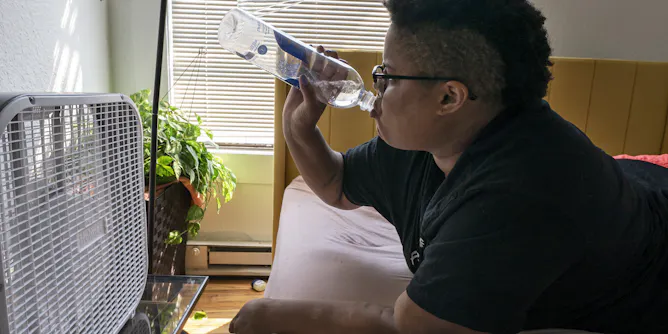
On extremely hot days and in the aftermath of storms, people tend to hole up inside. Losing festivals, traditions and gathering places can worsen that loneliness.
Articles on Extreme storms
Displaying 1 - 20 of 34 articles
A National Academy of Sciences report examined the latest advances in extreme event attribution science. As four of the authors explain, the type of disaster makes a difference.

A hurricane scientist explains the technology forecasters rely on to keep people safe and help communities all along the Atlantic coast know when to evacuate.
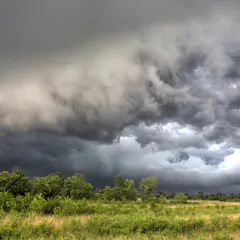
Don’t blame the weatherman. A meteorologist explains where your local weather forecasts really come from, and what storm scientists are doing to bring them closer to home.

Computer models of the storm hitting different areas show how much damage is possible, yet flood maps still focus on where flooding is most likely instead.
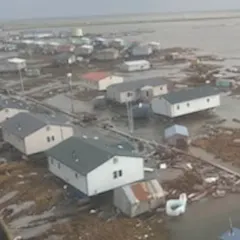
‘As the storm approached Alaska, everything went sideways,’ leaving people no time to evacuate and little time to prepare. An Alaska meteorologist explains what happened and the challenges ahead.
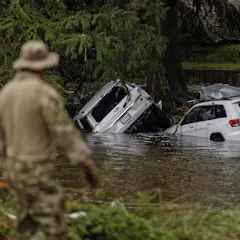
Large parts of the central and eastern U.S. have seen at least 50% more precipitation than normal. An atmospheric scientist explains why and what creates flash flood weather.

Forecasters already patch together very rough estimates, and ending NOAA’s ‘billion-dollar disasters’ list means less access to insurance data. Texas’ state climatologists explain why that matters.
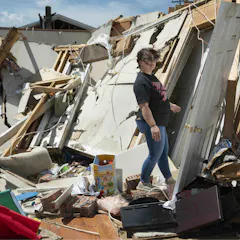
A storm scientist explains what’s been driving deadly tornado outbreaks and how tornado season has been changing.
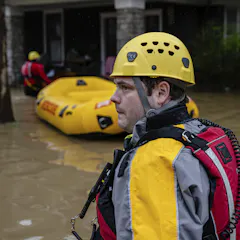
Rising global temperatures increase the risk of extreme downpours, as a climate scientist explains.
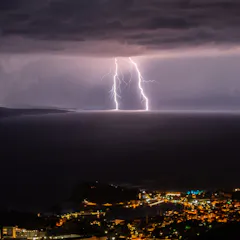
An unplanned experiment takes scientists closer to solving a long-standing mystery: To what extent, if any, have human-created emissions influenced thunderstorms?

NOAA operates fleets of satellites, sensors on airplanes and ocean-going buoys, as well as radar, providing the data used by weather forecasters nationwide – and freely available to anyone.
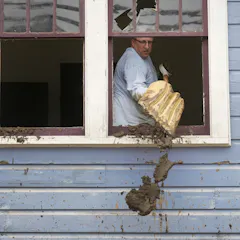
Disasters such as hurricanes Helene and Milton often hit low-income and other disadvantaged groups hardest. 2 policy experts suggest ways long-term aid could help.

These powerful ‘rivers in the sky’ provide a huge share of annual precipitation in many regions, including California. They can also melt sea ice, with global climate implications.

With Hurricanes Helene and Milton reminding us of the destructive force of such storms, the tropical cyclone forecast for Australia is for an average number but with a higher risk of severe cyclones.
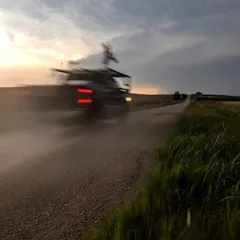
To understand how tornadoes behave, scientists need to be near the storm. The movies get some of it right.
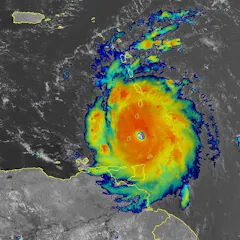
Beryl’s strength and rapid intensification set records, raising alarms about what’s already expected to be a very active Atlantic hurricane season, as a meteorologist explains.
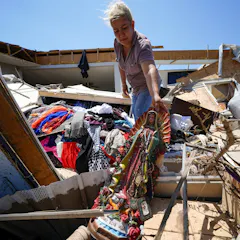
Spring 2024 was menacing for large parts of the US, with a tornado nearly every day in May. Tornado outbreaks tore up communities across multiple states.
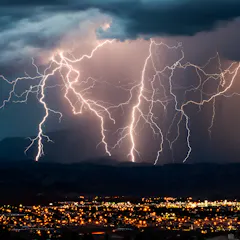
A new study shows how often lightning strikes and how it behaves, often hitting the ground with multiple strikes from the same flash.
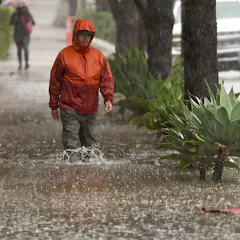
The strong El Niño that started in 2023 will still have big impacts at least through March. Here’s what to watch for next.
Top contributors
-

Professor of Geology and Environmental Geosciences, University of Dayton
-
Meteorologist and Research Program Manager, University of Wisconsin-Madison
-
Professor of Atmospheric Science, University at Albany, State University of New York
-
Operations Manager, Monash University
-
Professor of Law Emeritus, Vermont Law & Graduate School
-
Professor of Atmospheric Science, Iowa State University
-
Research and Operations Meteorologist, Center for Western Weather and Water Extremes, University of California, San Diego
-
Distinguished Professor of Meteorology, Penn State
-
Professor of Policy Analysis, RAND School of Public Policy
-
Assistant Professor of Climate and Space Sciences Engineering, University of Michigan
-
Associate Professor of Climate Change, Technology and Policy, Carleton University
-
Professor of Earth and Planetary Sciences, University of California, Santa Cruz
-
Associate Professor of Engineering, Georgia Institute of Technology
-
Professor of Hydrosystems Engineering, University of Michigan
-
Assistant Research Professor of Atmospheric Science, Penn State