
A South American frog named after Charles Darwin may be extinct from a deadly amphibian disease. Scientists at the Zoological…
Articles on Extinction
Displaying 361 - 380 of 420 articles
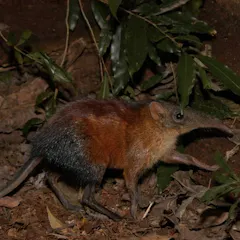
Kakadu National Park, Western Australia’s Shark Bay and Queensland’s wet tropics are among the world’s most important protected areas for conserving species, according to a study published today in the…
Bees went though a mass extinction, along with the dinosaurs and species of flowering plants, 65 million years ago. It’s…
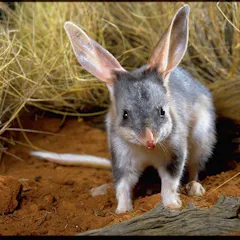
Despite once being described as common, mammals have been lost across the Australian landscape over the last 200 years. The impact has been particularly severe on Australia’s digging mammals, including…
A method to identify new homes for animals affected by climate change has been devised by a team of UK scientists. The Zoological…
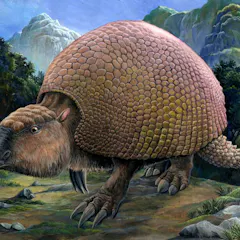
If Earth were like a human body, large animals might be its arteries, moving nutrients from where they’re abundant to where they’re needed. Currently the planet has large regions where life is limited…
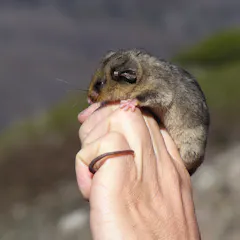
In work we published in Science today we look at two conflicting ideas on whether species can adapt to climate change. Are our ideas about extinction too catastrophic, or do we actually need to do more…
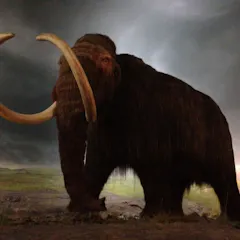
It is unlikely that a mammoth could be cloned in the way we created Dolly the sheep, as has been proposed following the discovery of mammoth bones in northern Siberia. However, the idea prompts us to consider…
The world’s most endangered cat, the Iberian lynx, is headed for extinction within the next 50 years. The international study…
Today we worry that cow farts are destroying the environment with methane; back in the Proterozoic, it’s certain that algae farts ruined it with oxygen. As an evolutionary biologist and conservationist…
Contrary to previous research, climate change has been found not guilty of causing the mass extinction of giant Australian…
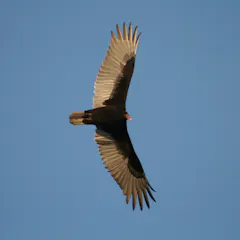
The rate of extinction of species today is many thousand times the natural rate. There are even examples that such loss can have serious impact on humans. So a critical question is: what is the role species…
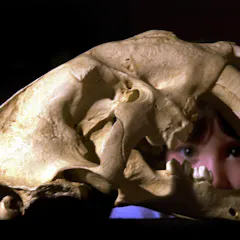
The State of Nature report published this month showed that of more than 3,100 British species surveyed, 60% are in decline, and one in 10 of those species on the Red List are under threat of extinction…
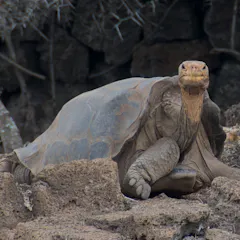
There can be few words as poignant as “endling”, the name given to the last surviving individual of a species. The picture (below) of Benjamin, the last Tasmanian tiger or thylacine, is heartbreaking…
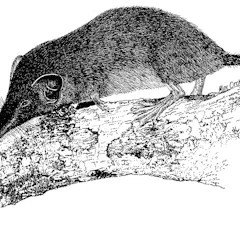
It may be that there are no more shrews in Australia. There was only ever one representative, edging into the Australian political estate on the remote Christmas Island, closer to Java than any other part…
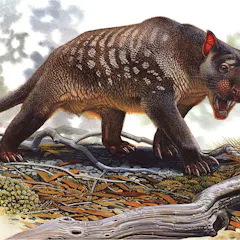
Throughout the Ice Age that characterised our planet for much of the last two million years or so mainland Australia, Tasmania and New Guinea formed a single landmass — Sahul. It was a strange and often…
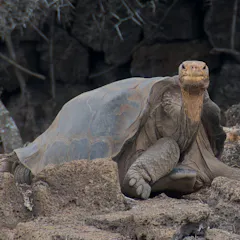
“Dad, the world is missing amazing animals. I wish extinction wasn’t forever”. Despite my wife and I working as biologists, our five-year-old son came to make this statement independently. He is highlighting…
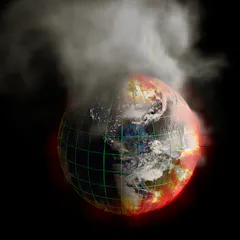
It’s long been known that massive increases in emission of CO2 from volcanoes, associated with the opening of the Atlantic Ocean in the end-Triassic Period, set off a shift in state of the climate which…
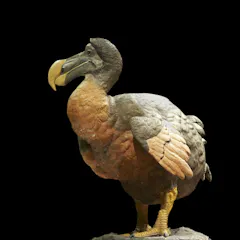
On Friday, March 15 in Washington DC, National Geographic and TEDx are hosting a day-long conference on species-revival science and ethics. In other words, they will be debating whether we can, and should…
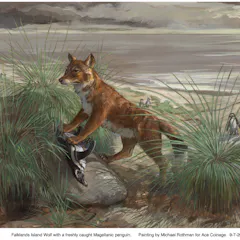
A long-standing natural history mystery has been solved, as my colleagues and I explain today in the journal Nature Communications. The Falkland Islands wolf, or warrah, may have been the world’s loneliest…
Top contributors
-

Professor of Conservation Biology, Charles Darwin University
-
Professor in Wildlife Ecology and Conservation, School of Life & Environmental Sciences, Deakin University
-
Professor of Conservation and Sustainable Livelihoods, Charles Darwin University
-
Matthew Flinders Professor of Global Ecology and Node Leader in the ARC Centre of Excellence for Indigenous and Environmental Histories and Futures, Flinders University
-
Professor in Conservation Science, School of the Environment, The University of Queensland
-
Professor of Wildlife Conservation, Australian National University
-
Distinguished Professor of Ecology, Fenner School of Environment and Society, Australian National University
-
Associate Professor in Vertebrate Palaeontology, Flinders University
-
Professor in Conservation Science, School of Ecosystem and Forest Science, The University of Melbourne
-
Professor, Urban Ecology and Biodiversity, The University of Melbourne; RMIT University
-
University Fellow in Biodiversity, Charles Darwin University
-
Professor of Environmental Management, The University of Queensland
-
Lecturer in the School of Applied Sciences, Edinburgh Napier University
-
Honorary Research Fellow, University of Sydney
-
Distinguished Research Professor and Australian Laureate, James Cook University