
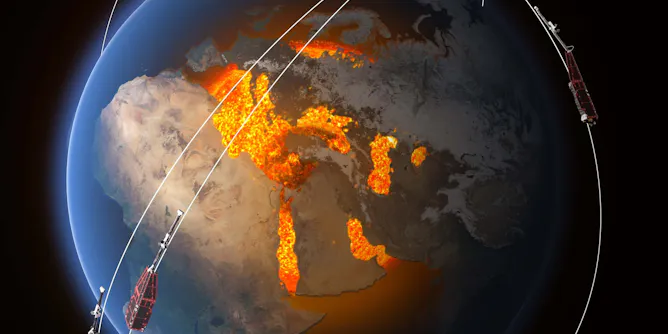
Space research never stops and it seems neither do the surprises. On ABC Breakfast News I covered some huge results from the last few weeks. Be still my beating (magnetic) heart Earth’s magnetic field…
Articles on Exoplanets
Displaying 161 - 180 of 228 articles
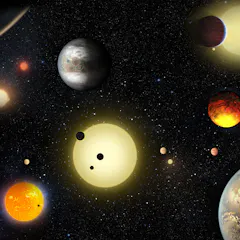
The number of known exoplanets doubled this week to more than 3,200. But why have only a handful of these those new planets caught people’s imagination?
The increasingly rapid pace of exoplanet discoveries must mean it is only a matter of time until astronomers find another Earth.
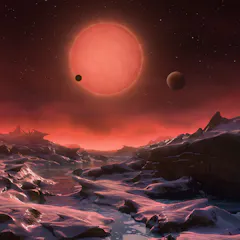
We don’t need to look for Earth-like planets exclusively around Sun-like stars. Tiny, dim TRAPPIST-1 has only 11 percent the diameter of the Sun and is much redder.
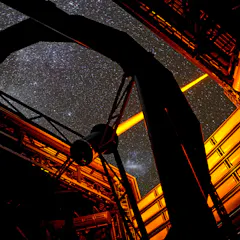
There are technological ways to hide a planet from intergalactic detection – as well as ways to signal that we’re just sitting here, eager for contact.
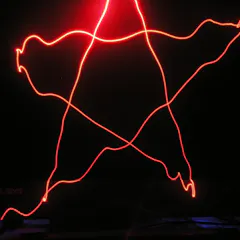
It’s an ambitious plan to send a micro-spaceship to our stellar neighbour but is this possible with today’s technology or even technology in the near future?
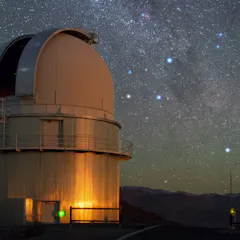
A US$100-million plan has been announced to send tiny probes out in space in search of life elsewhere in the universe. But are they looking in the right place?
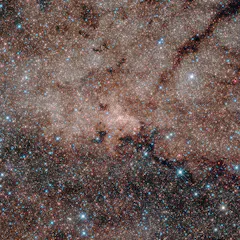
Each fortnight I get the amazing opportunity to speak about my top stories in space on ABC Breakfast News TV but for those of you who hate early mornings I wanted to make sure you got to hear of these…
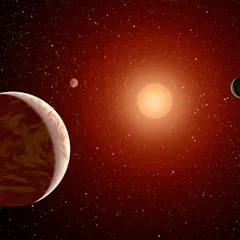
It could be orbiting LHS 2520.
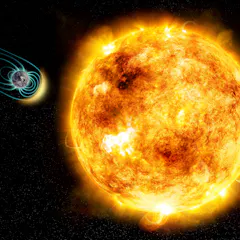
In the search for life on other planets in the universe we need to find the right kind of star, and it needs to have the right kind of space weather.
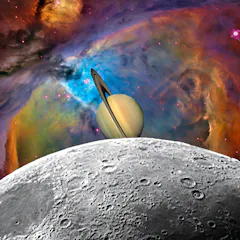
As the list of known planets beyond our solar system grows, the search for their moons is intensifying. One reason: they might hold the key to finding life elsewhere in the universe.
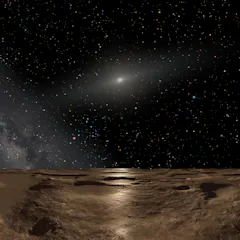
The search for new objects, including new planets, in our solar system has turned up some interesting finds. There have been a few failures over the years too.
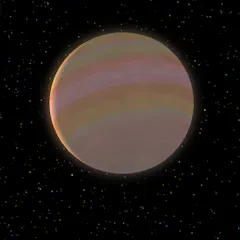
Jupiter had a big influence on how our solar system’s planets formed. New research – led by a high school student – tried to nail down how rare Jupiter analogs really are in other planetary systems.

New research gives a clue about what happens when there are two habitable worlds in the same solar system.
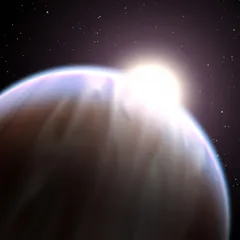
A hint of oxygen and a whiff of methane in a distant exoplanet’s atmosphere may be the first evidence we discover of alien life.
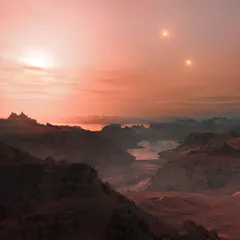
Is there another Earth out there? Certainly, there are a few contenders

Recent Martian findings are just the latest discoveries of aurora on other planets, both in and out of our solar system.
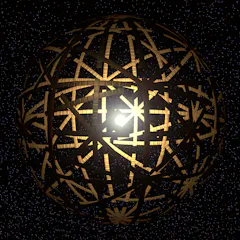
There’s a lot of speculation about a star behaving strangely in our galaxy. But even if it’s not evidence of alien intelligence, it’s sure to be an amazing discovery.

Five science (fiction) reasons why you should get to know Doctor Who.
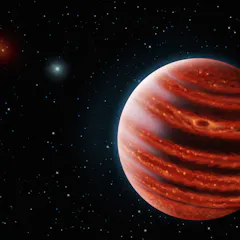
Studying the young, Jupiter-sized planet 51 Eridani b opens a window into our solar system’s past.
Top contributors
-

Professor (Astrophysics), University of Southern Queensland
-
University Distinguished Professor of Astronomy, University of Arizona
-
Professor of Astrophysics Education, The Open University
-
Professor (Physics), University of Southern Queensland
-
Associate Dean for Research and Professor of Astronomy and Planetary Sciences, University of Arizona
-
Lecturer, University of Southern Queensland
-
Postdoc astrophysicist, Mississippi State University
-
Associate Professor, Japan Aerospace Exploration Agency (JAXA)
-
Professor of Planetary Geosciences, The Open University
-
Ernest Rutherford Fellow, The Open University
-
PhD Candidate, University of Southern Queensland
-
Senior Lecturer in Physics, Nottingham Trent University
-
Senior Curator (Astronomy), Museums Victoria Research Institute; The University of Melbourne
-
W J McDonald Postdoctoral Fellow, The University of Texas at Austin
-
Professor and Associate Dean (Research), UNSW