

Global media coverage tends to focus on just one of Ethiopia’s conflicts.
Articles on Ethiopia
Displaying 21 - 40 of 487 articles
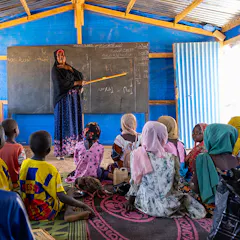
Eroding the gains made in education has severe consequences, especially for girls.

Over 100,000 water handpumps in rural sub-Saharan Africa are broken, leaving millions without safe water. Regular maintenance is cheaper than repairs.
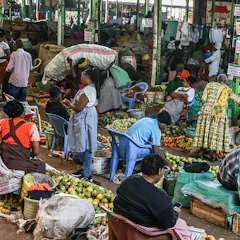
The universal fear is the effect the rise in prices is having on fuel, a staple commodity in every one of the countries for ordinary people as well as industries.
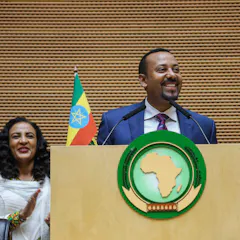
A national dialogue is usually convened during moments of political crisis or transition.
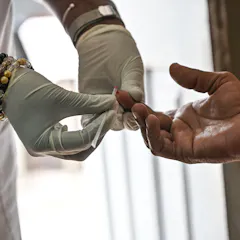
African countries must not sign away their health data or release their pathogens in exchange for donor funding.
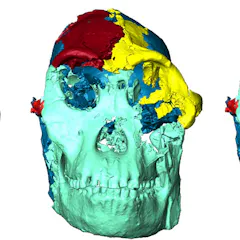
What did the face of our ancestors looks like 3 million years ago? Meet the reconstructed skull of “Little Foot” which provides valuable insights into how our ancestors adapted to their environment.
Digital identification is supposed to provide identity to all people. But sometimes it blocks access to essential services.

The violence in Tigray was structured, targeted and sustained.
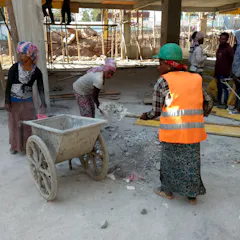
Ethnicity can be consciously adjusted in response to the risks women face in public spaces.
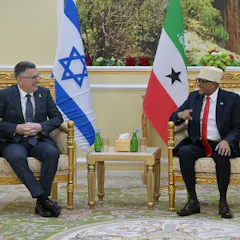
While Israel’s recognition of Somaliland alters the board, it doesn’t end the game.
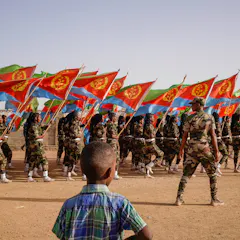
Why two of Africa’s most bitter rivals – Ethiopia and Eritrea – are on the brink of war again.

Museveni came to power with the sense that violence is critical to politics, and especially critical to liberation politics.
Internet shutdown affects millions of Africans more and more often and are most prominent during elections or protests.

There’s a significant shift towards the recognition of customary rights and the strengthening of women’s land rights.
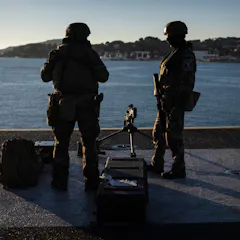
The Red Sea region has become a showcase of the new alliances shaping global power and influence.
Armed drones are increasingly being seen as a solution to security challenges in African conflicts.
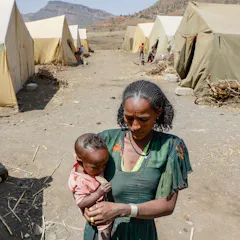
Famine was weaponised as part of a broader campaign of destruction in Ethiopia’s Tigray region.
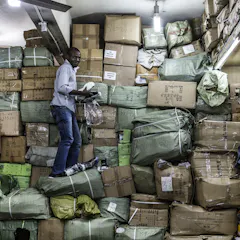
Ethiopian migrants in Johannesburg have reused buildings, densified commercial space and developed networks.
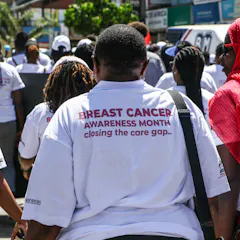
The confirmed presence of substandard or falsified anticancer medicines in sub-Saharan Africa will complicate cancer care.
Top contributors
-

Senior Lecturer of Political Science, Georgia Gwinnett College
-
Visiting Lecturer, University of Roehampton
-
Professor, Weber State University
-
Professor Emeritus in Global Health & Humanitarian Affairs, University of Manchester
-
Ph.D. Fellow, Center for Constitutional Democracy, Indiana University
-
PhD candidate, University of the Pacific
-
Associate Professor, Khalifa University
-
Professor of Geography, Ghent University
-
Professor of Sociology and Global and Africana Studies, University of Tennessee
-
Researcher, Ghent University; Oregon State University
-
Senior Research Fellow, Horn of Africa and Southern Africa, Institute of Commonwealth Studies, School of Advanced Study, University of London
-
Professor of International Relations, Norwegian University of Life Sciences
-
Lecturer and Senior Research Fellow at the South African Research Chair in International Law (SARCIL), University of Johannesburg
-
Visiting Adjunct Professor, School of Governance, University of the Witwatersrand
-
CGIAR