
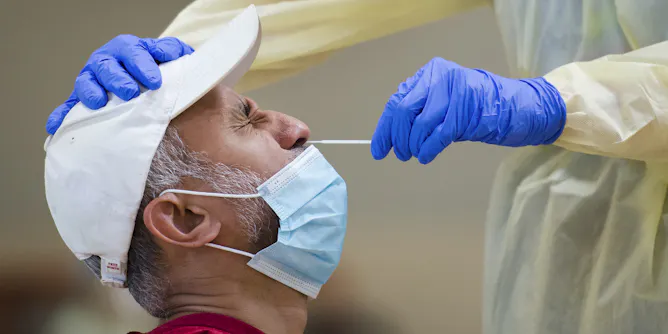
Understanding terms like sensitivity and specificity can help us make sense of COVID-19 testing, the accuracy of tests and what the results mean.
Articles on Epidemiology
Displaying 121 - 140 of 243 articles
Overall, Victoria’s roadmap is good. It identifies the right goal, provides explicit criteria for when restrictions might be lifted, and involves mostly appropriate restrictions.
Genetic analysis of virus samples from New Zealand’s latest COVID-19 cases is now much swifter. It’s providing key information, but hasn’t yet answered the question of where this second wave started.

A night manager at one of Melbourne’s quarantine hotels has been designated as “patient zero” in Victoria’s second wave of COVID-19. Here’s what that actually means.
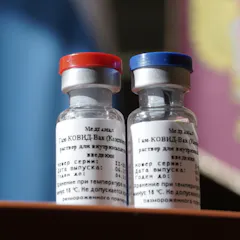
As Russia fast tracks a coronavirus vaccine, scientists worry about skipped safety checks – and the potential fallout for trust in vaccines if something ends up going wrong.
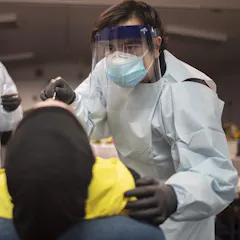
A recent report by the CDC estimated that the true number of COVID-19 cases in the US could be six to 24 times more than the number of confirmed cases. A public health scholar explains the implications.
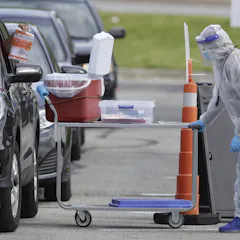
A team of researchers from Indiana University performed random testing for SARS-CoV-2 across the state. The results offer some of the most accurate data to date about important aspects of the virus.
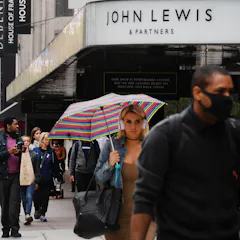
The R number fluctuates more as case numbers fall.
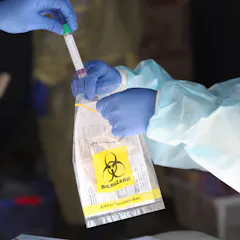
To control the COVID-19 pandemic through random testing would require about 6.5 million test a day. Using group testing and machine learning could get that number down to fewer than 40,000 day.

There’s no scientific definition for a wave of disease – and no evidence that the original onslaught of coronavirus in the US has receded much at all.
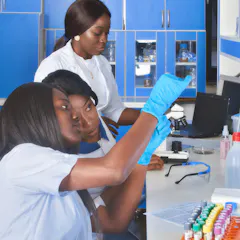
Some of the priorities were drawn from the World Health Organisation’s Roadmap; others were expressed by researchers in and from Africa as being important to the continent’s many contexts.
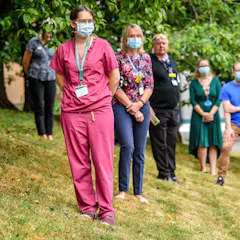
A simple computer model shows that safety measures can significantly impact both the exponential spread of COVID-19 and mortality rates.

Going to a protest may increase your risk of COVID-19. But calling out the structural racism that takes black lives and affects health outcomes for people of colour is also vital.

K is all about the super-spreaders.
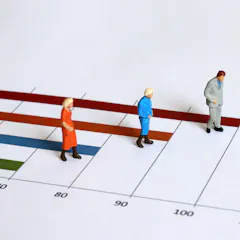
Over a 26 year period, cancer diagnoses have risen by 22%, but deaths from cancer have decreased by an equal amount.
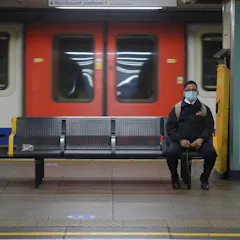
The UK locked down too late and has been in catch-up mode ever since. But with contact tracing, it can turn things around.

Untreated sewage could be the best tracking tool we have to prevent a second wave.
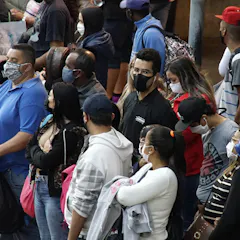
Epidemiological data suggests that 80% of COVID-19 cases can be traced to just 20% of those infected with SARS-CoV-2.
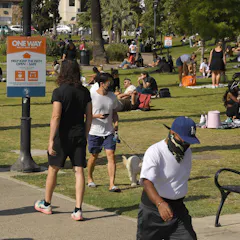
There are different types of epidemiological models. Those that rely on understanding of how disease spread are most useful now that most states have passed their peak case numbers.

An easy question, but a difficult answer.
Top contributors
-

Associate Professor, Epidemiology, Deakin University
-
Professor of Biostatistics and Epidemiology, Adelaide University
-
Professor, School of Medicine, University of Connecticut
-
Professor in Mathematical Biology, The University of Melbourne
-
Chair in Epidemiology, Deakin University
-
Head of School of Population Health and Professor, Infectious Diseases Dynamics and Interventions, UNSW
-
Professor of Epidemiology, Population Interventions Unit, Centre for Epidemiology and Biostatistics, Melbourne School of Population and Global Health, The University of Melbourne
-
Professor of Public Health, American University
-
Professor and Chair of Epidemiology, University of Michigan
-
Research Assistant Professor of Epidemiology, University of Michigan
-
Assistant Professor of Infectious Diseases, University of Pittsburgh
-
Ph.D. Student in Microbiology and Immunology, Vanderbilt Vaccine Center, Vanderbilt University
-
Matthew Flinders Professor of Global Ecology and Node Leader in the ARC Centre of Excellence for Indigenous and Environmental Histories and Futures, Flinders University
-
Honorary Enterprise Professor, School of Population and Global Health, and Department of General Practice and Primary Care, The University of Melbourne
-
Professor of Global Biosecurity, NHMRC L3 Research Fellow, Head, Biosecurity Program, Kirby Institute, UNSW