

To minimize the effects of future pandemics, it is not enough that we recognize deficiencies in our responses to COVID-19; we must start to build policies for the next pandemic as soon as possible.
Articles on Epidemiology
Displaying 41 - 60 of 243 articles
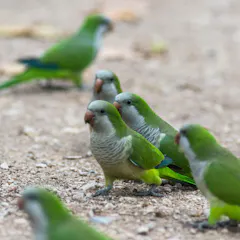
Dozens of people in Argentina are critically ill with ‘atypical’ pneumonia. But this is unlikely to be another pandemic looming.

Pandemics often have animal origins, so prevention is often dominated by health and veterinary sciences. However, social sciences’ role in understanding human behaviour is also crucial to prevention.

The historical correlation between economic prosperity and increased life expectancy might suggest that growth is generally a good thing. However, other evidence points to the downside of growth.
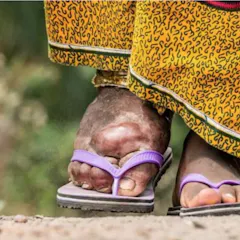
In rural Ghana, only 18% of patients believe elephantiasis is a disease. Some others think it is caused by curses or even rain. Only by understanding local beliefs can it be treated effectively.
Policymakers rely on models during uncertain times to figure out how their choices could affect the future. Over the pandemic, an ensemble of many COVID-19 models outperformed any one alone.

This is expected to be the smallest Omicron wave so far. But eligible older and vulnerable people are still recommended to have a booster.
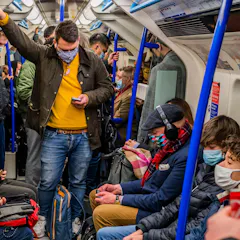
ONS, Zoe app, Google Trends … there were many ways to keep an eye on COVID cases during the pandemic. Here’s how they fared.

A calm voice, a trusted expert, devoted teacher. Epidemiologist Professor Mary-Louise McLaws was passionate about engaging with the mainstream media and communicating what she knew.
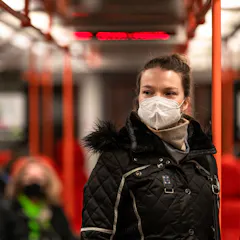
Australia is in the middle of its fifth Omicron wave, which has been brewing since February. But it’s been slow and drawn out and the health impacts are very different to earlier waves.

Finding cosmetics that are free of hormone- disrupting chemicals often means paying more. An epidemiologist explains the risk, particularly for young women.
It’s not entirely accurate to say that you’re more likely to die in a car accident than in a plane crash. Chances are, you’re not the average person.
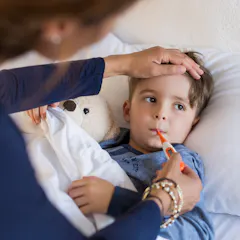
We may have an autumn surge in flu cases. So best start planning for your flu shot soon.

A biologist who studies how viruses spread from animals to people explains the process of spillover and the risks posed by the new bird flu that has spread across the globe.
People don’t all age at the same rate. Untangling the factors that influence health and disease – such as epigenetics, demographics and behavior – could lead to better care for those who need it most.

XBB.1.5 and other subvariants do signal a change in how the virus is mutating. Here’s what this means for Australia and globally.

While lung cancer rates have decreased by 43% in men, they have risen by 79% in women. New screening guidelines and recognizing early symptoms can help address the changing face of lung cancer.

Although chronic pain is recognized by scientists as a disease in its own right, it remains largely under-recognized, under-diagnosed and, above all, associated with numerous prejudices.

Long COVID impacts one in every five people who’ve had the virus. In the U.S., early research shows people of colour are most likely to develop long COVID. It has been called a mass-disabling event.
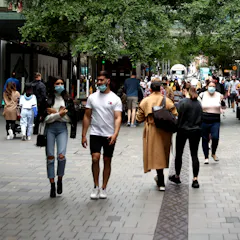
The evidence so far suggests this wave could be a shorter and smaller version of the Omicron BA.5 wave.
Top contributors
-

Associate Professor, Epidemiology, Deakin University
-
Professor of Biostatistics and Epidemiology, Adelaide University
-
Professor, School of Medicine, University of Connecticut
-
Professor in Mathematical Biology, The University of Melbourne
-
Chair in Epidemiology, Deakin University
-
Head of School of Population Health and Professor, Infectious Diseases Dynamics and Interventions, UNSW
-
Professor of Epidemiology, Population Interventions Unit, Centre for Epidemiology and Biostatistics, Melbourne School of Population and Global Health, The University of Melbourne
-
Professor of Public Health, American University
-
Professor and Chair of Epidemiology, University of Michigan
-
Research Assistant Professor of Epidemiology, University of Michigan
-
Assistant Professor of Infectious Diseases, University of Pittsburgh
-
Ph.D. Student in Microbiology and Immunology, Vanderbilt Vaccine Center, Vanderbilt University
-
Matthew Flinders Professor of Global Ecology and Node Leader in the ARC Centre of Excellence for Indigenous and Environmental Histories and Futures, Flinders University
-
Honorary Enterprise Professor, School of Population and Global Health, and Department of General Practice and Primary Care, The University of Melbourne
-
Professor of Global Biosecurity, NHMRC L3 Research Fellow, Head, Biosecurity Program, Kirby Institute, UNSW