
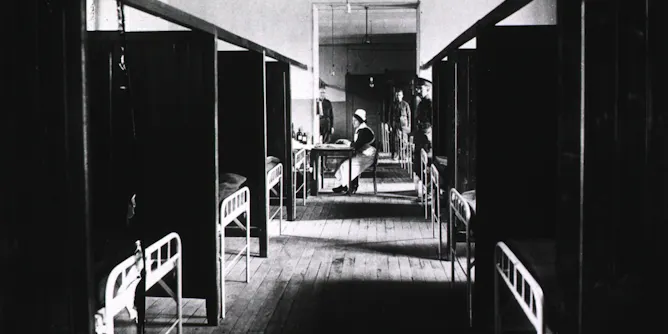
One hundred years after a strange and devastating pandemic, researchers comb for clues in dusty libraries, church records and long- forgotten books.
Articles on Epidemiology
Displaying 201 - 220 of 243 articles
Flu virus mutates so quickly that one year’s vaccine won’t work on the next year’s common strains. But rational design – a new way to create vaccines – might pave the way for more lasting solutions.
Scientists may have discovered why cancer incidence rises with age, and it’s got more to do with the immune system than people thought.

Lithium is present naturally in many water systems and was once considered an elixir. It has long been used to treat bipolar disorder, but researchers have also started exploring its role in dementia.
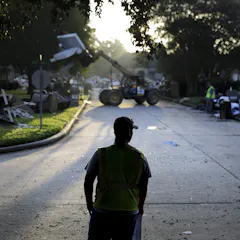
Epidemiologists study disease outbreaks in populations to determine who gets sick and why. In the wake of this year’s hurricanes, they are assessing impacts from mold, toxic leaks and other threats.

If you’re 45 or older and have depression, new research suggests you may need to ask for a heart check when you next see your doctor.
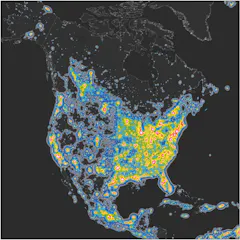
Study uses satellite data to add to growing evidence that nighttime light exposure raises risk of breast cancer, with the strongest link among young women.

While we must put in place effective measures to protect against the malicious use of personal data, not using the information collected about Australians comes at a cost.

Phrases like “knowledge production” conceal the fact that knowledge answers to something beyond itself and beyond us. To produce knowledge is to find out about something.

Long-term studies help identify new risk factors for disease and how we might address them.
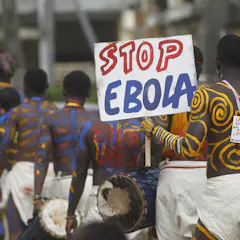
The power to overcoming Ebola was in public awareness by performing simple yet basic infection prevention and control measures like washing hands, isolation and reporting suspected cases.

Sometimes statistics and probability can produce unexpected or counter-intuitive results. If we’re hoping to use numbers to make good decisions, we should be wary of the traps.
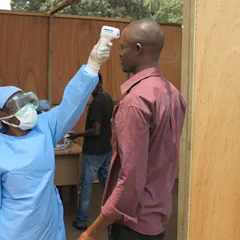
One year after the end of the West African Ebola epidemic, a study of survivors in Guinea shows what has been learned about the deadly virus, and what remains unknown.

Flu virus mutates so quickly that one year’s vaccine won’t work on the next year’s common strains. But a new way to create vaccines, called ‘rational design,’ might pave the way for more lasting solutions.

A new way of looking at what’s behind chronic disease takes into account social, environmental and other factors, rather than blaming individuals.

After almost four-and-a half decades and from modest beginnings, the Dunedin study has evolved into one of the most significant long-term tracking studies in the world.
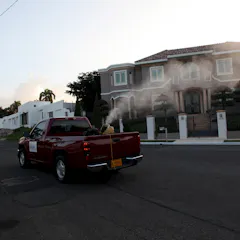
It’s hard to contain a mosquito-borne infection like Zika when the conditions are ideal for it to spread.

Women are catching up to men in rates of alcohol consumption and this has important implications for how we think about our community response to harmful alcohol use.
A computer model suggests that while more cases of Zika can be expected in the continental U.S. outbreaks will probably be small and are not projected to spread.

What could we do if a real-life zombie disease started to spread?
Top contributors
-

Associate Professor, Epidemiology, Deakin University
-
Professor of Biostatistics and Epidemiology, Adelaide University
-
Professor, School of Medicine, University of Connecticut
-
Professor in Mathematical Biology, The University of Melbourne
-
Chair in Epidemiology, Deakin University
-
Head of School of Population Health and Professor, Infectious Diseases Dynamics and Interventions, UNSW
-
Professor of Epidemiology, Population Interventions Unit, Centre for Epidemiology and Biostatistics, Melbourne School of Population and Global Health, The University of Melbourne
-
Professor of Public Health, American University
-
Professor and Chair of Epidemiology, University of Michigan
-
Research Assistant Professor of Epidemiology, University of Michigan
-
Assistant Professor of Infectious Diseases, University of Pittsburgh
-
Ph.D. Student in Microbiology and Immunology, Vanderbilt Vaccine Center, Vanderbilt University
-
Matthew Flinders Professor of Global Ecology and Node Leader in the ARC Centre of Excellence for Indigenous and Environmental Histories and Futures, Flinders University
-
Honorary Enterprise Professor, School of Population and Global Health, and Department of General Practice and Primary Care, The University of Melbourne
-
Professor of Global Biosecurity, NHMRC L3 Research Fellow, Head, Biosecurity Program, Kirby Institute, UNSW