
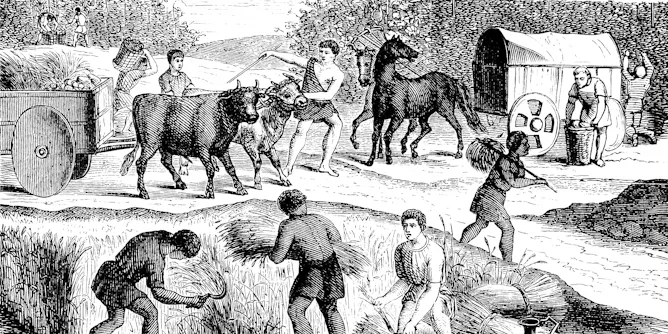
Human factors − such as how people produce food and how they organize themselves and live together − influence disease outbreaks.
Articles on Epidemics
Displaying 21 - 40 of 184 articles

Pandemics often have animal origins, so prevention is often dominated by health and veterinary sciences. However, social sciences’ role in understanding human behaviour is also crucial to prevention.
With the emergency phase of the COVID-19 pandemic in the rearview mirror, at least for now, we look back on a handful of stories that provided sharp insights at key moments in the pandemic.
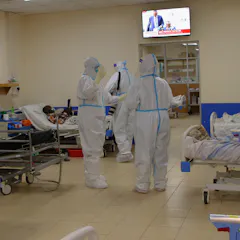
A new global dataset shows there is no clear global increase of infectious disease outbreaks over time. And it can suggest which countries would most likely be affected by an outbreak.

There has been an epidemic outbreak of Marburg virus in Equatorial Guinea for the first time. Here’s what you need to know about the virus, and how it spreads.
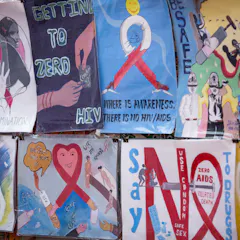
Dec. 1 marks World AIDS Day. Canada has the tools and means to end the epidemic. The question remains, are we up to the task?
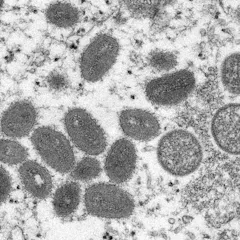
The monkeypox virus, which is commonly found in West and Central Africa, is now causing many infections in the U.S., Europe and Latin America.

The seriousness of an epidemic is a function of several factors, including the degree of contagiousness and potential for rapid spread.
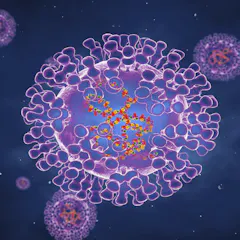
Nigeria must step up its preparedness for mpox.
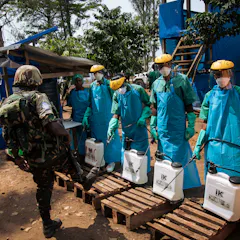
International epidemic management involves ceding to foreign experts who possess, at best, a surface-level understanding of a very complex region.
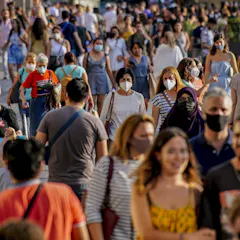
Endemic doesn’t mean we drop our guard, surrender to the virus or downgrade the threat the virus poses to individuals and the community.

It was the biases of its ‘first world’ which prevented South Africa from mobilising the energies and talents of most of its people against COVID-19.
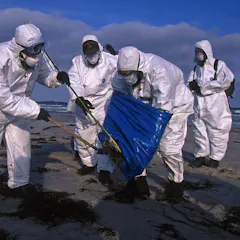
Each year in spring and summer, waterbirds mingle on their breeding grounds in Siberia and mix their flu viruses, creating new variants they then bring to Europe, Asia and Africa.
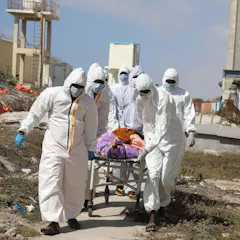
Satellite imagery can help to get data in fragile, crisis-affected situations.

The past century’s vampires have often been a bit dashing, even romantic. That’s not how the myth started out.

De nombreux pays africains ont acquis beaucoup d'xpériences en matière de gestion de épidémies de fièvres hémorragiques virales qu'ils peuvent appliquer à celle du virus à Marburg.
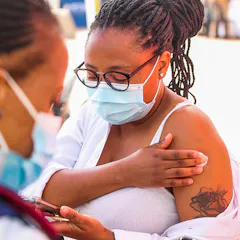
Epidemics do not require the total eradication of the disease to end.

For decades, US schools have been common sites for vaccine clinics to respond to outbreaks and provide catch-up immunizations. So why are they suddenly controversial?

Experts assess Nigeria’s response to COVID-19 so far and express worry that the country does not appear to have learnt much; it isn’t prepared for the next pandemic.

The course offers a model for teaching about complex problems, and underlines the critical role of university learning, research and outreach in understanding and addressing them.
Top contributors
-

Professor of Global Biosecurity, NHMRC L3 Research Fellow, Head, Biosecurity Program, Kirby Institute, UNSW
-
Director of the School of Journalism & Strategic Media, Professor of Media Studies, Middle Tennessee State University
-
Assistant Professor of History, University of Pittsburgh
-
Fellow, Nigerian Academy of Science
-
Principal Visiting Fellow & Former Deputy Director, International Institute for Global Health (UNU-IIGH), United Nations University
-
Professor of Political Studies, University of Johannesburg
-
Research Scientist, African Population and Health Research Center
-
Director, Scowcroft Institute of International Affairs and Executive Professor, Texas A&M University
-
Associate Professor of Epidemiology, Texas A&M University
-
Assistant Professor, Texas A&M University
-
Lecturer, Biomedical and Life Sciences, Lancaster University
-
Associate Professor of Biology, Penn State
-
Professor of Clinical Microbiology, University of Lagos
-
Associate Professor, Epidemiology, Deakin University
-
Lecturer in Virology, Queen's University Belfast