
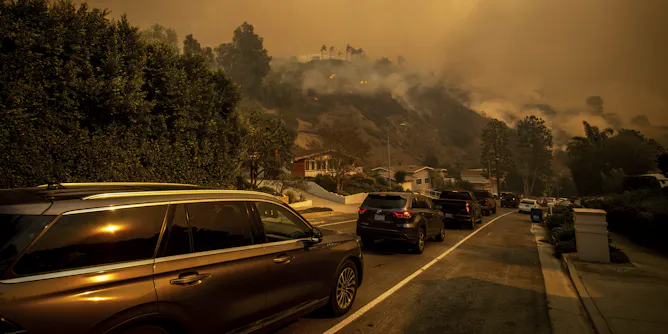
The chemicals emitted when buildings and vehicles burn can find their way into nearby homes. Studies show the health risks can stick around.
Articles on Environmental health
Displaying 41 - 60 of 202 articles

For example, the first Trump administration tried to use the principles of transparency to prevent federal agencies from considering major health studies when setting pollution rules.

A series of surveys in the months and years after the devastating blaze near Boulder revealed continuing health concerns in surviving buildings, and tips for how to clean up smoke-damaged homes.
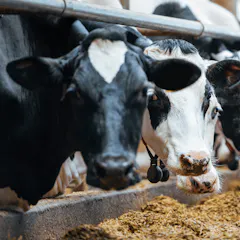
There has been an enormous amount of misinformation about Bovaer, with concerns it could make its way to humans via milk or beef. Here’s what the science says.
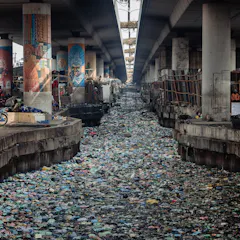
There are 960 million disposable baby diapers used and thrown away every year in Ghana, Nigeria and Kenya. Ways need to be found to recycle them instead.
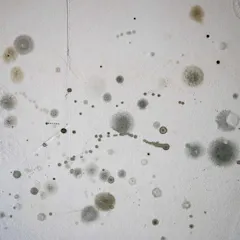
Mold growth happens in damp indoor areas and is difficult to prevent. It can be an annoyance but usually isn’t harmful to your health.

New techniques monitor the health of lakes in real time by analyzing their microbiome to anticipate and respond to environmental threats such as cyanobacteria.

The large-scale study linked exposure to air pollution with a higher infertility risk in men, while traffic noise affected women.
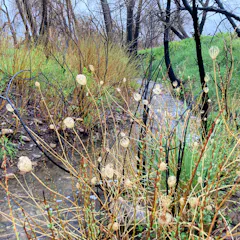
After wildfires in California and Colorado cities, levels of harmful metals in the water jumped. Nature sent up a red flag.

Durability and the risk of chemicals being released when pipes heat up are just 2 concerns about plastic pipes.

Hajj has grappled with public health and safety risks such as crowd crushes and infectious diseases in the past. It’s now facing an emerging risk: climate extremes.

Nanoplastics are the smallest microplastics, far narrower than a human hair. Very little is known about their composition, structure or how they break down in the environment.
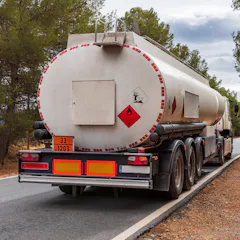
Nobody wants to see an accident involving flammable, corrosive or radioactive material. But understanding the rules put in place to prevent these accidents isn’t easy.

From synthetic fabrics to car exhaust to wildfires, exposure to environmental pollutants push the skin microbiome to adapt in ways that reduce its ability to protect the skin.

Filtering out PFAS is only the first step. These ‘forever chemicals’ still have to be destroyed, and there are many questions about how to do that safely.
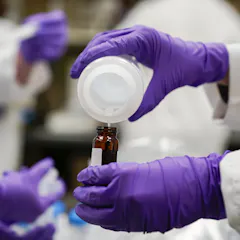
These chemicals are now found on almost every part of the planet, including in the bodies of a large percentage of the American public. An environmental health scientist explains the risks.

Microplastics are created when everyday products – including clothes, food and beverage packaging, home furnishings, plastic bags, toys and toiletries – degrade.
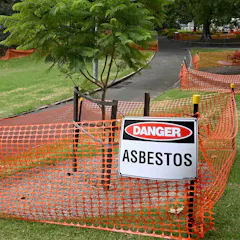
Exposure to asbestos can cause the same cancer in dogs as it does in humans. Recent cases of asbestos-contaminated mulch highlight the need to better protect our pets.
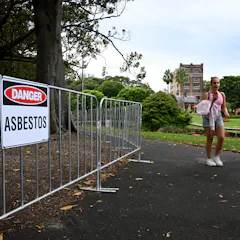
The most important factor for disease risk is exposure – you actually have to inhale asbestos fibres to be at risk of disease. But asbestos needs to be treated with caution.

New research provides evidence for the first time that the primary chemical in Roundup is reaching people in nearby homes, and it isn’t just from the food they eat.
Top contributors
-

Honorary Professor, School of Natural Sciences, Macquarie University
-
Assistant Professor of Environmental Health, Middlebury College
-
Associate Professor of Environmental and Occupation Health, University of California, Irvine; University of Southern California
-
Senior Lecturer in Pharmacology, Adelaide University
-
Professor of Environmental Health Sciences, UMass Amherst
-
Professor, Environmental Studies Program at UC Santa Barbara
-
Associate Professor of Environmental and Occupational Health Sciences, University of Washington
-
Postdoctoral research fellow, Macquarie University
-
Chief Specialist Scientist (Public Health), South African Medical Research Council
-
Associate Professor of Sociology; Co-Founder, Center for Environmental Justice at CSU, Colorado State University
-
Professor of Earth Sciences and Executive Director, Environmental Resilience Institute, Indiana University
-
Emeritus Professor of Medicine, Adelaide University
-
Honorary Associate Professor in Environmental Health, Australian National University
-
Specialist scientist, South African Medical Research Council
-
Professor of Environmental Health Sciences, Johns Hopkins University