
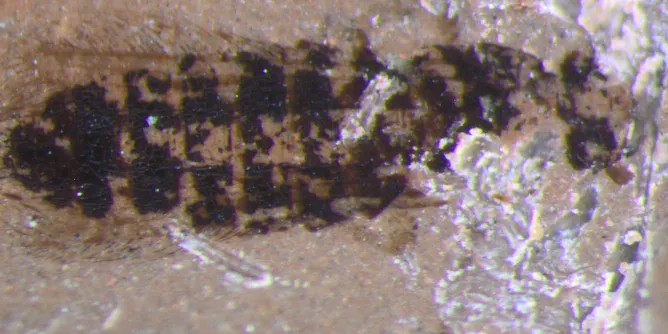
This is the first time that a fossil thrips has been recorded anywhere in Africa, or the entire southern hemisphere.
Articles on Entomology
Displaying 21 - 40 of 109 articles
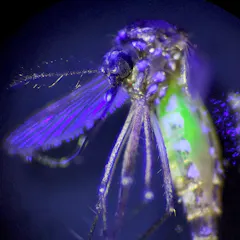
The virus that causes eastern equine encephalitis, or EEE, has evolved to infect mosquitoes. To be able to spread between people, however, it faces extra challenges.
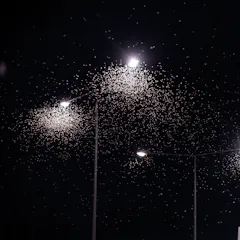
Artificial lights at night are causing serious disruption to these insect night shift workers. That’s a problem for everyone.

Bugs that buzz and flutter at other times of year are conspicuously absent during winter months.

Fruit flies wreak havoc on crops in Hawaii, but a type of parasitoid wasp armed with a biological weapon has helped keep the pests at bay.

The promising compounda were discovered on an organic farm.

All of a sudden, dragonflies are everywhere – but they’ve been waiting a long time for their chance to take to the air.

With the help of citizen scientists, South African entomologists can work to keep invasive wasp populations from spreading.
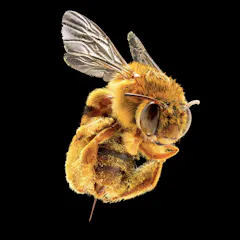
99.96% of bee species do not die after stinging. So why does everyone think they do?
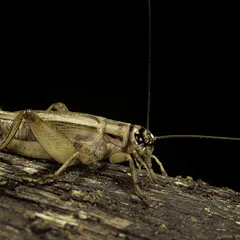
Only male crickets have wing structures that produce sound, but females are very good at following the signal.
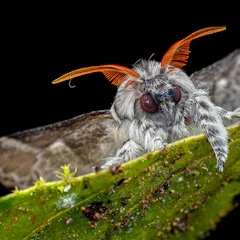
Sometimes it seems the night is just buzzing with insects. But are there really more insects out at night? We analysed all the evidence on insect activity across the day–night cycle to find out.

The last time that these two groups of cicadas emerged from underground together, Thomas Jefferson was president.
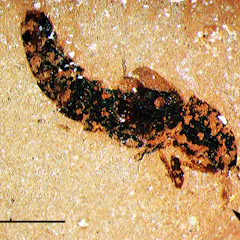
This is one of the first fossil rove beetles ever discovered on the continent and in the southern hemisphere more broadly.
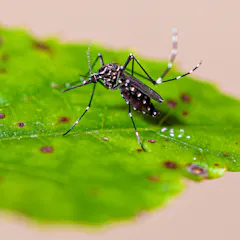
Female mosquitoes don’t want to lay their eggs alone, but they don’t want sites that are too crowded either. Understanding what guides their choice could inform new control strategies.

The native red admiral is less common than it used to be, but we can all help threatened bug species by ensuring they have the right habitats to thrive in.
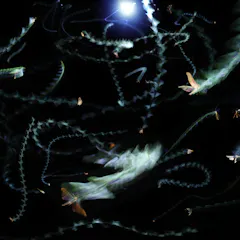
A new study shows how artificial light at night scrambles insects’ normal flight patterns, pulling them off course into orbit around the light.
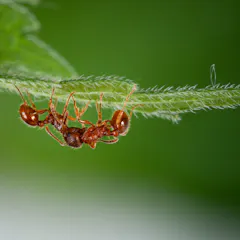
Most stings can be safely handled at home. But in rare cases, you can get a serious allergic reaction, which needs urgent medical attention.
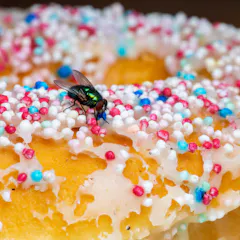
Flies often beat out competitors for food because of their specialized sensing organs called antennae.
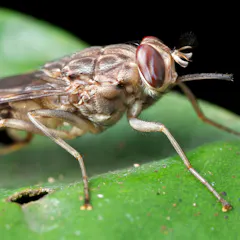
New research on what attracts blood-feasting flies to blue objects could help minimise the impacts of those insects on people and animals.

Scientists are learning amazing things about bees’ sensory perception and mental capabilities.
Top contributors
-

Associate Professor in Entomology, University of Sydney
-
Postdoctoral Researcher in Mycology, West Virginia University
-
Lecturer, School of Life and Environmental Sciences, University of Sydney
-
Senior Ecologist, University of Sydney
-
Emeritus Professor of Biology, University of Bath
-
Senior Research Scientist of Ecology and Evolutionary Biology, University of Connecticut
-
Assistant Professor of Ecology and Evolutionary Biology, University of Connecticut
-
Professor of Behavioural Ecology, UCL
-
Senior Lecturer
-
Professor and Department Head, Entomology and Plant Pathology, University of Tennessee
-
PhD Candidate in evolution, behaviour, ecology and entomology, University of East Anglia
-
Lecturer in Biological Sciences, University of Wollongong
-
Professor of Biological Sciences, Florida International University
-
PhD Candidate in Zoology, University of Otago
-
Professor of Conservation Ecology, University of Gloucestershire