

A university professor who researches emergency management suddenly found himself in the middle of one of Canada’s worst mass shootings.
Articles on Emergency response
Displaying 21 - 40 of 52 articles
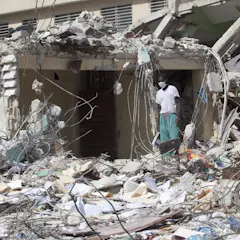
The unique skills of Canadian health-care workers with international disaster experience could be a valuable resource during domestic emergencies.

As the “freedom convoy” and occupation of Ottawa drags on, the potential for a violent stand-off between protestors and police increases, which in turn decreases the chances of a peaceful resolution.

Canadians need to rethink their relationship to the pandemic by learning to live in a state of continual disaster for the foreseeable future.
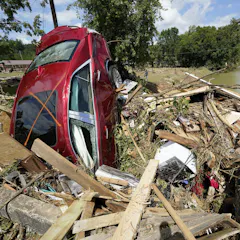
By mimicking the human brain, autonomous drones could locate victims in hard-to-reach places and alert responders to their location within seconds.
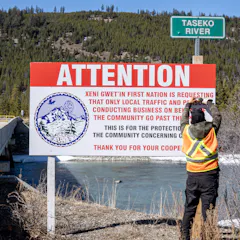
The minutiae of bureaucratic policy and procedure perpetuates colonialism and undermined a fully Tŝilhqot’in-led pandemic response.
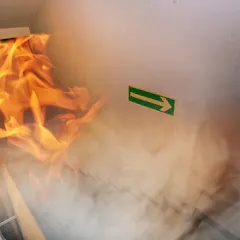
Researchers are using mixed reality technologies to investigate how people behave in in emergency situations. The findings are helping shape disaster responses.

Shoring up surveillance and response systems and learning lessons from how the COVID-19 pandemic unfolded will help the world be ready the next time around.
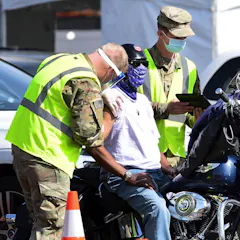
Developing a national disaster response plan for the pandemic was only step one.
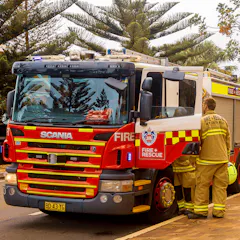
Yesterday, the bushfire royal commission handed down interim observations. But there’s a glaring omission.
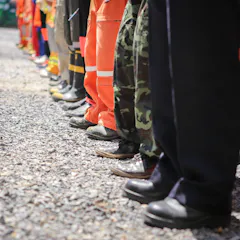
Medical assistance teams are a group of experienced health workers sent to handle a medical or humanitarian crisis, including from today, the growing number of COVID-19 cases in Victoria’s aged care.

New research shows almost 20% of families caring for children with special needs were unable to buy essential medication during coronavirus.
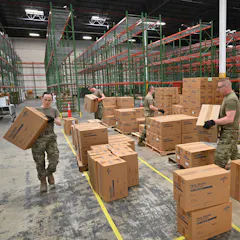
The paradox of the stockpile is that it’s meant to protect against future threats, but is limited by today’s imagination about what those threats might be.

The National Guard may be the least understood branch of the US military. A National Guard attorney and military law professor explains how it works.
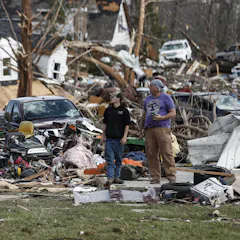
Donated goods often not only fail to help those in actual need but cause congestion, tie up resources and further hurt local economies.
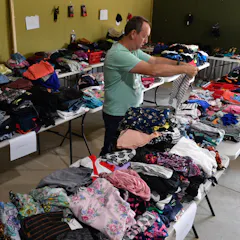
It’s worth thinking carefully about how to give, to ensure you’re not wasting your contribution or inadvertently making things worse.
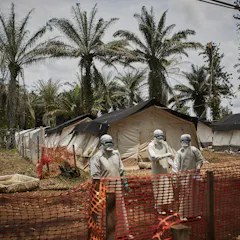
When done properly, a simulation exercise is a useful tool for evaluating preparedness for a public health emergency.

Emergency responders and military personnel need to think creatively – even imaginatively – to save lives under pressure. Analyzing the Grenfell Tower Fire in London reveals useful lessons.
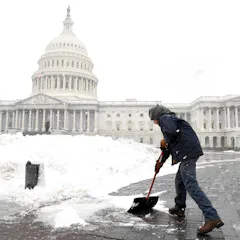
The shutdown poses a very real threat to preparedness for future emergencies, such as natural disasters and disease outbreaks.

Wildland firefighting has always been a risky job, but development in fire-prone areas is making it more dangerous by putting forest firefighters in situations they are not equipped or trained for.
Top contributors
-

Associate Professor of Disaster and Emergency Management, York University, Canada
-
Professor, Disaster & Emergency Management, Faculty of Liberal Arts & Professional Studies & Director, CIFAL York, York University, Canada
-
Professor of Electrical, Computer and Biomedical Engineering, University of Hartford
-
Visiting Assistant Professor of Information Sciences and Technologies, Rochester Institute of Technology
-
Assistant Professor, Internal Medicine, University of South Florida
-
Professor of Information Systems, Lancaster University
-
Research Fellow, American University School of Public Affairs
-
Fellow, Nigerian Academy of Science
-
Professor of Political Science, Public Policy and Urban Affairs, Northeastern University
-
Coordinator, Veterinary Extension Specialist Group, Colorado State University
-
Senior Lecturer/Associate Professor, Department of Government, University of Essex
-
Lecturer in Information Security, Governance and Leadership / Design Thinking, The University of Queensland
-
Ph.D. Candidate, Northeastern University
-
Professor of Public Health, University at Albany, State University of New York
-
Eugene H. Fram Chair in Applied Critical Thinking; Principal of the Collaboratory for Resiliency & Recovery @ RIT & Professor of Civil Engineering Technology, Environmental Management and Safety, Rochester Institute of Technology