

Women were often imprisoned with their abusers, making it nearly impossible to escape.
Articles on Emergency planning
Displaying 1 - 20 of 43 articles

The Los Angeles fires may be the most costly natural disaster in US history. An expert on safety, risk reduction and complex systems calls for a blue-ribbon commission to analyze their causes.
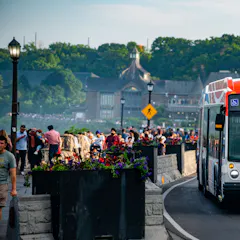
A million people are anticipated to head to the Niagara Region to experience the total solar eclipse on April 8. Keeping large crowds of spectators safe may pose a challenge for the region.

Prepping is fast becoming mainstream, but new government advice fails to address inequality, and could cause division between the haves and have-nots.

The North Queensland floods remind us of the need to build community resilience to disasters – during the event, in the immediate aftermath and beyond.

As the “freedom convoy” and occupation of Ottawa drags on, the potential for a violent stand-off between protestors and police increases, which in turn decreases the chances of a peaceful resolution.
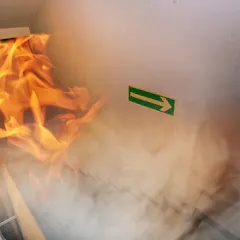
Researchers are using mixed reality technologies to investigate how people behave in in emergency situations. The findings are helping shape disaster responses.
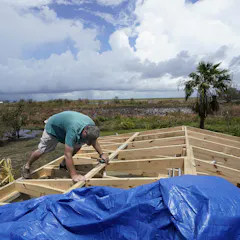
Federal weather scientists are pushing to make the US more ‘weather-ready,’ which could mean prepping for fires, flooding or storms depending on where you live. The common factor: thinking ahead.

The COVID-19 pandemic is a global problem and solutions must also be found for the most vulnerable populations.
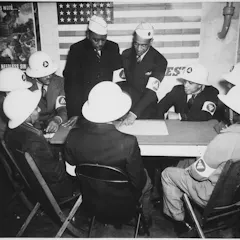
Since the Cold War, Americans have shifted from engaging in active self-rescue to passively waiting for help from a centralized, bureaucratic federal emergency response.
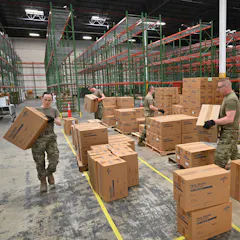
The paradox of the stockpile is that it’s meant to protect against future threats, but is limited by today’s imagination about what those threats might be.

As response to COVID-19 moves from a learning phase to an operational phase, lessons from the 2009 H1N1 pandemic can inform Canada’s action plan.
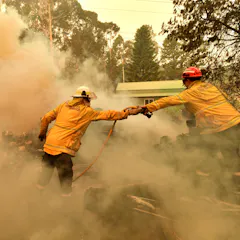
We don’t need to send in the army every time there’s a natural disaster, or create a national fire fighting force. We need to think practically about working together in emergencies.

Is it possible to plan for the unforeseen? Some basic principles allow careful preparation to be reconciled with quickly shifting circumstances.
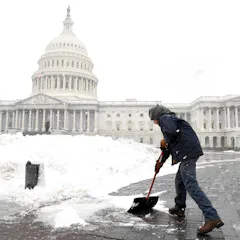
The shutdown poses a very real threat to preparedness for future emergencies, such as natural disasters and disease outbreaks.
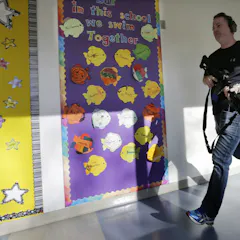
While emergency drills may help schools feel safer, they contain underlying and often unintended moral messages about the nature of school and life itself.
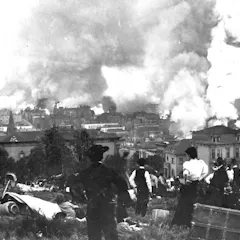
According to current forecasts, California has a 93 percent chance of an earthquake with magnitude 7 or greater occurring by 2045. Early warning systems, now in development, could limit casualties and damage.

Evacuating nursing home residents during a disaster can be even more dangerous than staying put.
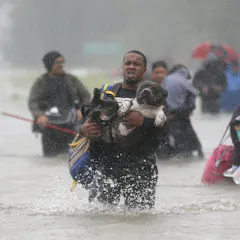
In the wake of natural disasters, pets are be stranded, lost or abandoned. There are simple guidelines that can help keep your whole family safe.

During Hurricane Katrina in 2005, some people died rather than evacuating without their pets. Now emergency managers are required to include animals in their response plans.
Top contributors
-

Assistant Professor of Nursing, University of Michigan
-
Associate Professor of Disaster and Emergency Management, York University, Canada
-
Clinical Instructor of Veterinary Clinical Medicine, University of Illinois Urbana-Champaign
-
Research scientist, CSIRO
-
Scientia Professor, Faculty of Medicine and Health, UNSW
-
Senior Researcher, CSIRO
-
Associate Professor, Macquarie University
-
Director, CSIRO Digital Productivity and Services Flagship, CSIRO
-
Research Team Leader, Bushfire Behaviour and Risks, CSIRO
-
Associate Lecturer in Climate Change and Health, The University of Melbourne
-
Professor, Digital Media Research Centre, Queensland University of Technology
-
Professor of Geophysics and Department Head, Colorado State University
-
Researcher, CSIRO
-
Seth Bonder Collegiate Professor of Engineering, University of Michigan
-
Professor, Aged Care Medical Research Australian Centre for Evidence Based Aged Care, La Trobe University