

Cells called macrophages can devour living cancer cells – and may hold the key for successful treatment.
Articles on Microscopy
Displaying 1 - 20 of 42 articles
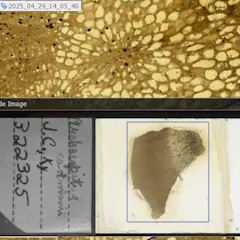
Pollen, algae, insects, radiolarians – each unique microfossil holds clues to how Earth has changed over millions of years. Combining AI with digital scanners helps researchers piece it all together.

Naloxone can reverse an overdose in minutes, but exactly how it does this at the molecular level has previously been unclear.

Master switches of cell communication, G protein-coupled receptor kinases are the target of many drugs across a range of diseases.

Attosecond science allows the extremely fast movements of electron particles to be observed. This emerging field brings both opportunity and controversy.
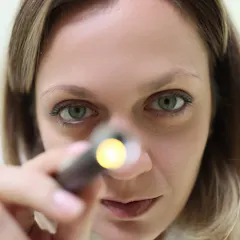
Your GP shines a light in your eyes, orders a blood test and requests some medical imaging. All rely on light to help diagnose disease.
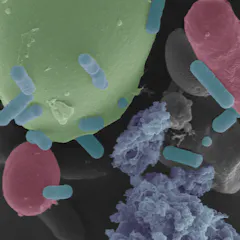
You can thank yeast and bacteria for the distinctive taste and smell of the oldest leavened bread in history.

Studying the human brain is difficult because of its vast and intricate network of neural connections. The fruit fly offers a simpler but similar model that researchers can more easily map.

Sugar molecules called glycans cover the surface of all cells, acting as ID cards that broadcast what they are to the rest of the body.
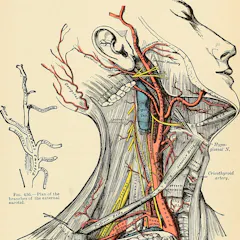
From body snatching to Photoshop and virtual reality, the techniques of medical illustration have evolved. But its essential role in showing clinicians how to care for the body continues today.

Visualization is an essential part of the scientific process. Advances in imaging have enabled eye-opening discoveries, not only for scientists and researchers but also for the general public.

Superresolution microscopy allowed researchers to view cells at the molecular level. Improvements on the technique can help study the building blocks of complex cell processes over time.
A new way to make high-frequency light could make it easier to look at things 10 times smaller than conventional microscopes can see.
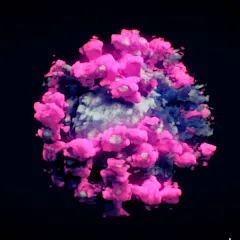
Many microscopy techniques have won Nobel Prizes over the years. Advancements like cryo-ET that allow scientists to see the individual atoms of cells can reveal their biological functions.

New research reveals that the London Underground is polluted with small particles which may carry negative health effects for humans.
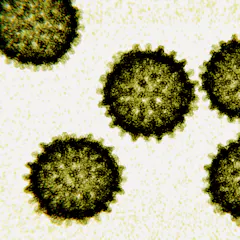
Using a Nobel Prize-winning technique called cryo-EM, researchers were able to identify potential areas on the hepatitis C virus that a vaccine could target.
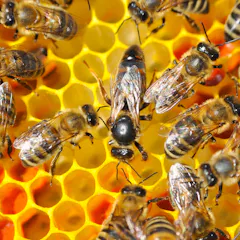
Studying bee sperm is difficult because of the way it coils, but fluorescent light illuminates the head of the sperm. Sperm quality may indicate stress levels in the bee colony.
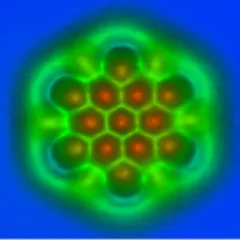
A physicist explains how atoms arrange themselves into molecules – and how scientists are able to image these tiny bits of matter that make up everything around you.
So far, similar medical diagnostics tech has either required time-consuming post processing, or has used parts that prevented it from being integrated into a flat design.
Understanding when and how neurons die is an important part of research on neurodegenerative diseases like Lou Gehrig’s, Alzheimer’s and Parkinson’s diseases.
Top contributors
-

Scientific Program Leader at Gladstone Institutes, University of California, San Francisco
-
Associate Professor of Neural and Behavioral Sciences, Penn State
-
Professor of Computational and Systems Biology, Associate Senior Vice Chancellor for Science Strategy and Planning, University of Pittsburgh
-
Senior Lecturer in Nanomedicine, King's College London
-
Reader in Engineering, University of Cambridge
-
Ph.D. Student in Electrical and Computer Engineering, University of California, San Diego
-
Junior Research Fellow, Imperial College London
-
Microscopy and Histology Core Facility Manager, University of Aberdeen
-
Assistant Professor in Physics, Heriot-Watt University
-
Head of Marine Imaging Lab, University of Haifa
-
Postdoctoral Fellow, Massachusetts Institute of Technology (MIT)
-
Associate Professor of Physics, Griffith University
-
University of Sydney
-
Professor of Science Communication and Chemistry, University of Hull
-
Nanoartist and creative-practice based researcher in Media, Curtin University