

Pollen, algae, insects, radiolarians – each unique microfossil holds clues to how Earth has changed over millions of years. Combining AI with digital scanners helps researchers piece it all together.
Articles on Microscope
Displaying all articles
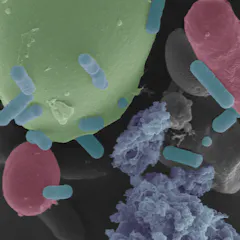
You can thank yeast and bacteria for the distinctive taste and smell of the oldest leavened bread in history.

Visualization is an essential part of the scientific process. Advances in imaging have enabled eye-opening discoveries, not only for scientists and researchers but also for the general public.

Superresolution microscopy allowed researchers to view cells at the molecular level. Improvements on the technique can help study the building blocks of complex cell processes over time.
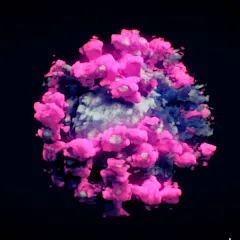
Many microscopy techniques have won Nobel Prizes over the years. Advancements like cryo-ET that allow scientists to see the individual atoms of cells can reveal their biological functions.
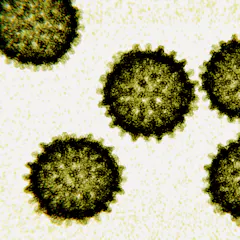
Using a Nobel Prize-winning technique called cryo-EM, researchers were able to identify potential areas on the hepatitis C virus that a vaccine could target.

Quantum microscopes reveal biological structures that would otherwise be impossible to see.
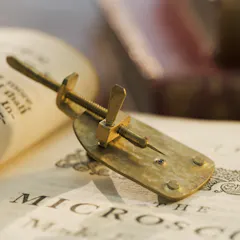
Van Leeuwenhoek, who discovered bacteria, is one of the most important figures in the history of medicine, laying the groundwork for today’s understanding of infectious disease.
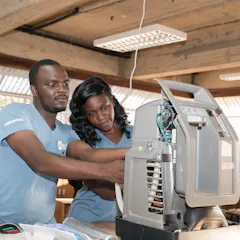
Engineering students in Malawi and Tanzania have used the materials and tools available to them to build ventilators, personal protective equipment and UV disinfection systems.
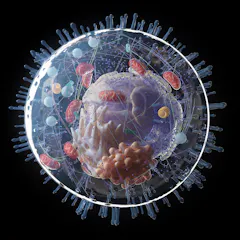
Nanodiamonds aren’t just cellular bling: they could be used to better understand the development of cancer in our cells.
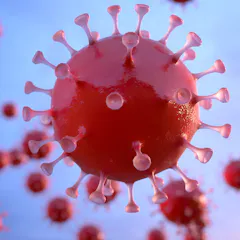
Viruses exist in a realm where there is no light and colour has no meaning. In their COVID-19 depictions, designers, illustrators and communicators make some highly creative and evocative decisions.

Born on July 18, 1635, this polymath broke ground in fields ranging from pneumatics, microscopy, mechanics and astronomy to civil engineering and architecture.

Our view of this essential dimension of earth’s biome has been shaped by the manufacturers of cleaning products.
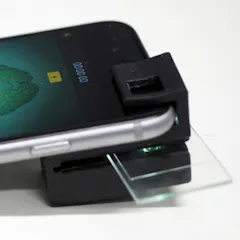
Even though you don’t think of your mobile phone as being anything like a microscope, it’s got almost all the parts you need.
Top contributors
-

Chancellor's Professor of Medicine, Liberal Arts, and Philanthropy, Indiana University
-
Professor of Computational and Systems Biology, Associate Senior Vice Chancellor for Science Strategy and Planning, University of Pittsburgh
-
Research Officer, RMIT University
-
Senior Lecturer, School of Creative Industries, University of Newcastle
-
Professor of Quantum and Precision Technologies, The University of Queensland
-
Associate Professor of Civil Engineering, University of Malawi
-
Assistant Professor of Electrical & Computer Engineering, Biomedical Engineering, Biointerfaces Institute, Applied Physics, Macromolecular Science & Engineering, University of Michigan
-
Professor of Bioengineering, Rice University
-
Researcher, Department of Solid State Physics, Lund University
-
Professor and Director Neuroscience Program, Northern Kentucky University
-
Scientific Program Leader at Gladstone Institutes, University of California, San Francisco
-
Associate Professor of Neural and Behavioral Sciences, Penn State
-
Postdoctoral Fellow in Integrative Structural and Computational Biology, The Scripps Research Institute
-
Postdoctoral Scholar in Molecular and Cell Biology, The Scripps Research Institute
-
Senior Research Associate Engineer, The Ohio State University