
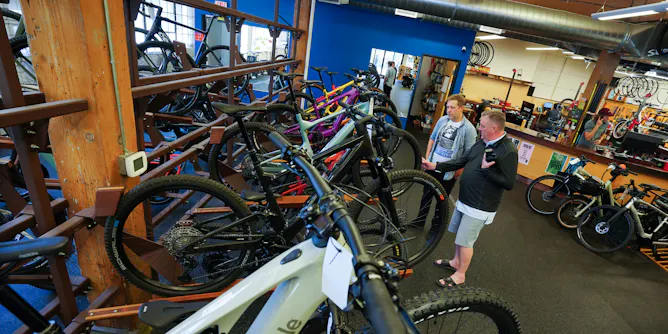
Rebates may well increase ownership but won’t overcome the main obstacles to riding e-bikes and e-scooters, which are lack of infrastructure and concerns about safety.
Articles on Electric scooters
Displaying all articles
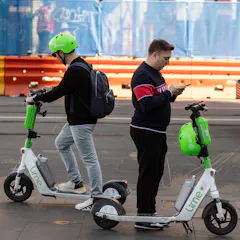
The parking of e-scooters is a source of fierce debate, but technology offers a solution to control the problem.

Shared e-scooters have safety features that private e-scooters lack, but accident data don’t distinguish between them, nor tell us about the economic and environmental harms of other transport modes.

Low-income customers who qualify for subsidised rates are five times more likely to use shared e-scooters and e-bikes for daily travel. People with disabilities also value them.

Brisbane was the first Australian city to accept rideshare e-scooters. After some growing pains, residents, visitors and the city itself are enjoying the benefits, a new study finds.
India’s international climate pledge could set the tone for other emerging economies for a decade.
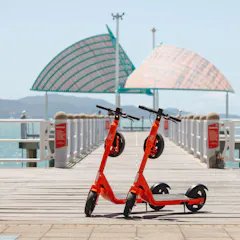
A new study shows e-scooter hire schemes increase the number of tourism destinations visitors can reach. And once at these destinations, e-scooter users spend more.
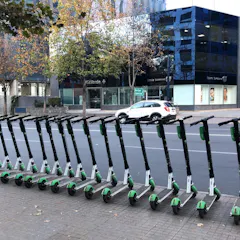
Shared e-scooter programs may seem like a green way to get around, but these small vehicles can have big environmental footprints.
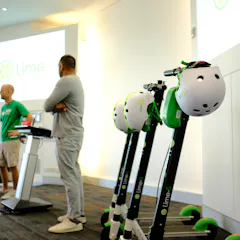
Every day, e-scooters and helmets are put out together, but some people ride without helmets and at the end of each day helmets are missing. So what can be done to ensure safe riding behaviour?
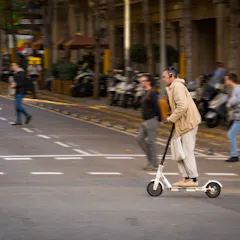
The exploding popularity of e-scooters has the potential to reshape transport in our cities. Regulators need to adapt their approaches to handle the new mobility service rather than ban it altogether.
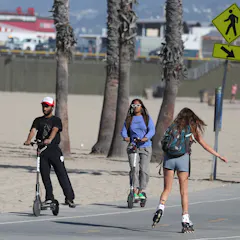
Motorized scooters that can travel up to 15 miles per hour have soared in popularity over the past year, as have concerns about their safety.
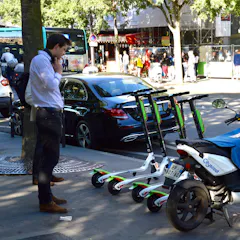
Shared electric scooters appeal as a way to cover that awkward distance between public transport stops and your destination. But first e-scooter operators must solve the littering and dumping problem.

Electric rideables are making life less comfortable and more dangerous for pedestrians. Here’s how makers of rideables could help make cities safer for everybody.
Top contributors
-

Senior Research Fellow, Cities Research Institute, Griffith University
-
Professorial Fellow, Mary MacKillop Institute for Health Research, Australian Catholic University; Emeritus Professor, Wertheim School of Public Health, University of California San Diego, University of California, San Diego
-
Associate Professor in Urban Planning, The University of Queensland
-
Research Fellow in the Climate Policy Lab, The Fletcher School, Tufts University
-
Research Lead, UQ Micromobility Research Cluster, The University of Queensland
-
Professor and Founding Director of QUT Centre for the Digital Economy, Queensland University of Technology
-
Associate Professor of Environmental Engineering, North Carolina State University
-
Adjunct Researcher, Cities Research Institute, Griffith University
-
Associate Professor of Social and Behavioral Sciences, Rutgers University
-
Professor of Transport Technology and Sustainability, Swinburne University of Technology
-
Post-doctoral Researcher, Business School, The University of Queensland
-
Honorary Professor of Planning, The University of Queensland
-
Adjunct Professor, School of Engineering and Built Environment, Griffith University
-
Associate Professor in Transport, Monash University
-
Senior Lecturer in Tourism, Griffith University