

Classrooms are shaped by emotion, relationships and unpredictability. Teachers in a study described a widening gap between AI policy expectations and the realities of classrooms.
Articles on Educational technology
Displaying 1 - 20 of 56 articles
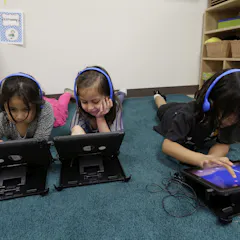
A meta-analysis of AI chatbots’ impact on student learning finds benefits when used properly, but risks of diminishing student motivation and confidence.

It can take years to collect evidence that shows effective uses of new technologies in schools. Unfortunately, early guesses sometimes go seriously wrong.

Early experiences shapes children’s developmental trajectories, and despite pressures to adapt to AI in education, there is a need for caution and safeguarding children’s privacy.

Big tech wants generative AI systems to seem like neutral, reliable tools – but the reality is far more complicated.

Like calculators before them, AI tools can raise the bar for what people can achieve – if they’re used the right way.
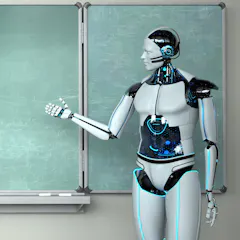
AI’s potential needs to be explored through experimentation. But this works best if managed under controlled environments.

In Ontario and elsewhere, we still need reforms that give decision-makers the power to bring robust democratic oversight to EdTech in schools.

Child-directed educational technology can deliver high quality education for millions of marginalised children worldwide.
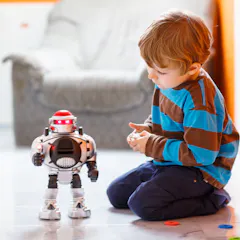
Before charging ahead to a world of AI babysitters and teacher or companion robots, we should consider this technology carefully to assess its appropriateness in children’s lives.

The education technology sector constantly offers new products to solve old problems. Will anything be different this time?

The language and speech technology has been developed to provide linguistic accuracy and is grounded in teaching principles.

Adapting post-secondary education through technological, social and cultural shifts depends on paying attention to healthy connection, social justice and amplifying what’s now going well.

A new report from UNESCO analyzes the many challenges of the growing presence of technology in education and notes 14 per cent of countries have policies that ban mobile phones.

Training for academics needs to be timely, specific, relevant and appropriate for the technology being implemented.

Without an educator to critically engage students about learning in a game, the learning can be misinformed or lost.

Software that advertises premium features for a fee is ill-suited to school environments, where children should experience universal access.

The fast-growing educational technology industry is poorly regulated and profits from user data. Australian law, education departments and schools can all do more to improve safeguards for children.

Technology has infiltrated education, but how do we choose what is best for teaching and learning?

Chatbots can be part of a broader approach universities’ teaching and learning centres can take to support faculty in innovating teaching practices.
Top contributors
-

Associate Professor in Education & Technology, University of KwaZulu-Natal
-
Associate Professor in Information Systems, University of the Western Cape
-
Professor of learning technologies, University of Minnesota
-
Associate Professor for Digital Innovation, University of the Western Cape
-
Postdoctoral Fellow, School of Education and Technology, Royal Roads University
-
PhD Candidate, Faculty of Education, Lakehead University
-
Associate Professor, University of the Free State
-
Emeritus Professor of Education, University of Derby
-
PhD, économiste « Développement Humain » / "Human Development" economist, Agence Française de Développement (AFD)
-
Professeure associée en Psychologie de l'éducation, CY Cergy Paris Université
-
Emeritus Professor, MTN Solution Space Graduate School of Business, University of Cape Town
-
Assistant Professor, Educational Policy and Equity, University of Toronto
-
Director of the Learning, Instruction & Technology Lab and Professor of Educational Psychology, School of Education, The University of Queensland
-
Dean, Syphax School of Education, Psychology & Interdisciplinary Studies, Virginia Union University
-
Chef de projet « Éducation, formation, emploi », Agence Française de Développement (AFD)