
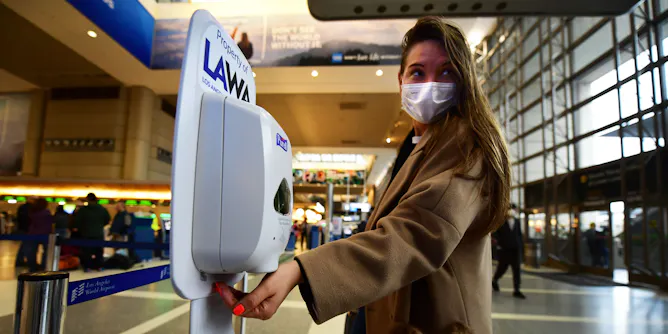
Human psychology has evolved to avoid situations that could lead to infection. Behavioral choices now could have long-term effects on how people interact with others and the world.
Articles on Disease
Displaying 121 - 140 of 260 articles

In the 1790s, penal reformers rebuilt America’s squalid jails as airy, hygienic places meant to keep residents – and by extension society – healthy. Now they’re hotbeds of COVID-19. What went wrong?
Asthma rescue inhalers are in short supply, and asthma sufferers are worried about the risks they face from COVID-19. A doctor answers six key questions.

Behind every government announcement, there is an army of epidemiologists predicting how the virus will spread, and how to beat it.

Among the more than 20,000 drugs approved by the FDA, there may be some that can treat COVID-19. A team at the University of California, San Francisco, is identifying possible candidates.

Stay calm, stick to the facts and talk to your children about your own feelings on the coronavirus and COVID-19 disease.

The US has public health agencies at the federal, state and local level. The spread of coronavirus is putting those agencies in the spotlight. What roles does each play and how are they coordinated?
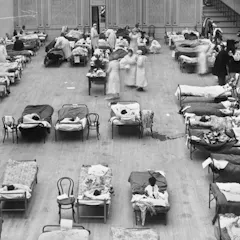
From the neighborhood to the newsroom to the White House, nobody stays silent during a health emergency. These terms are often mixed up, and it matters who is using them and when.
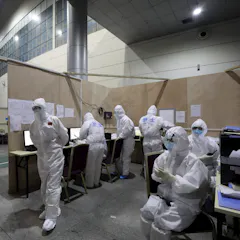
In a health crisis, decisions about treatment and containment must be made quickly. It’s crucial those decisions be based on research evidence, but fast and easy access is not always available.
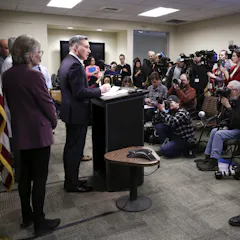
An epidemiologist explains the differences and similarities between COVID-19 and the seasonal flu.

A rare disease is one that affects less that five in 10,000 people. There are about 7,000 known rare diseases.
Genome sequencing technologies have transformed biological research in many ways, but have had a much smaller effect on the treatment of common diseases.

Research suggests that scientists’ understanding of biological age may not be as robust as we thought.

Norovirus, the winter vomiting bug, is highly infectious among people in confined places – like cruise ships. But not everyone is equally vulnerable. Your blood type may determine if you get sick.
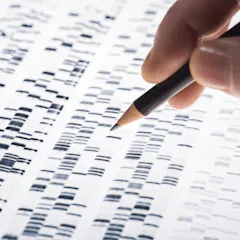
Africa is known to be where humans originated. This makes it the most genetically diverse region in the world. Diversity in other populations represents a subset of the diversity within Africa.
It’s imperative that there’s research into the nature, extent, mobility and consequences of antibiotic resistance.

We’ve known how to control typhoid for over 100 years. The rapid current increase of drug-resistant variants in both rich and poor countries is down to decades of short-sighted global health policies.
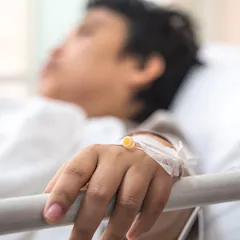
We asked five experts if your mental state can affect how well you recover from illness and disease. Five out of five said yes.
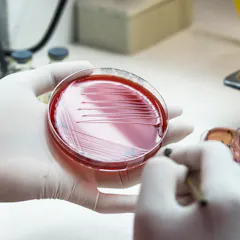
This breakthrough could be key in fighting antibiotic resistance.
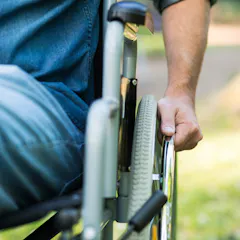
A promising new approach to treating MS tricks defective immune cells into thinking they are attacking the body, when they are in fact being attacked themselves.
Top contributors
-

Chancellor's Professor of Medicine, Liberal Arts, and Philanthropy, Indiana University
-
Alfred Deakin Professor and Chair in Ecology, Deakin University
-
Lecturer in Virology, Queen's University Belfast
-
Professor and Chair, Department of Environmental Health, Boston University
-
Associate Professor, Epidemiology, Deakin University
-
Senior Lecturer in Microbiology, Western Sydney University
-
Adjunct Associate Professor of Population Health Sciences, University of Wisconsin-Madison
-
Associate Professor of Osteoarchaeology, Uppsala University
-
Professor Emeritus of Environmental and Occupational Health Sciences, University of Washington
-
Professor of Environmental Medicine, University of Wisconsin-Madison
-
Professor of Mathematical Biology and Public Engagement, University of Bath
-
Professor of Microbiology and Immunology, Indiana University
-
Lecturer in Zoology, Aberystwyth University
-
Senior Lecturer in Southern Ocean Vertebrate Ecology, Institute for Marine and Antarctic Studies, University of Tasmania
-
Senior Lecturer in Ecology, University of Wollongong