

What contributes most to being at high risk of diabetes – diet, genes or something else? Big research questions need robust research approaches, so let’s break it down.
Articles on Disease
Displaying 161 - 180 of 260 articles

New data underscore that adults with no high school diploma or GED are at the greatest risk for the leading causes of disease and death.
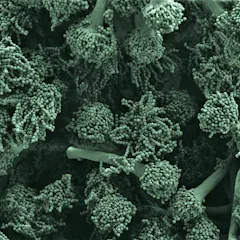
Fungi perform a vital role in the biological cycle, but pose an increasing danger to human health – invasive fungal infections kill three times more people than malaria.

Handshakes may be polite, but they’re also a sure fire way to transfer lots of bacteria from one hand to another.
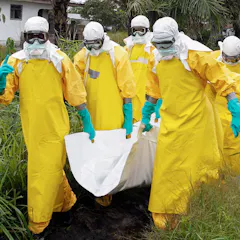
The obesity epidemic, the flu epidemic, the opioid epidemic… in the 21st century, everything seems to be an “epidemic”. But what does the term actually mean?

Many people feel conflicted about the use of animals in scientific research. But what is actually involved?

Comics often portray those with dementia as abnormal or less than human.

There’s plenty of evidence that modern swill-feeding would be safe, sustainable, and popular.

New research shows just 1% of E. coli bacteria’s genetic mutations are lethal.

New research uses pathology in dinosaur bones to look at predator-prey interactions in the fossil record.

A stomach-churning viral video of an Oregon woman who describes removing cattle eyeworms from her eye has renewed interest in parasites that jump from animals to humans. Here’s all you need to know.

South Africa’s food making giant, Tiger Brands, could have handled the listeriosis crisis better.

Pets give us a lot of joy … and sometimes a few diseases.

These female workers had their health destroyed by a horrific disease known as ‘phossy jaw’. It caused their jaw bones to glow in the dark and rot away.

CC BY-ND17.2 MB (download)
The audio version of a long read on the historical mistakes and cover ups that hampered the response to the devastating Ebola outbreak of 2014.

Science has come a long way in the 100 years since the worst flu pandemic in history. But that doesn’t mean that the country is ready for another health disaster.
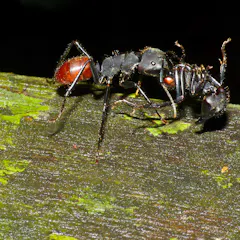
Ants produce their own antimicrobial chemicals to fight bacteria.
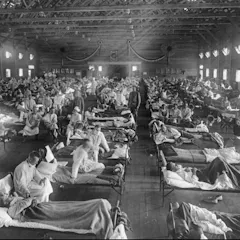
Don’t believe these 10 common myths about the 1918 Spanish flu.

Migratory animals are often blamed for the global spread of disease. However, recent research indicates they may not be the primary culprit.

The population is aging in Canada and around the world. It’s time to focus our attentions on optimal aging instead of grimly tallying the burdens of growing old.
Top contributors
-

Chancellor's Professor of Medicine, Liberal Arts, and Philanthropy, Indiana University
-
Alfred Deakin Professor and Chair in Ecology, Deakin University
-
Lecturer in Virology, Queen's University Belfast
-
Professor and Chair, Department of Environmental Health, Boston University
-
Associate Professor, Epidemiology, Deakin University
-
Senior Lecturer in Microbiology, Western Sydney University
-
Adjunct Associate Professor of Population Health Sciences, University of Wisconsin-Madison
-
Associate Professor of Osteoarchaeology, Uppsala University
-
Professor Emeritus of Environmental and Occupational Health Sciences, University of Washington
-
Professor of Environmental Medicine, University of Wisconsin-Madison
-
Professor of Mathematical Biology and Public Engagement, University of Bath
-
Professor of Microbiology and Immunology, Indiana University
-
Lecturer in Zoology, Aberystwyth University
-
Senior Lecturer in Southern Ocean Vertebrate Ecology, Institute for Marine and Antarctic Studies, University of Tasmania
-
Senior Lecturer in Ecology, University of Wollongong