
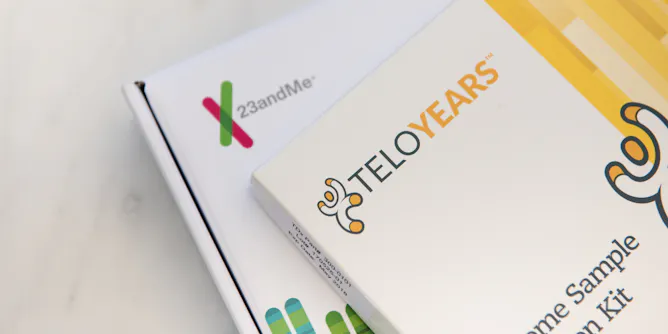
Genetic testing companies are offering tests that analyze the ends of your chromosomes – telomeres – to gauge your health and your real age. But is there scientific evidence to support such tests?
Articles on Direct-to-consumer DNA testing
Displaying 21 - 29 of 29 articles
Most common chronic diseases are the outcome of complex interactions between genetic, environmental and social risk factors, so a genetic risk score, on its own, isn’t much help.

New research investigated who uses the wide array of tools available to people who’ve received their own raw genetic data and want to maximize what they learn from it.
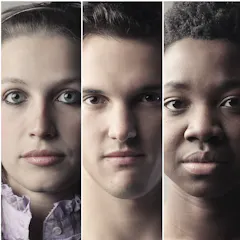
Estimating our ancestry is hard – because our backgrounds are much more mixed up than we thought. So don’t take your DNA ancestry test results literally: they’re just a prediction.

Direct-to-consumer genetic testing company 23andMe is now offering a new ‘polygenic risk score’ that reveals your risk of developing Type 2 diabetes. Does it work? Are our family physicians ready?

The results of genetic ancestry tests are grossly over-simplified. A new study shows the tests reinforce what you want to believe rather than offering objective, scientific proof of who you are.
Genetics is influencing more and more of our decisions, but we can’t make the right choices if we don’t understand it.
Data and privacy issues are tangled up in the DNA reports consumers get from big genetic testing companies – and the third-party sites they turn to in order to glean more from their raw DNA.

More people are sending off saliva samples to find out about their genetic roots. But the raw DNA results go way beyond genealogical data – and could deliver unintended consequences.
Top contributors
-

Research Scientist in Biostatistics, University of Washington
-
PhD Candidate in Law, Queen's University, Ontario
-
Ethical, Legal & Social Adviser in Public Health Genomics, Monash University
-
Associate Professor of Sociology, University of British Columbia
-
Associate Professor of Community Health Sciences, Boston University
-
AIR Teaching Fellow, Goldsmiths, University of London
-
Director of Bruce Lefroy Centre for Genetic Health Research, Murdoch Children's Research Institute
-
Chen Su Lan Centennial Professor in Medical Ethics, National University of Singapore; Distinguished Visiting Professor in Law, University of Melbourne; Uehiro Chair in Practical Ethics, The University of Melbourne
-
Professor of Clinical Epidemiology, Sydney School of Public Health, University of Sydney
-
Assistant Professor of Biochemistry and Molecular Biology, Thomas Jefferson University
-
Professor of Environmental and Occupational Health, University of Pittsburgh
-
Senior Lecturer in Philosophy of Science, University of Sydney
-
Associate professor, Royal Holloway, University of London
-
PhD Candidate in Anthropology, University of California, Davis
-
Professor, Murdoch Children's Research Institute