

A recent article published and widely read in Science revealed that Neanderthal men preferred “Sapiens” women, but it fails to tell the whole story.
Articles on Ancestry
Displaying 1 - 20 of 30 articles

Citizenship as reparation must not translate into citizenship as entitlement.

Repelled by American racism, thousands of free people of color bounced between New Orleans and Haiti in the 19th century.
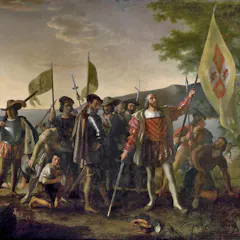
Claims about Columbus being Sephardic have bubbled up for decades. Early in the 20th century, some immigrant groups hoped proving ties to him would improve their own social standing.
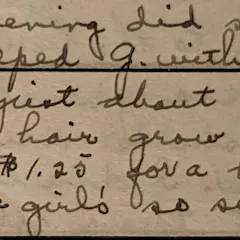
You can uncover the depths and hidden details of your own family’s unspoken narratives by thinking like an archival researcher writing an ‘investigative memoir.’
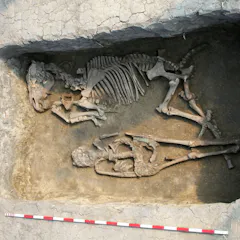
The Avars dominated southeastern central Europe for hundreds of years, leaving one of the richest archaeological heritages in Europe. Now scientists are using DNA to reveal details of their societies.
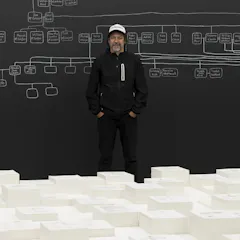
Archie Moore is the first Australian to win the Golden Lion at the Venice Biennale, given to the best national pavilion at the world’s oldest and most renowned art biennale.
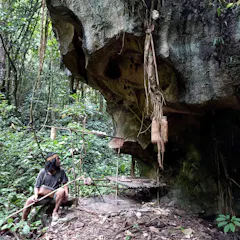
The Punan Batu is one of the most active nomadic hunter-gatherer groups still existing in the world. They have unique characteristics that are different from other groups in Borneo.

Researching family history is a popular hobby. But hobbyists can find themselves unearthing details of ancestors behaving badly or treated cruelly – or family secrets and trauma.
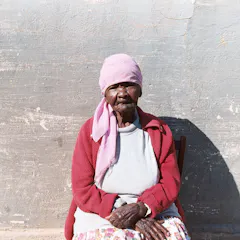
The South African Khoe-San communities are no strangers to exploitative research. One research team is trying to provide genetic ancestry results to community members. But they still face many challenges.
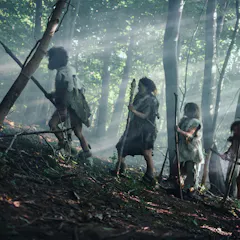
How we’re linking together genetic material from thousands of people - modern and ancient - to trace our ancestors and the history of our evolution.
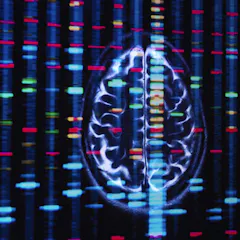
Using a technique called admixture mapping, researchers can leverage the diversity of people with mixed ancestry to look for hard-to-find genetic risk factors for diseases like Alzheimer’s disease.
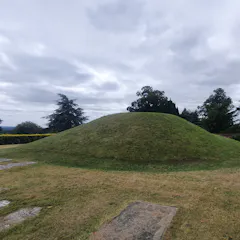
New analysis of Anglo-Saxon skulls suggests that being an Anglo-Saxon was a matter of language and culture, and not genetics.
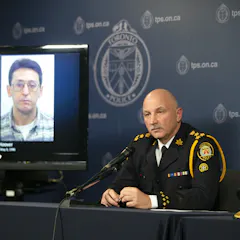
Christine Jessop was murdered in 1984 and, 36 years later, DNA evidence finally identified her killer. But the police investigation’s use of genetic genealogical databases raised questions about privacy.

It is a good time to ask how the travel and tourism industry has contributed to racism and how that can change.
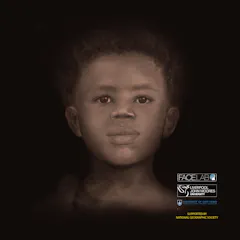
Through science, art and technology, we are able to reconstruct the faces of the dead based on their remains. The researcher who did this work for descendants in Sutherland explains the process.
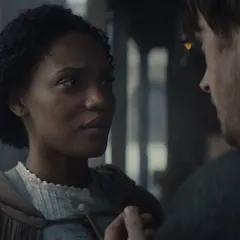
Canadian audiences did not object to Ancestry’s ad which romanticized Canada as “Promised land,” but they should have.
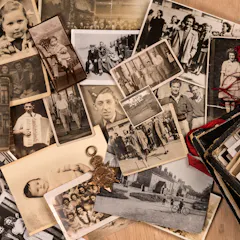
Before you attribute a trait to a famous ancestor like George Washington or Marie Antoinette, you might want to see how much DNA you actually share with these people. It’s not what you thought.
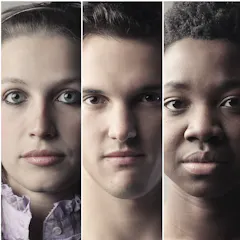
Estimating our ancestry is hard – because our backgrounds are much more mixed up than we thought. So don’t take your DNA ancestry test results literally: they’re just a prediction.
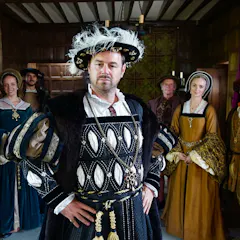
DNA testing is helping reveal people’s unknown royal ancestry.
Top contributors
-

Professor of Anthropology, Deakin University
-
Lecturer, Business School & Centre for Policy Futures, The University of Queensland
-
Research Fellow, Deakin University
-
Professor of English, York University, Canada
-
Postdoctoral Fellow, Department of Zoology, University of Otago
-
Chair professor, Archaeology, University of Sydney
-
Reader in Heritage Studies, Newcastle University
-
Postdoctoral Researcher, Human Evolutionary Studies, Simon Fraser University
-
Associate Professor of Sociology, University of British Columbia
-
UNSW
-
Research fellow, The University of Queensland
-
Visiting Fellow, Newcastle University
-
Associate Professor of Community Health Sciences, Boston University
-
Distinguished Professor, Charles Sturt University
-
Associate professor in Vertebrate Palaeontology, University of the Witwatersrand